So far, so good on New York’s building emission rules. But, unfortunately for many property owners, the hard part is yet to come.
The vast majority of the buildings required to slash their carbon footprints have done so or taken steps to, according to a report the Department of Buildings submitted to the City Council Monday night.
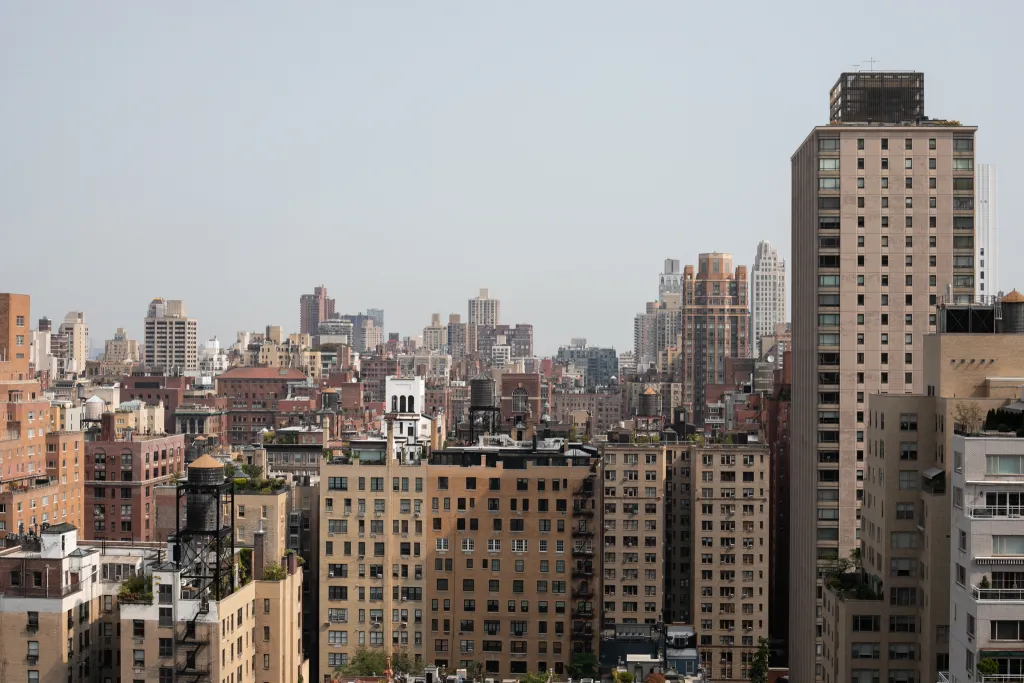
How much city properties spew planet-warming carbon makes a big difference for a greener New York; buildings — with their heat, lights and air conditioning — are the biggest source of emissions in the city, and Local Law 97 aims to curtail them.
The law, passed in 2019, mandates that buildings over 25,000 square feet keep their emissions down below a certain cap or face financial penalties. The first compliance period began in 2024, and in subsequent years, buildings are allowed to spew fewer and fewer emissions.
Of the nearly 30,000 buildings required to file reports, about 95% did so, showing how they complied with the law or are taking steps to get there.
In a statement, Mayor Zohran Mamdani heralded the law’s implementation as strong so far.
“We will continue working to reduce greenhouse gas emissions and invest in clean energy,” he said, “delivering more efficient buildings, cleaner air and a more resilient city for decades to come.”
The DOB’s analysis breaks down buildings into two groups: one that includes mostly market-rate buildings subject to the emissions caps (as well as schools, offices and hotels), and another that includes affordable housing and houses of worship. The DOB did not yet determine compliance rates for the latter group.
Of the more than 10,437 properties in the first group that filed emissions reports to the DOB, about 95% — or 10,000 — are in compliance with the benchmarks. Of the rest, more than half are over the emissions limit by less than 50%. About a quarter of those buildings are over by more than 50%, and about a third of them opted to submit plans to show how they will make “good faith efforts” to comply with the law.
For those following the implementation of the law, the analysis likely won’t come as a surprise. When the law was passed, the DOB figured 80% of buildings subject to the law would already be under the emissions caps in the first compliance period.
The challenge for most buildings would come in 2030, when emission limits become stricter. That’s when tougher and more expensive projects would likely need to get done. To bring down carbon emissions, building owners may have to make physical changes to their buildings by adding solar, fully sealing and insulating older buildings, replacing oil boilers or switching to more efficient electric appliances, among other options.
Jesse Gerstin, the former board president of a co-op apartment in Brooklyn’s Ditmas Park, helmed the installation of rooftop solar for the building. The system turned on by the end of 2024 and brought the building into compliance with Local Law 97.
“By our understanding, we won’t have a fine,” he said in an interview earlier this year. “We probably could’ve started with energy efficiency and heating first … but other people in the building were excited about solar.”
Some of the upgrades owners have to make can come at high upfront costs, and those not in compliance could face fines of $268 for every ton of carbon-based emissions above the limit, per year. A ton of carbon is about equal to a car driving around 2,300 miles, according to an Environmental Protection Agency estimate.
As of Monday, 16 properties that are over the emission limits are in the process of paying about $270,150 in penalties, according to DOB.
“Some building owners, in my understanding, have made a financial decision to pay some penalties instead of doing the work, so, we’re happy to collect that money,” said Laura Popa, deputy commissioner of sustainability at the DOB, at a July event.
She emphasized the “supportive approach to enforcement” her agency has taken, with the goal to get building owners to engage. To that end, the DOB has given extensions for “good faith” efforts and sent out notices to building owners to spur them to file after the deadline.
There are also other ways for building owners to comply, beyond making physical changes to their buildings. For instance, owners may purchase carbon offsets for up to 10% of their emissions — though less than 1% of properties opted to do this. Still, the offsets purchased sent about $1.7 million into a fund to help decarbonize affordable housing.
The law may evolve with time, Popa indicated, as the DOB is conducting a series of studies that may change the way the city and building owners approach enforcement and compliance. The DOB is considering whether to add measurements for energy efficiency, how to account for the density of residents in a given building and how to better support landlords of apartment buildings, among other aspects.
Brian Lynch, whose family owns a rent-stabilized building of 44 apartments in Kew Gardens, Queens, said he’d welcome more support. He praised the assistance of the NYC Accelerator, a program that helps building owners navigate the decarbonization process. To comply with Local Law 97, he ended up upgrading an existing energy management system with wireless sensors that moderate the building’s heat.
“I’m not sure if it saved any money yet because this [past] winter was so cold but it seems to be working pretty well,” Lynch said. “Some apartments could be blazing hot and some could be freezing, so it’s trying to average it out and make the environment comfortable for everyone.”
Our nonprofit newsroom relies on donations from readers to sustain our local reporting and keep it free for all New Yorkers. Donate to THE CITY today.
The post Compliance High on NYC Emission Rules So Far, With Much Tougher Goals to Come appeared first on The City Reporter.
