Of all the myths I carried as a young girl in Texas, Billie Holiday at Carnegie Hall may have been among the most dangerous. Not dangerous in the obvious way, perhaps, but in the way beauty can become a private wound. I watched the old clips and recordings with the stunned devotion of someone trying to understand how one room could hold that much ache, glamour, history, and sound. I remember wondering what it would feel like to sit inside that grand performance hall, near the stage where Holiday had turned sorrow into phrasing, fracture into style, and pain into an almost unbearable form of grace.
On Tuesday, that girl from Texas met the room she had imagined.
Carnegie Hall is not merely a venue. It is an atmosphere of accumulated genius. It is where Duke Ellington expanded the American musical imagination, where Leonard Bernstein seemed to conduct with both intellect and fever, where Holiday’s voice carried the weight of a country that often failed her while still needing her music to understand itself. Inside that hall, the past does not behave politely. It hovers. It leans in. It asks what we intend to do with the inheritance.
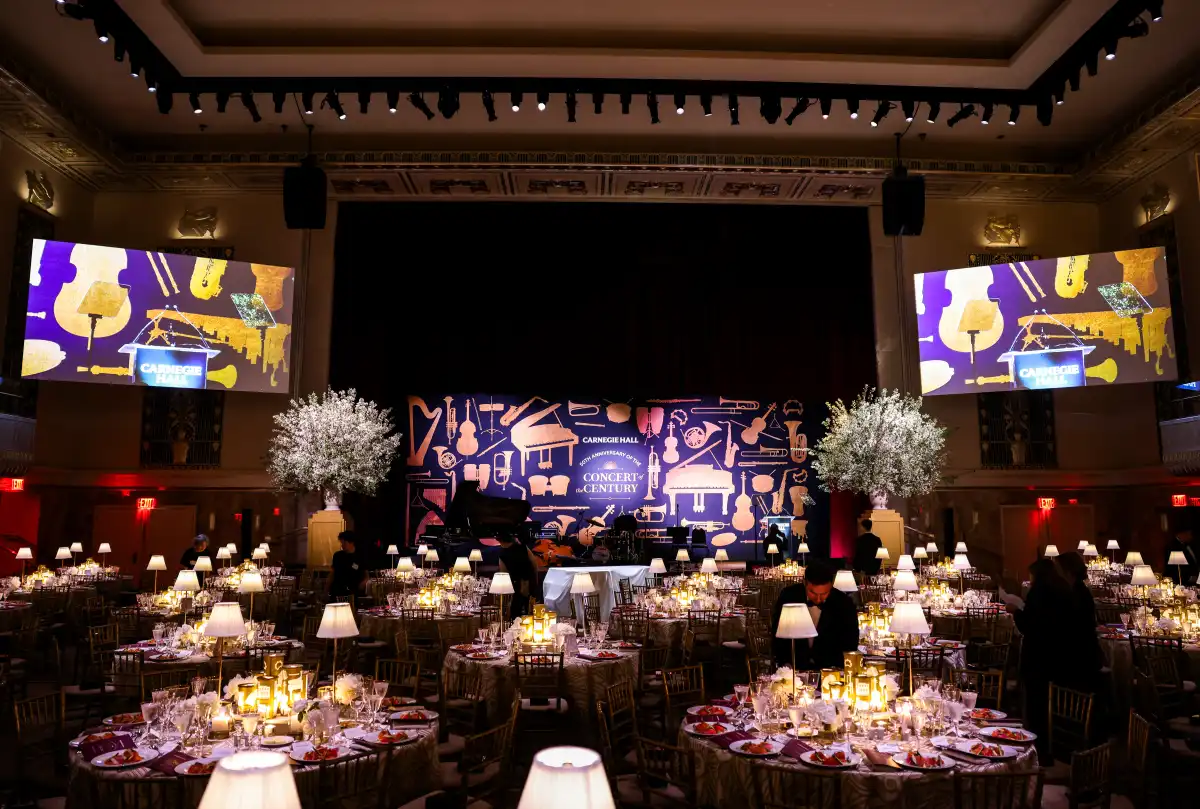
Carnegie Hall’s 50th anniversary celebration of its legendary “Concert of the Century,” first organized by Isaac Stern in 1976, became a deeply layered act of continuity. Half a century after that historic concert-celebration, and 135 years after the Hall first opened in 1891, the evening gathered Renée Fleming, Joyce DiDonato, Isabel Leonard, Audra McDonald, Michael Feinstein, Emanuel Ax, Lang Lang, Daniil Trifonov, Yannick Nézet-Séguin, the NYO-USA All-Stars, and the Oratorio Society of New York in a program that felt almost impossibly generous.
The idea of Make Our Garden Grow seemed sewn through the entire occasion, not only as Bernstein’s final benediction, but as its deeper moral weather. There was, perhaps, a resilience against ignorance and otherness moving beneath the glamour, never over-explained, never flattened into slogan, yet unmistakably present. The performance seemed to understand that music does not simply entertain a civilized society. It cultivates one. It asks us to tend what is fragile, widen what has been narrowed, and defend beauty from every force that would make the world smaller.
Renée Fleming, who also served as host, offered the kind of voice that makes language feel nearly impertinent. Her Mozart Laudate Dominum, performed with the NYO-USA All-Stars and the Oratorio Society of New York, carried that unmistakable Fleming silk: luminous, disciplined, emotionally exact, yet never cold. In her hands, beauty became not ornament, but devotion made audible.

Michael Feinstein brought the room into the amber glow of old Manhattan, where memory, theater, and mischief share the same glass. His syrupy supper-club intimacy made his story of Judy Garland and Elaine Stritch drinking after a show deep into the dangerous hours between midnight and morning impossible not to adore. Garland allegedly leaned in to say, “Elaine, I am going to say something to you I have never said to anyone… good night.” The line landed with fatal glamour, from an era when wit could end a room and a cocktail could extend a legend.
How badly I wished, in that instant, to have had one drink with Garland after one of her sold-out Carnegie performances. Not for gossip, exactly, though naturally one would not refuse it, but for the mythology: exhausted brilliance, cigarette smoke, impossible sound, ache beneath applause, and the strange intimacy of sitting near someone who had given the public everything while remaining unknowable.
Audra McDonald, radiant as ever, brought her own form of reverence to the stage through an ode to jazz legends with longtime music director Andy Einhorn. She does not merely interpret a song. She inhabits its architecture, allowing phrasing to carry lineage, cabaret, Broadway, grief, elegance, and the old American miracle of turning heartbreak into form. From there, the program moved through Joyce DiDonato with Emanuel Ax, Lang Lang with Tchaikovsky, Daniil Trifonov with Gershwin, Isabel Leonard with Rossini, and the collective force of artists, chorus, and orchestra joining for Bernstein’s “Make Our Garden Grow.”

It felt less like a finale than an instruction.
Perhaps the most important truth of the gala was that Carnegie Hall is not surviving on memory alone. Under Executive and Artistic Director Clive Gillinson’s twenty years of leadership, the institution has not simply preserved its grandeur, but turned toward tomorrow with uncommon seriousness. The benefit supported Carnegie Hall’s artistic, education, and social impact programs, including youth-centered work that refuses to treat the next generation as an afterthought. The NYO-USA All-Stars onstage were themselves a living argument for that future: alumni of the National Youth Orchestra of the United States of America, now emerging as outstanding young professionals in music.
That devotion to young musicians, community, access, and artistic possibility is not a side note. It is the living architecture of Carnegie Hall’s future. It is what keeps the institution from becoming only a monument. Carnegie Hall remains powerful because it knows excellence must be inherited, challenged, opened, and passed forward. Yannick Nézet-Séguin described the Hall as a beacon of openness, creativity, diversity, and freedom of expression, while Anya Gillinson spoke movingly of Clive as someone who has cherished, protected, and built upon the institution, breathing new life into its future while honoring its history.
Then, as though the night had not already climbed high enough into cultural fantasy, guests were brought to the Waldorf Astoria New York for dinner honoring Clive’s visionary stewardship. The Waldorf is, admittedly, one of those rooms capable of weakening you to your knees. That grandeur, its memories, that type of tenure opulence that demands reverence.

In all that excess of brilliance–the gala raised $3.5 million for Carnegie Hall’s artistic, education, and social impact programs, a figure that matters because beauty, however divine it may feel beneath chandeliers, still requires structure, conviction, and care.
That, perhaps, is what stayed with me after the applause dissolved. Carnegie Hall is filled with ghosts, but it is not trapped by the past. It is accountable to it. That magical night, beneath the weight of all that music and all those names, the Hall did not ask us merely to remember what greatness has sounded like. It asked whether we are willing to protect the conditions that allow it to return.