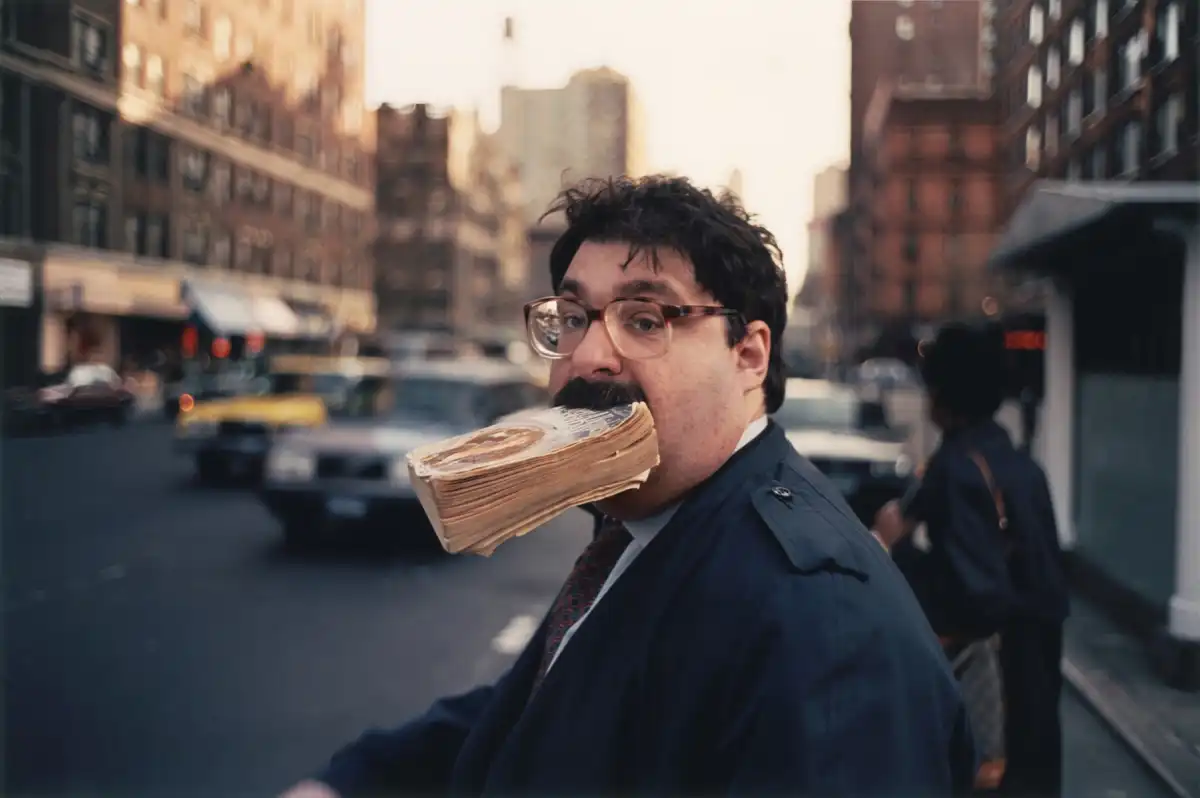
The extraordinary show-out for AIPAD this year seems to prove something the art world has been whispering for years and is, perhaps, finally ready to say aloud: photography has arrived not as a secondary medium, not as decorative evidence, not as the tasteful cousin of painting, but as one of the most intellectually potent, historically loaded, and emotionally exacting forms in the contemporary market.
At The Photography Show presented by AIPAD, held at the Park Avenue Armory from April 22–26, 2026, the medium was given the scale, seriousness, and theatricality it has long deserved. The fair brought together international exhibitors, historically significant work, contemporary experimentation, and the newly introduced Focal Point sector, which emphasized solo presentations and lens-based practices that expand the definition of what photography has been and what it may still become. AIPAD, organized in 1979, remains a defining expert voice for fine art photography dealers, and its flagship fair is described as the longest-running exhibition dedicated to the photographic medium in the world.
This is significant. For decades, photography has arguably suffered from a peculiar cultural contradiction. It is adored, studied, collected by museums, circulated endlessly, and granted immense aesthetic authority. Yet when the conversation turns to price, acquisition, and long-term value, a hesitation often appears. The same collector who will admire a photograph with near-religious reverence can suddenly become faintly provincial when asked to pay for it properly.
That tension fascinates me as an art dealer. It also, admittedly, frustrates me. How does one overcome the lingering notion that photography should be greatly admired, yet not greatly paid for?
The answer, unsurprisingly, begins with history.
Photography has always been haunted by its own brilliance. From the moment the camera entered the world, it was accused of being too immediate, too mechanical, too close to reality to be granted the full intoxication of art. Painting could invent. Sculpture could monumentalize. Photography, so the lazy argument went, merely captured. What an insufficient reading of a medium that has shaped modern consciousness with more force than almost any other visual form.
Photography did not merely record the modern age. In many ways, it manufactured the modern eye. It altered the way we understand war, glamour, intimacy, power, desire, labor, beauty, violence, celebrity, grief, architecture, and the self. It changed the terms of evidence. It made memory portable. It made image culture democratic, then dangerous, then divine. From nineteenth-century experimentation to documentary realism, from Surrealist manipulation to fashion photography and conceptual practice, photography has never been passive. At its best, it is proof and performance at once.
The market, however, has often lagged behind the intellect.

Part of this, naturally, is due to reproducibility, that old ghost rattling around every photography conversation like an uninvited guest in an otherwise elegant room. Collectors sometimes struggle with editions. They wonder whether a work can hold value if more than one exists. They forget, rather conveniently, that bronze sculpture has long existed in editions, that prints by canonical artists command enormous prices, and that scarcity in art is never merely a matter of singularity. Scarcity is also provenance, condition, scale, vintage, printing process, historical importance, institutional recognition, and cultural necessity.
A great photograph is not “just an image.” It is, more accurately, an object with lineage. A vintage print, a lifetime print, a rare process, a signed edition, a museum-exhibited work, or a photograph that marks a pivotal moment in an artist’s practice carries a very different market reality than a loosely circulated image. With this in mind, the problem is not photography’s value. The problem is that too few collectors have been trained to read that value with the same confidence they bring to canvas.
This is where AIPAD becomes so essential. It does not simply present photography, but educates the eye around photography. It gives the medium context, scholarship, authority, and, frankly, glamour. That last word matters, as glamour is not frivolity when deployed correctly. Glamour is the aura that allows knowledge to become desire.

Certain works made that argument feel immediate. Dean West’s Isaac Silhouette #1, American West, 2024 had the cinematic precision I find increasingly persuasive in contemporary photography: spare, constructed, mythic, and almost too composed, like the American West after it has been dressed in white and asked to confess what it has been hiding. The cowboy hat becomes both icon and veil, while the face, half-submerged in shadow, reminds us how much can be said through contour, absence, and restraint.
Thomas’s Tell Me What You’re Thinking, Shinique, 2022 lingered for precisely the opposite reason. It was lush, saturated, and psychologically alive, with the magnificent charge of two women holding the room while pattern, color, fabric, and gaze conspire around them. Here, the photograph does not whisper. It reclines, commands, and lets the room become a stage for identity, glamour, intimacy, and self-possession.
Bill Armstrong’s Renaissance #1006, 2006 felt especially compelling in its painterly blur, collapsing photography into memory, atmosphere, and art historical echo. The softened purple body against the rose ground becomes less a figure than an apparition, a gesture, a ghost of Renaissance movement translated through the unstable poetry of the lens. It seems to ask whether an image must be sharp in order to be true, which is, frankly, one of the more seductive questions photography can pose.
These were the pieces that clarified the argument. Photography is not asking to be defended as art. It is asking to be understood with more sophistication. It is asking collectors to recognize when an image is not merely beautiful, but structurally important, intellectually charged, and market-worthy.

There is also something deliciously timely about this shift. We live in an era drowning in images, yet starving for images that mean something. The collector who understands photography now is not buying surface. They are buying literacy. They are buying an artifact of perception. They are buying the ability to say: this image mattered, this print matters, this moment in visual history belongs in my collection.
Quite frankly, photography deserves the full architecture of value: rigorous pricing, serious collecting, institutional placement, and advisory conversations that do not apologize for the medium’s complexity. It deserves to be understood not as an accessible alternative to painting, but as a category with its own hierarchy, history, and investment logic.
The most seductive thing about photography is that it appears to reveal the world while quietly controlling how we see it. That power has shaped the past century and continues to shape the present one. AIPAD’s incredible showing only confirms what should now feel obvious: photography is not merely rising. Photography has risen.
The market would be wise, and perhaps a bit more elegant, to behave accordingly.
AIPAD.com.
