Opera is born disappearing. Breath leaves the body, trembles through the room, enters hundreds of strangers, and is gone. The vibration remains somewhere beneath the sternum, yet the sound itself cannot be held. This is the form’s great seduction and its historical peril: what survives depends upon who is recorded, programmed, funded, taught, and named.
I understood that paradox viscerally when I saw Denyce Graves perform. Her mezzo-soprano seemed to draw the air from my lungs before returning it transformed. The tremor multiplied, reverberating through flesh and architecture until human limitation felt temporarily absurd. By the final note, music had made existence appear limitless; the ensuing silence reminded me how quickly magnificence can vanish.
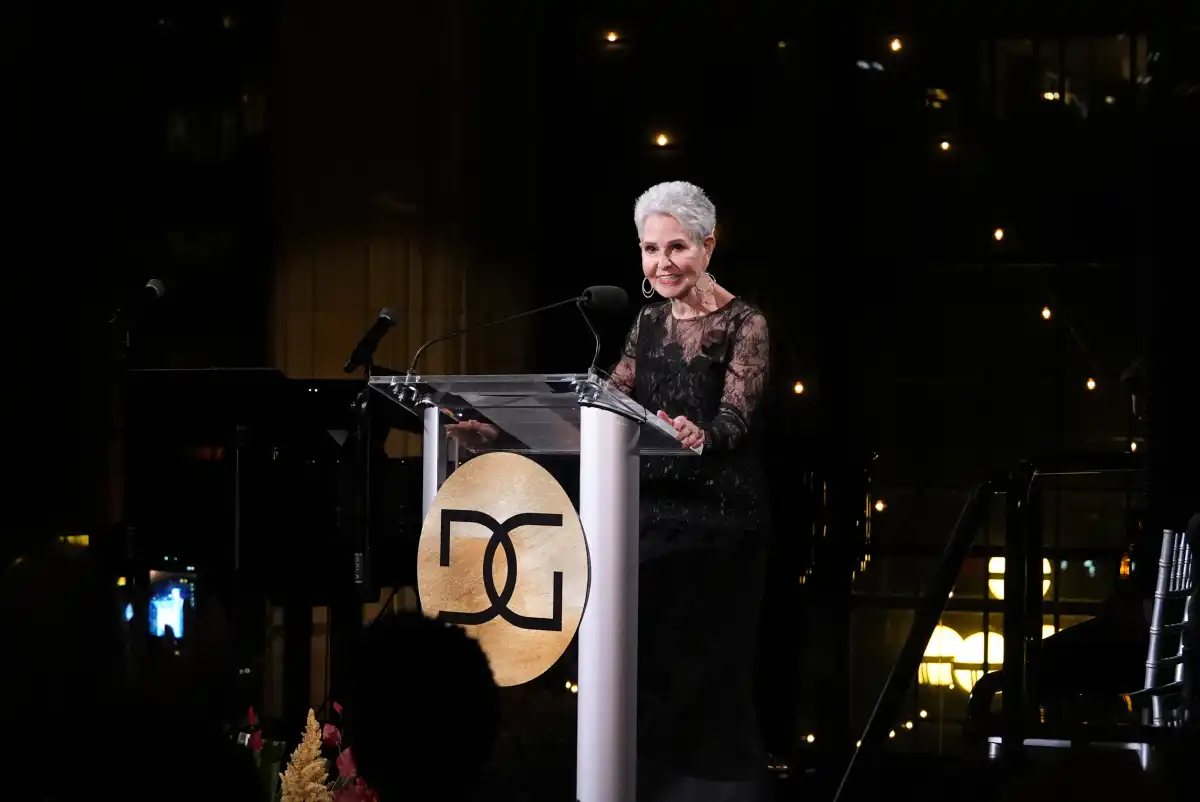
Perhaps this is the most compelling way to understand the Denyce Graves Foundation. Its work occurs on both sides of disappearance, supporting emerging singers whose careers remain unwritten while recovering musical figures nearly erased from national memory. The annual Harvest Moon Gala at Guastavino’s was, in effect, a living counter-archive in black tie.
Chaired by Barbara Tober and Ann Gottlieb and emceed by Deborah Roberts, the evening honored Misty Copeland, Yannick Nézet-Séguin, and Ann Ziff, with Susan Graham, John Holiday, Joshua Bell, and young DGF artists performing throughout. Then came Paul Simon—a surprise so deliciously unexpected that the entire room seemed to inhale at once. I was privately hoping for “50 Ways to Leave Your Lover,” since one should approach any gala with at least one unreasonable demand, yet everything he served was precisely right. In quintessential Denyce fashion, the moment was impeccably judged, gloriously fun, and entirely iconic.
Denyce Graves Foundation Harvest Moon Gala.Photo by Patrick McMullan/PMC


Beneath that splendor lived a formidable argument. American musical history was composed not only by artists, but by institutions deciding whose achievements merited repetition. A canon is never neutral; it is power rehearsed until preference begins to sound inevitable. Graves challenges that construction by restoring overlooked lives to the record and giving developing talent the resources to endure beyond a promising debut.
Misty Copeland’s inaugural Mary Cardwell Dawson Humanitarian Award made this work especially palpable. Dawson founded the National Negro Opera Company when prevailing structures failed to accommodate Black excellence. Graves recovered her legacy, just as Copeland discovered Raven Wilkinson, the first Black woman to dance with the Ballet Russe de Monte Carlo. Neither encounter is archival trivia. A predecessor changes the nervous system of ambition: knowing someone came before can make achievement feel less like trespass.
Kenny Leon praised Copeland for widening the passage after becoming the first, while Calvin Royal III recognized how her ascent compelled ballet to perceive Black artistry, individuality, and humanity more fully. The honor, therefore, acknowledged more than visibility. It celebrated the discipline of transforming singular success into collective inheritance.
From the conductor’s podium, meanwhile, cultural memory becomes audible policy. Game Changer Award recipient Nézet-Séguin spoke of music as an expression of love and commonality, affirming his commitment to Margaret Bonds, Marian Anderson, and Florence Price alongside contemporary composers. Programming such figures is neither charity nor fashionable revision. It repairs the repertoire by returning essential intelligence to an art form diminished by its omissions.


Ann Ziff, recipient of the Living Legend Award, represented the economic architecture beneath artistic survival. Her devotion to The Metropolitan Opera and its singers demonstrates that patronage, at its finest, does not simply purchase prestige; it sustains the conditions under which greatness can continue. Peter Gelb called her The Met’s “soothing matriarch” and, rather deliciously, his antidote. Even tragedy set to orchestration benefits from someone tending the humans producing it.
Marianne Williamson made the evening’s moral stakes explicit, arguing that an age demanding bombs and brute force requires more ballet and music, not less. The performances supplied her answer. Established masters and rising vocalists occupied the same program, allowing lineage to become something heard rather than explained.
Quite fittingly, Brandon Jovanovich, DGF members, and fellow performers closed with Leonard Bernstein’s Make Our Garden Grow. The final chord disappeared, as every note must. What remained was the institution ensuring that the people who made it—and the histories carried within them—would not.
