America remains remarkably susceptible to a beautiful room and a difficult invitation. Perhaps our appetite for the Gilded Age begins there: social warfare beneath magnificent ceilings, and the possibility that taste might secure an entrance money alone could not. I understand the attraction. There is considerable sex appeal in an era that treated even daylight as something one might commission.
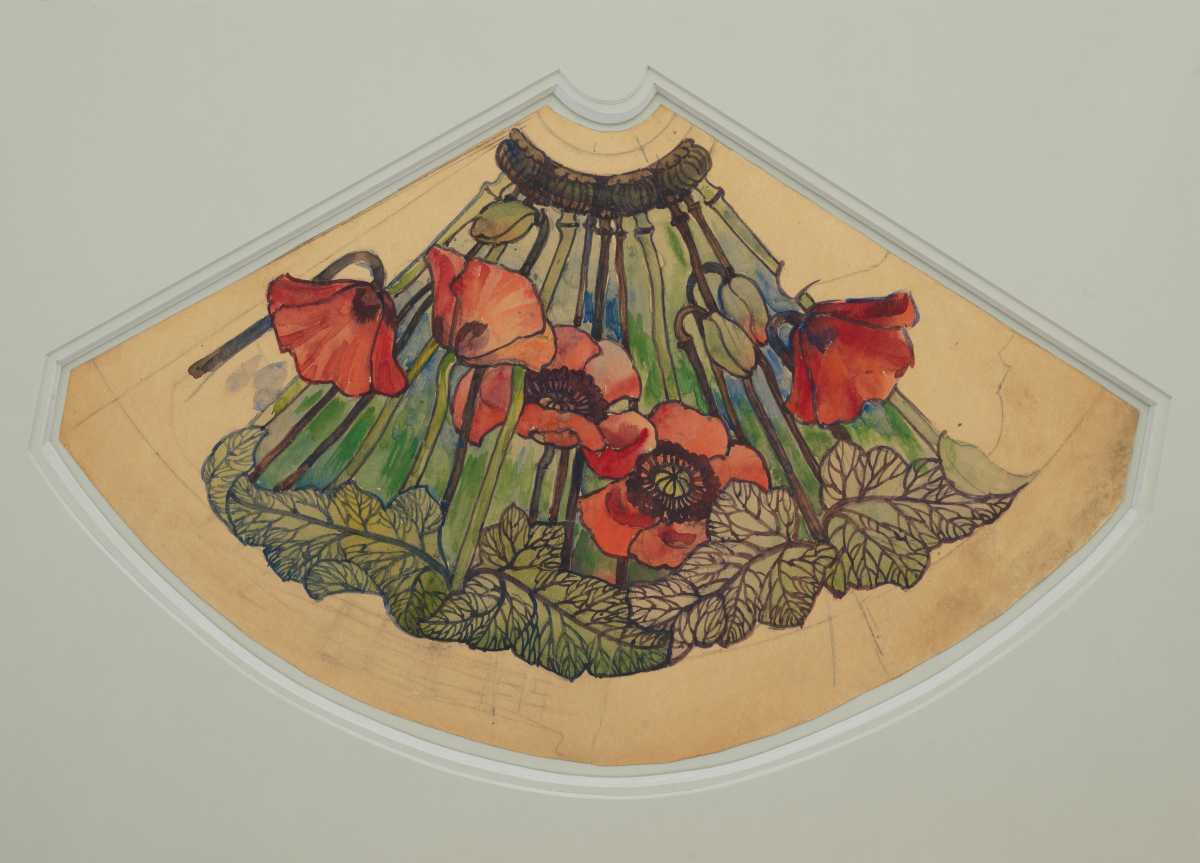
Opening October 22, Designing the Gilded Age: Drawings from the Studios of Louis C. Tiffany at The Metropolitan Museum of Art follows that ambition back to the drawing table. Nearly 120 works from the Museum’s collection will join selected loans to explore the designs behind the studios’ windows, lamps, mosaics, and interiors. Organized by Alice Cooney Frelinghuysen with Barbara Veith, it considers the decisions that preceded the splendor, and the people who made them.
Of course, some historical perspective is useful before surrendering to the wisteria. Mark Twain and Charles Dudley Warner’s 1873 novel The Gilded Age: A Tale of To-Day supplied the period with a name conceived in satire. Even so, its appetite for display sustained extraordinary artistic invention. A commission could announce a patron’s wealth while expressing a more particular longing, whether for the authority of history or the consolations of nature. The room became a portrait of its owner’s aspirations.
Tiffany brought a painter’s sensibility to these desires. The son of Charles Lewis Tiffany, founder of Tiffany & Co., he began in painting before pursuing interiors and other media, including textiles, jewelry, and enamelwork. At his Corona, Queens, glassworks, his collaboration with the English glassmaker Arthur Nash helped develop ways of blending colors in molten glass. Shading and texture could emerge from within the material. His leaded windows gave changing daylight an active role in the composition. A garden made in glass could have weather of its own.

Such effects required choices a finished object can make look inevitable. A drawing asks where the eye should travel, how a border should hold a composition, how much of a wall might become a garden. Working sketches and presentation watercolors helped secure and execute commissions, while preserving the uncertainty of a design still open to revision. There is, after all, a particular intimacy in following an artist’s thinking before the outcome is settled.
Within that process, a fuller cast of artists emerges. Agnes Northrop, Clara Driscoll, and Julia Munson appear alongside émigré designers including Frederick Wilson and Jacob Holzer. Their contributions complicate the familiar convenience of a single celebrated name. Northrop’s designs extended from landscape windows to silk lampshades. In a watercolor in The Met’s holdings, she proposed two versions of pink Sweet William flowers, outlining their forms before adding color. The rare signed drawing is unusually eloquent about authorship.
Elsewhere, the pleasure will be more theatrical. The Chrysler Museum of Art is lending Woman in a Pergola with Wisteria, dated 1911, for a reunion with its original wisteria transoms, recently discovered in an Arizona home. The ensemble will appear together for the first time in at least half a century. Returning the upper panels restores the relationship between the central figure and the flowering architecture around her.
Rather poignantly, the woman herself carries a story equal to the setting. Recent research reported by the Chrysler identifies her as the American opera singer Lillian Nordica, depicted in Verdi’s Aïda. The window was commissioned for the Long Island estate of Captain Joseph Raphael De Lamar, who, according to the museum, twice asked Nordica to marry him. The hoped-for union never took place. His attachment found an enduring expression in the commission, giving private longing an almost architectural permanence.

It also brings us closer to the emotional life of these objects. Beyond provenance and prestige, the drawings permit other questions. What did a patron hope a room would make possible? How might a landscape offer solace, or a flowering shade alter an evening? For me, this is where art and luxury become most interesting together, in the power of a material, handled with intelligence, to change how someone inhabits a place.
The exhibition’s reach across domestic interiors, sacred settings, and public commissions carries this story beyond the mansion door. Their survival, however, is uneven. Some drawings record interiors altered or destroyed; others preserve proposals never realized. Once the architecture disappears, these sheets acquire a gravity their makers could scarcely have anticipated. They become evidence of how a place was meant to be inhabited.
Now, after decades of conservation, these works on paper have their own moment. The drawings ask us to notice the precision of a contour and the labor of arranging color, to give a designer’s judgment the attention usually reserved for the patron’s spending. A vanished interior can still be entered imaginatively through a surviving design. For all the Gilded Age’s devotion to making an impression, its most affecting invitation may now arrive on a fragile sheet of paper.
Designing the Gilded Age: Drawings from the Studios of Louis C. Tiffany will be on view at The Met Fifth Avenue, Galleries 691–693, from October 22, 2026, through February 7, 2027. The exhibition is made possible by Tiffany & Co.