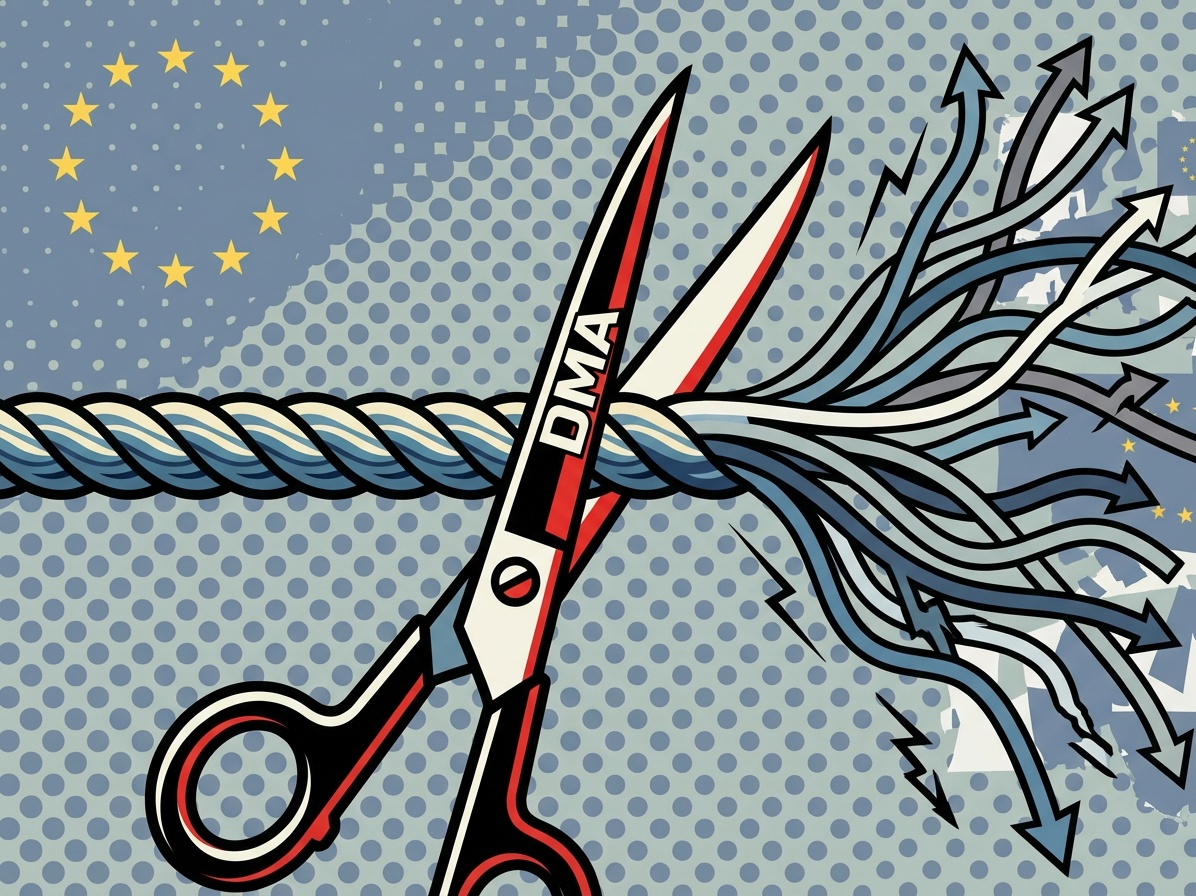
The European Union’s Digital Markets Act (DMA) doesn’t simply regulate competitors—it redesigns how digital merchandise work.
The DMA is usually framed as a pro-consumer reform—a vital intervention to “rein in gatekeepers” and restore equity and contestability in digital markets. That framing obscures a extra bold—and extra troubling—venture. At its core, the DMA empowers EU regulators to dictate the structure of the digital expertise itself.
The DMA displays a deep suspicion of integration. Companies that work seamlessly collectively—search and maps, maps and bookings, messaging and funds—as soon as stood as user-facing improvements. Regulators now deal with them as potential types of “self-preferencing,” and due to this fact as threats to competitors or, at minimal, to “equity.”
This strategy drives a transparent regulatory imaginative and prescient: digital providers should both interoperate with rivals on mandated phrases or stay artificially separate.
Markets don’t usually evolve this manner. However it’s how regulators design techniques.
When Seamlessness Turns into Suspicious
Contemplate a easy instance. A person searches for a restaurant on Google and sees a map, opinions, and an choice to ebook a desk. For shoppers, that integration is the purpose. It lowers transaction prices and streamlines the trail from discovery to motion. Below the DMA, nonetheless, the identical design dangers being labeled self-preferencing if Google favors its personal reserving software over rivals.
The implication is fragmentation. As a substitute of a seamless expertise, customers should transfer throughout a number of providers—search in a single place, maps in one other, bookings elsewhere. A once-integrated workflow turns into a patchwork of disconnected steps.
The DMA extends this logic throughout the digital ecosystem. Integration between search and maps turns into suspect. Preinstalled apps that perform nicely collectively seem probably exclusionary. A platform that builds complementary providers round its core providing dangers designation as a “gatekeeper” leveraging its place.
The DMA thus encodes a desire for modularity over integration. Not as a result of customers demand it—the success of the regulated platforms suggests the other—however as a result of regulators worry the aggressive and, more and more, the ethical implications of built-in ecosystems.
The Fantasy of Neutrality
This displays a deeper conceptual shift. Conventional competitors regulation asks whether or not conduct harms shoppers—by lowering output, elevating costs, or diminishing innovation. The DMA as an alternative asks whether or not platforms act with ample “neutrality” towards rivals.
However neutrality, on this context, is a mirage.
Digital platforms are usually not passive conduits. They’re merchandise—designed, curated, and repeatedly optimized. Demanding neutrality requires platforms to cease functioning as merchandise and as an alternative function as regulated utilities that host rivals on equal phrases. It treats Amazon.com like a nineteenth century railroad.
This logic applies even—particularly—when integration improves performance, lowers prices, or enhances the person expertise. Curation—the train of judgment, i.e., the absence of excellent neutrality—is the core characteristic of most digital platforms. Customers don’t need an alphabetical record of search outcomes on Google, nor do they wish to cycle via three separate apps to seek out, ebook, and get instructions to a restaurant.
EU regulators, nonetheless, focus much less on person preferences than on reshaping digital markets to mirror their most well-liked construction and normative imaginative and prescient.
Making Innovation Irrational
The implications are predictable. By limiting how platforms combine their very own providers, the DMA reduces the inducement to construct these providers within the first place. Why put money into a greater mapping software, funds system, or reserving characteristic if corporations can’t totally combine it right into a broader ecosystem?
Digital competitors coverage more and more embraces this sort of “leveling down.” Regulators limit profitable corporations’ capability to capitalize on their investments and require them to share performance or knowledge with rivals.
This marks a pointy break from the classical liberal view of competitors as a dynamic discovery course of—one during which corporations experiment, combine, and innovate underneath uncertainty. The DMA replaces that course of with a set of ex ante constraints designed to form outcomes prematurely.
However competitors just isn’t a static situation to engineer. It’s a messy, decentralized, and infrequently unpredictable course of. EU regulators have struggled to know that fundamental level.
The Phantasm of the ‘Appropriate’ Value
There’s additionally a extra sensible—and extra basic—drawback. The DMA’s imaginative and prescient of interoperability and neutrality calls for fixed oversight, technical standard-setting, and ongoing regulatory intervention. This isn’t a one-off repair; it’s a everlasting administrative venture. In observe, it locations the European Fee within the function of deciding which costs and pricing buildings are “right.”
Contemplate Apple’s App Retailer charges. If Apple reduces its fee from 30% to 27%, is that ample? What if it drops to 17% however expands the bottom of transactions topic to charges? What if it adopts a distinct pricing mannequin altogether—decrease headline charges paired with increased expenses elsewhere? Every strategy redistributes worth amongst builders, customers, and rivals.
Who decides which end result is true?
Markets as soon as answered these questions. That view now falls out of favor, dismissed as a relic of the “neoliberal period.” Dirigisme has returned. Regulators in Brussels now assume accountability for steering digital markets towards their most well-liked outcomes.
There is only one drawback: no impartial reply exists. Pricing buildings essentially contain tradeoffs. Some favor massive builders; others profit smaller corporations. Some ship short-term good points for shoppers; others assist long-term funding and innovation. The DMA successfully palms regulators the authority to resolve these tradeoffs.
In observe, the first beneficiaries are sometimes not shoppers, however rivals—notably those who acquire entry to platform assets or extra favorable phrases with out making comparable investments.
Again to Fundamentals—If We Can
None of this denies that digital markets increase actual competitors issues. However micromanaging product design or imposing a one-size-fits-all mannequin for a way providers should work together just isn’t the reply.
A extra coherent strategy would return to first ideas. Regulators ought to deal with demonstrable hurt, apply effects-based evaluation, and protect the incentives that drive innovation. Intervention within the enterprise fashions of personal, for-profit corporations ought to happen solely when precise hurt could be proven. That premise could seem unremarkable, nevertheless it has turn out to be contested.
This self-discipline issues most in fast-moving sectors, the place inflexible guidelines shortly turn out to be out of date, or counterproductive. The emergence of OpenAI and the fast rise of generative synthetic intelligence could render key features of the DMA outdated ahead of even its most fervent critics anticipated.
The Person Expertise, Regulated
The DMA displays a definite imaginative and prescient of the digital financial system—one which treats integration as suspect, scale as harmful, and success as one thing to constrain via ongoing regulation. In that framework, shoppers adapt to regulators’ conception of markets, not the opposite manner round.
That imaginative and prescient carries actual prices. By favoring fragmentation over integration and neutrality over performance, the DMA dangers degrading the person expertise that made digital providers invaluable within the first place.
In searching for to self-discipline how platforms compete, EU regulators more and more dictate how customers work together with expertise. The result’s a managed, fragmented, and fewer environment friendly digital atmosphere—designed not by markets, however by regulators.
That end result ought to give policymakers pause.
