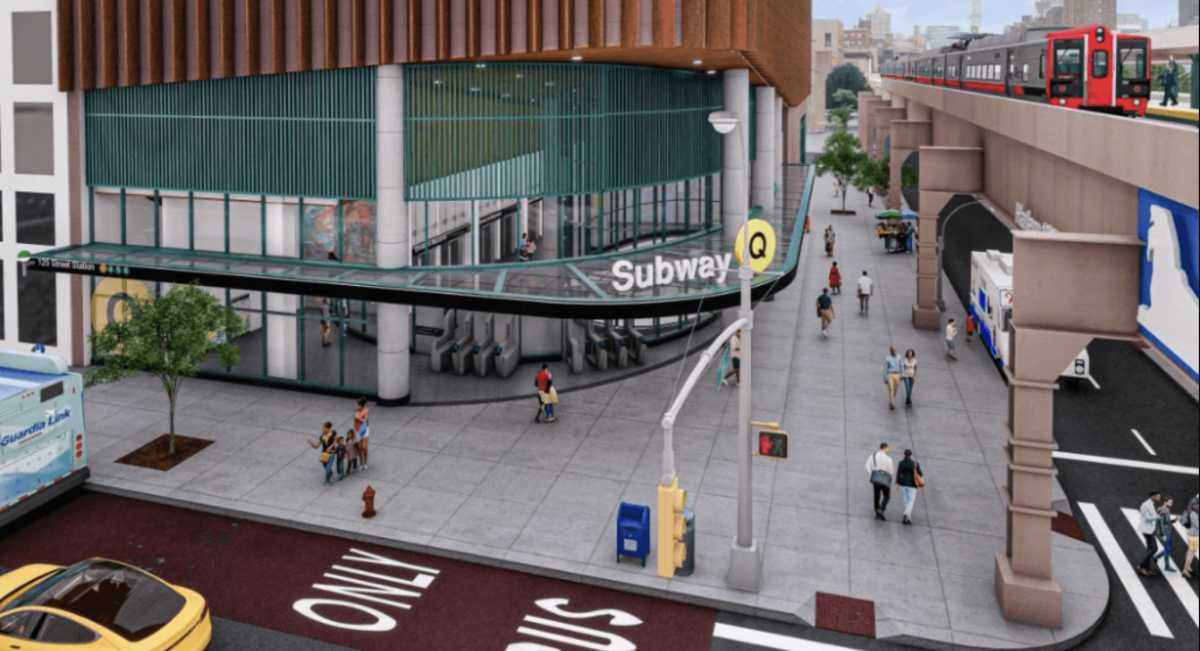
The Second Avenue Subway represents a promise nearly a century in the making. For generations, East Harlem has waited for the transit investment that much of New York takes for granted. Today, construction is finally underway, but imagine waiting your entire life for a promise to be kept, only to discover that keeping it could cost you your livelihood.
The very project intended to strengthen East Harlem threatens to erase many of the neighborhood businesses that have sustained it for decades. If the cost of finally delivering transit equity is forcing local entrepreneurs to close their doors before the first train ever arrives, New York will have solved one inequity by creating another.
Instead, transit equity and economic equity must go hand in hand.
The construction of Phase II has slammed East Harlem’s small businesses, many still recovering from COVID back into survival mode. We have seen this before; during Phase I, nearly half of affected businesses permanently closed. The lessons were clear: without adequate support for small businesses or real planning for community disruption, construction leaves lasting scars. Yet instead of learning from those mistakes, we are repeating them in a neighborhood with even fewer resources to weather the storm.
As the Council Member representing East Harlem and the Chair of the New York City Council Committee on Small Business, we walked the Second Avenue corridor to speak with the small business owners who are hurting right now. We saw the impact firsthand: one florist we visited said his business went from around $1000 in average daily sales to barely managing $10 some days – about 1% of pre-construction revenue.
Long-standing businesses are on the verge of total collapse, and there is far too little clarity about what will happen to those businesses being displaced by construction. Simply put, without intervention, they will not survive if assistance is not guaranteed.
That is why we have reached out to the MTA to explore pathways to economic restitution for our small businesses, such as an impact fund mirroring the one established by the Port Authority of New York and New Jersey for homes impacted by
the LaGuardia Airport redevelopment. That is why we cannot accept the argument that direct financial relief is simply “not feasible,” or that everything that can be done is already being done. When public infrastructure projects impose real financial costs on small businesses, government has a responsibility to find a way to share that burden.
This is not a new idea, nor is it a novel idea. Many similar funds exist for disaster mitigation and can be rapidly deployed in small business emergencies, as COVID displayed when millions of dollars were mobilized to save East Harlem small businesses from catastrophe. There is significant precedent in the United States for public transit authorities to set aside a very small portion of the gargantuan capital income they obtain on New Yorkers’ dime to mitigate the impact of their work on small businesses and local communities. Washington State Department of Transportation set aside a mitigation fund for small businesses impacted by a multi-billion dollar highway megaproject, the Maryland Department of Transportation has awarded $2.6 million in grants to small businesses impacted by DC’s Purple Line, and, most similar to NYC, the Los Angeles Metropolitan Transit Authority designates $10 million annually to a Business Interruption Fund that can provide up to $60,000 a year to “mom and pop” small businesses impacted by transit line expansion.
But we’re not alone in this suggestion. Back in 2009, the former NYC Public Advocate Betsy Gotbaum published a research report detailing how the MTA had failed small businesses during the Second Avenue Subway’s Phase 1 expansion, threatening the livelihoods of thousands of New Yorkers and causing significant displacement along the business corridor.
The first and most important recommendation from this report written 17 years ago? “Establish a Second Avenue Subway Construction Mitigation Fund to Provide Emergency Grants to Failing Businesses Located in the Construction Zone”.
This comes as New York enters a new era of major public infrastructure investment, from transit expansion to climate resiliency projects. The question is not whether we should build. We should. The question is whether we can build for New York’s future and rise to the demands of modern infrastructure projects without sacrificing the small businesses and communities that make this city worth investing in in the first place.
East Harlem has waited nearly 100 years for the Second Avenue Subway. It deserves transportation expansion. It also deserves to keep the small businesses that have made the neighborhood worth connecting in the first place.
