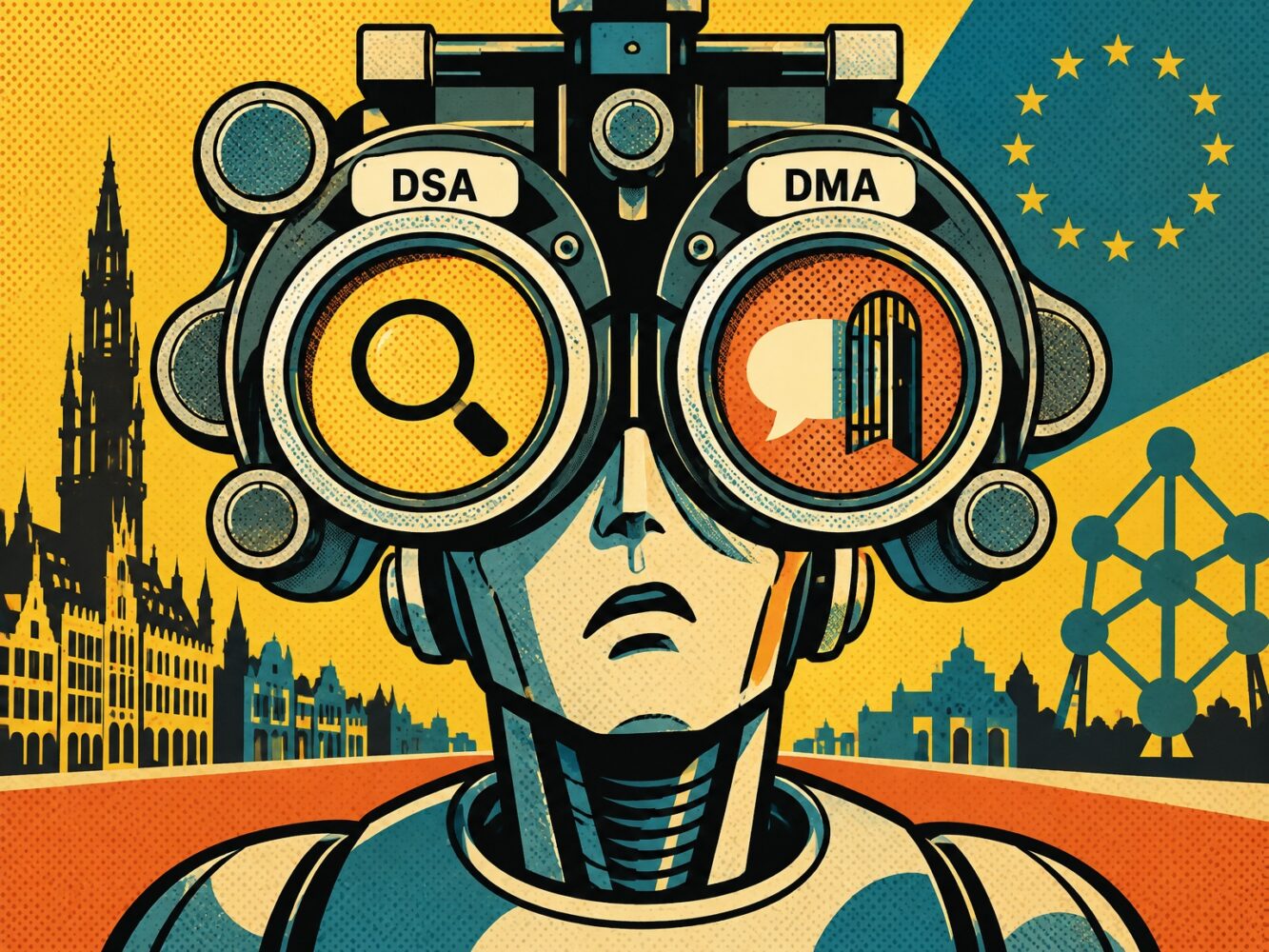
ChatGPT can draft a memo, plan a trip, and search the web. As of Aug. 31, it can add another line to its regulatory résumé: The European Commission has designated it a “very large online search engine” under the Digital Services Act (DSA).
The label may sound technical, but it captures a central problem for digital regulation: What happens when a service does too many things to fit neatly into any one legal category?
That question sits at the heart of today’s competition-policy debate over whether the wave of digital-market regulations adopted in recent years remains fit for purpose. The rise of artificial intelligence (AI), particularly AI-enabled applications, is already testing how well these frameworks can adapt to technologies their drafters did not anticipate.
The existing regimes face two related challenges. First, regulators must determine how to classify AI applications that become new gateways to digital services. Second, they must decide how to respond as new AI providers reshape competition and perhaps acquire gatekeeping power of their own. AI assistants and agents—tools that can perform multistep tasks on a user’s behalf—could upend familiar patterns of web browsing, online search, and e-commerce.
Of course, the competitive effects could cut in either direction. Incumbent platforms could integrate AI features in ways that shut out emerging providers. Alternative, new entrants could use those same technologies to challenge or even displace heretofore entrenched firms. Today’s disruptors, in other words, could become tomorrow’s gatekeepers.
Both possibilities expose the same basic problem: AI services do not fit neatly into the regulatory boxes that governments have built for digital markets. They increasingly behave like platforms, connecting users with other services and performing functions associated with search engines, online marketplaces, and virtual assistants. Yet frameworks organized around those predefined categories struggle to capture services that combine all three.
The DMA’s AI Holding Pattern
Against this backdrop, it’s notable that the European Commission chose a wait-and-see approach in its first review of the Digital Markets Act (DMA).
In its late-April report and accompanying staff working document, the Commission recognized that AI demands particular regulatory attention because it could become one of the most powerful general-purpose technologies. But AI remains at a relatively early stage, and its uses continue to evolve rapidly.
Given that uncertainty, the Commission declined to expand the DMA’s list of “core platform services”—the categories of important digital gateways the law covers. Instead, it indicated that it plans to monitor AI developments closely. The DMA would, of course, continue to apply when a gatekeeper integrates AI into an already designated core platform service. Moreover, a standalone AI service could fall within the law if it independently meets the criteria for designation.
The Commission added that it would examine, in particular, whether existing categories like virtual assistants already cover some AI services. It will also consider whether the DMA’s current mechanisms can adapt the obligations imposed on AI services as technology and market conditions evolve.
For now, then, the Commission’s official verdict is that the DMA can handle AI without an overhaul. It considers the existing framework adequate to address AI-related conduct by designated gatekeepers and the addition of AI features to core platform services.
The DSA Jumps the Queue
Against that backdrop, the Commission’s DSA designation for ChatGPT looks more than a little surprising. Under the DMA, the Commission counseled patience. Under the DSA, it acted.
To get there, the Commission focused on function rather than form. It did not attempt to classify ChatGPT in its entirety. Instead, it treated the service’s web-search feature as sufficient to bring ChatGPT within the DSA’s definition of an online search engine. The result is a hybrid classification for a hybrid service.
The distinction matters because the DSA and DMA together form the main pillars of the European Union’s digital rulebook. The DSA addresses platform accountability and systemic risks, while the DMA targets competition involving designated gatekeepers. Their aims differ, but their boundaries overlap.
That overlap has competitive consequences. The designation subjects ChatGPT to obligations that do not currently apply to rival AI providers such as Anthropic. It could therefore tilt the regulatory playing field. That is principally a competition concern—and thus more naturally the DMA’s business—but it arises from a decision under the DSA.
This mismatch raises two questions. Why bring an AI service promptly within the DSA while maintaining a wait-and-see approach under the DMA? And does the designation suggest that the Commission has reconsidered how to classify AI applications under the DMA?
The second question is particularly thorny because both laws define online search engines in identical terms. Yet during the DMA review, the Commission identified “virtual assistants,” rather than search engines, as the possible category for standalone AI services.
Meanwhile, a separate Commission action further deepens the uncertainty. In a July specification proceeding concerning Google’s obligation to share search data, the Commission concluded that AI chatbots with search functions could access data made available under Article 6(11) of the DMA. That position suggests the existing DMA framework can accommodate services that perform functions comparable to online search engines—at least when those services seek the law’s benefits, if not yet when regulators impose its obligations.
The Regulatory Sorting Hat
ChatGPT’s designation under the DSA exposes a basic problem with technology regulation: The rules age much faster than the technology. AI applications evolve quickly, combine functions once performed by separate services, and resist frameworks built around rigid categories.
Forcing these services into existing legal taxonomies may solve an immediate jurisdictional problem, but it can undermine regulatory coherence. It also invites “strategic designation”—choosing the legal category that brings a service within a particular regulator’s ambit. That risk grows when different agencies enforce overlapping regimes.
The Italian cases involving DeepSeek, Mistral, and Nova offer a concrete illustration of the problem, as the Italian Competition Authority and the Italian Communications Authority disagreed over how the services should be classified under the DSA.
The Communications Authority viewed AI agents as AI-powered search engines and, therefore, as providers of intermediary services under the DSA. That classification would place them under the authority’s supervision in its role as Italy’s Digital Services Coordinator. The Competition Authority rejected that interpretation. It concluded that an optional web-search feature, activated by the user, does not by itself turn an AI chatbot into an online search engine or intermediary service under the DSA.
Whether the DMA will follow the example set by ChatGPT’s designation under the DSA remains an open question. Europe’s harder task is to keep its rules coherent when AI refuses to stay in one box.
