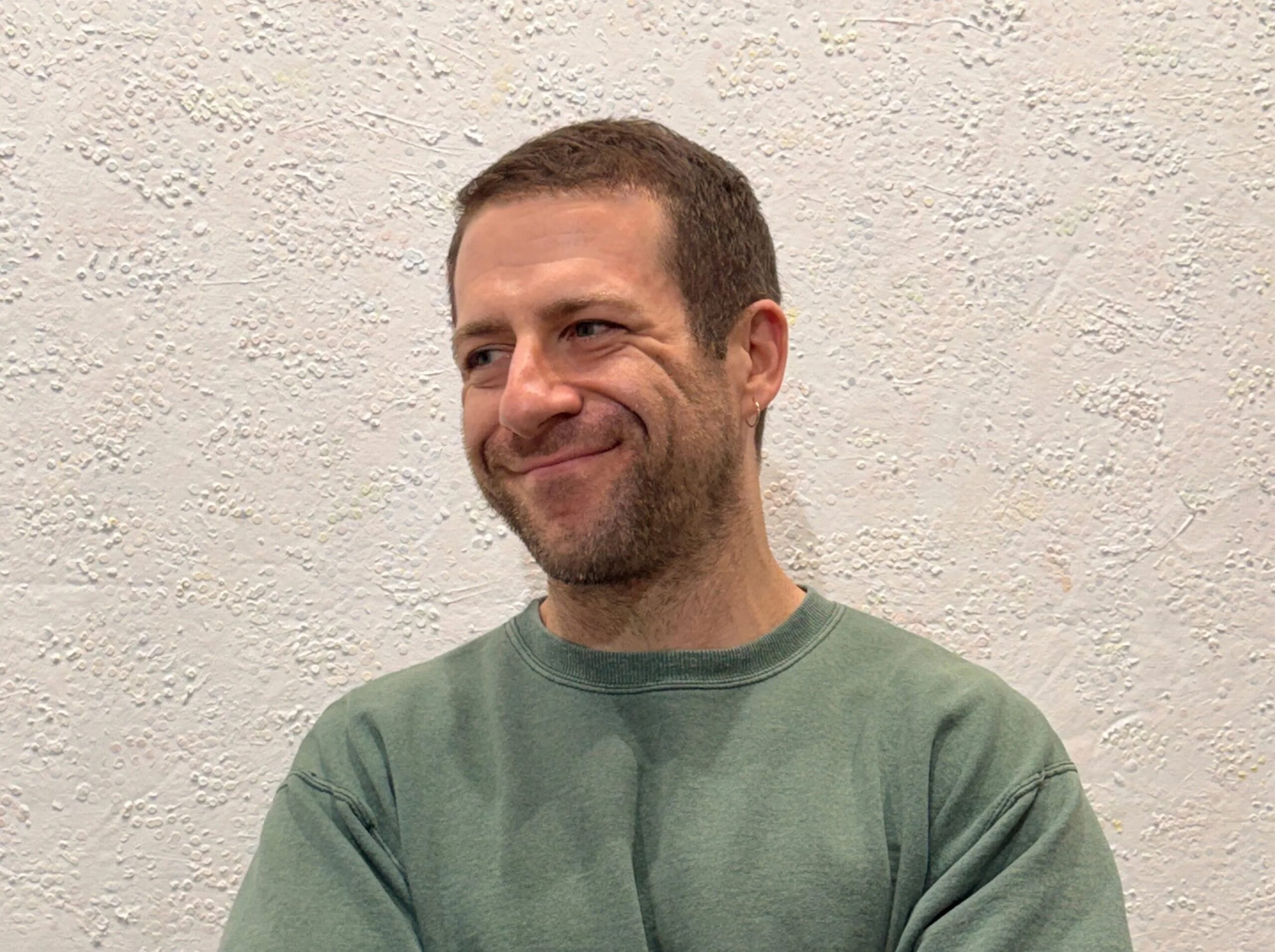
In 15 years, seller Garth Greenan has established a fame not by headline-grabbing hypothesis on ultra-contemporary market darlings or glamorous openings, however by quietly creating a strong program that has grown alongside artists whose careers have turn into institutionally validated. The gallery is now a daily presence at main worldwide festivals, and most of the artists on its roster—Jaune Fast-to-See Smith, Emmi Whitehorse, Rosalyn Drexler, Cannupa Hanska Luger and Howardena Pindell amongst them—are fixtures in museum exhibitions and biennials. Greenan’s technique has remained constant over greater than a decade: prioritize the standard and long-term worth of creative apply past passing tendencies and maintain it by cautious analysis, long-term relationships and a deep dedication to artists.
Later this yr, the gallery will relocate from its longtime Chelsea deal with to 10 Greene Road and 25 Greene Road in Soho. The brand new area in a landmarked, cast-iron façade constructing was designed by longtime gallery collaborator Stuart Basseches Architect along with Konstantinos Spiropoulos. Greenan is christening the three,575-square-foot area with a double exhibition of main solo exhibits by Rosalyn Drexler and Cannupa Hanska Luger.
Greenan didn’t got down to turn into an artwork seller. Although he had solely an undergraduate training and little formal coaching, he was captivated with artwork and drawn to researching in depth the artists he admired. “What has at all times me is being attentive to the issues folks aren’t being attentive to,” he tells Observer, including that he principally “educated as an artwork historian” whereas admitting that probably the most formal tutorial factor he did was an undergraduate thesis on American painter Morris Louis.

Greenan compares his strategy to strolling right into a file retailer—if everyone seems to be gathered across the similar album, he’ll wander in the other way. It’s an impulse that even saved him from listening to the Rolling Stones, whose recognition he says as soon as felt too overwhelming to strategy with curiosity. He has at all times been drawn to the margins—in artists, scenes and communities that haven’t but turn into the main focus of consensus consideration. “I’m nonetheless most keen on what folks aren’t however perhaps must be. It’s not about setting tendencies—it’s simply extra enjoyable to be a part of the smaller subculture of people who find themselves supporting that artist or that music earlier than everybody else catches up.”
His path to gallerist started after assembly his associate, seller Gary Snyder, whom he describes as “a stunning, beautiful man” prepared to take an opportunity on an unknown younger upstart and his unconventional concepts. Collectively, they determined to give attention to artists who have been already traditionally vital however neglected by the market. “I saved discovering these traditionally vital artists who have been hiding in plain sight, principally in New York, and collectively we began re-presenting them to the artwork world,” Greenan remembers.
Among the many early artists who joined this system have been Nicholas Krushenick, Ralph Humphrey, Howardena Pindell, Rosalyn Drexler and Paul Feeley—names firmly embedded within the evolution of postwar artwork, even when on the time they weren’t commanding a lot consideration within the industrial market. From day one, Greenan made it his mission to reintroduce these artists to establishments, collectors and curators who had neglected them regardless of their historic significance by reinserting them into the broader discourse. “It’s a bit like placing the flawed body on a incredible portray. If the body is flawed sufficient, it could actually stop you from seeing how sturdy the work really is,” he says. “The work is so singular and so good, however the way in which it was being offered, particularly within the early 2000s, usually meant simply slides or digging by obscure, out-of-print monographs or, at greatest, expansive group exhibitions the place its specificity was misplaced. It was onerous to essentially think about a physique of labor that approach. What these artists wanted wasn’t rediscovery a lot as re-presentation—presenting the work once more so folks might really see it clearly.”

His curiosity in such figures stems partly from rising up in Washington, D.C., the place he usually visited the Hirshhorn Museum and Sculpture Backyard. As a result of the museum’s core assortment mirrored the interval when Joseph Hirshhorn was actively accumulating, its galleries persistently featured mid-century artwork. There, Greenan encountered artists like Nicholas Krushenick, Helen Frankenthaler, Rosalyn Drexler and Morris Louis early on. Their names stayed with him, and even then he discovered himself drawn to artists who weren’t as a lot on the middle of latest conversations—significantly when it got here to the market—as he felt they need to have been.
Greenan opened his gallery in 2011, properly earlier than the broader market shift towards revisiting neglected historic artists. On the time, he says, only some sellers—together with Alexander Grey—have been critically pursuing that strategy. From the outset, Greenan understood that constructing a roster would require endurance and real human connections. “When Gary Snyder and I began speaking about this round 2009 and areas in early 2010, we instantly understood that it will have been a idiot’s errand to attempt to signal big-name artists. We had no area and no actual fame,” he says. As a substitute, he determined to give attention to what was achievable—what he describes as “sharpening the diamonds on the bottom.”
Lots of the artists he started working with got here by chilly calls and word-of-mouth introductions. One of many first abilities the gallery added was Nicholas Krushenick, an American summary painter, collagist and printmaker usually known as the “father of Pop abstraction,” who developed a distinctively vibrant creative language mixing Pop Artwork, Op Artwork, Minimalism and Colour Discipline portray. Greenan approached his property by what he describes as a “White Pages chilly name” to Julia Krushenick, the artist’s widow and longtime steward of his legacy. “Julia turned an expensive buddy and collaborator. She had carried out a profitable present with Marian Goodman earlier, however my pitch was that there wasn’t actually a long-term plan for the work.” Right here, Greenan factors out how this usually occurs when artists are rediscovered: there may be one massive blockbuster exhibition of the very best materials however no follow-through.
He understood early on that significant institutional and market appreciation solely develops over time, by sustained work constructing the proper situations and important context. “From the start, I wished to do the alternative and play the lengthy recreation,” he says. “I’ve at all times seemed on the complete artist and the complete physique of labor—that’s nonetheless how we strategy issues in the present day.”

At that time, Greenan was nonetheless in his early twenties, and he believes his enthusiasm for artists from the Nineteen Sixties and ’70s who had been thought-about not sufficiently “related” helped set up belief with households and estates. One introduction led to a different. Howardena Pindell turned the gallery’s first artist of shade, added in 2012 after one other chilly name prompted by a suggestion from Mara Loving of the Al Loving property. Greenan emphasizes that the choice was not strategic however rooted in his long-standing curiosity in post-minimalism: Pindell was a part of the small group of pioneering African American abstractionists, together with Al Loving, Sam Gilliam, Jack Whitten, and Frank Bowling. At this time Greenan shares Pindell’s illustration with White Dice, which, following a serious solo exhibition in Hong Kong final yr, gave her a main stage at Frieze London in October, pairing her cosmic abstractions of pointillist galaxies with the equally non secular and visionary work of Sara Flores and Marguerite Humeau. Rising institutional consideration over the previous years, culminating with the 2018 main survey “Howardena Pindell: What Stays to Be Seen” on the Museum of Up to date Artwork Chicago (which then toured to the Virginia Museum of Tremendous Arts and the Rose Artwork Museum), has anchored her rising market appreciation, along with her most up-to-date public sale file reaching $1.63 million at Sotheby’s New York in 2023.
Over time, Greenan started participating with Native American artists, turning into not solely one of many first galleries but in addition probably the most vital galleries stewarding and championing their work in up to date circuits whereas contextualizing it inside the broader historical past of latest American artwork. As broader market consideration started shifting towards artists of shade, he realized that Native American artists remained considerably underrepresented within the New York gallery system. However relatively than pursuing a class, he centered on particular person artists whose work he believed was of the best high quality.

The primary Indigenous artist to affix Greenan’s roster was Jaune Fast-to-See Smith, a pioneering Native American up to date artist whose politically charged abstractions and collages fuse the modernist visible language of each Pop Artwork and Summary Expressionism with Indigenous historical past, id and a critique of colonial narratives. For years largely neglected, her place inside American modernism has solely lately been totally acknowledged, with a sequence of museum exhibitions and acquisitions culminating in her main 2023 retrospective “Reminiscence Map” on the Whitney—the primary full retrospective of a Native American girl organized by the museum. At this time, her work are wanted by collectors and establishments alike, usually promoting within the five- to six-figure vary.
Greenan first encountered her work as an undergraduate by the scholarship of his professor Invoice Anthes, whose guide Native Moderns examined the connection between modernism and Native American artists, leaving an enduring imprint on how Greenan would later learn and current these artists’ practices. Jaune Fast-to-See Smith’s first exhibition at Garth Greenan Gallery, “Making Drugs,” opened in April 2018, that includes a few of her latest thickly impastoed mixed-media work, in addition to two of her bold canoe-frame sculptures.
Launched by one other Native American artist, Athena LaTocha, a former scholar of Pindell, Smith turned not solely a place to begin but in addition the one who persuaded and inspired Greenan that it was acceptable for him to signify Native American artists. “She usually stated, ‘Wherever I am going, I convey my group with me.’ So I began making calls once more, similar to in the beginning of the gallery,” Greenan remembers. “She launched me to a broader group and inspired me to pursue these relationships.” That ultimately led him to start working with artists akin to Emmi Whitehorse and Cannupa Hanska Luger, properly earlier than their inclusion in plenty of latest biennials all over the world.

At this time, Garth Greenan Gallery represents 25 artists, and he sees each that scale and the long-term dedication to these artists as important to his strategy to the gallery enterprise. Quite than treating illustration as a badge of status tied to a selected gallery, he believes probably the most significant relationships are these by which artists and galleries develop collectively over time: “The very best relationships are those the place the artist and the gallery develop collectively. Illustration shouldn’t be about attaching somebody’s title to a gallery’s fame—it must be a mutually supportive alternate the place each careers develop.”
After practically 20 years working in Chelsea, Greenan sees the transfer to Soho as a vital new section for the gallery. “I opened my first gallery in 2011 at 529 West twentieth Road, and earlier than that, I’d already been working in Chelsea since 2008. So I’ve principally spent virtually 20 years there,” he says. “For this subsequent chapter of the gallery, we want extra space and the brand new location will allow us to do extra bold programming—bigger works, set up, new media—and in addition enable us to point out two exhibitions without delay, ideally in dialogue with one another.”
Greenan believes the objective must be integration—putting artists in dialog throughout generations and backgrounds whereas letting the standard of the work lead the dialogue. These sorts of considerate juxtapositions, akin to these he lately staged at Artwork Basel Miami Seaside, can reveal formal and conceptual connections throughout artists who’re hardly ever thought-about collectively. “Lately, I’ve been experimenting extra with placing artists in dialog,” he explains. “After I confirmed Rosalyn Drexler subsequent to Fritz Scholder, it revealed how visually and conceptually they’ve a lot in frequent, though folks don’t normally take into consideration them collectively. The identical goes for Melissa Cody subsequent to Nicholas Krushenick, or early Paul Feeley subsequent to Emmi Whitehorse, or Alfred Jensen subsequent to Howardena Pindell. That’s what an built-in program seems like. You begin with the work, after which all the things else follows.”
Transferring ahead, Greenan merely needs to give attention to displaying nice work. “The artwork world has at all times been trend-driven, however recently it feels particularly centered on classes and id earlier than the work itself,” he says. “Identification politics was vital as a result of it made folks take note of artists who have been underrepresented, however now I feel the dialog has to maneuver again towards the work itself.”
Extra in Galleries
