The Federal Trade Commission’s (FTC) lawsuit against Southern Glazer’s Wine & Spirits looks increasingly like a case in search of both a theory—and the facts to support it.
In FTC v. Southern Glazer’s Wine & Spirits, the FTC alleges that the distributor violated the Robinson-Patman Act by offering better prices to some retailers than others, harming competition. The Robinson-Patman Act putatively aims to protect smaller businesses from discriminatory pricing. Southern Glazer’s responds that, after years of investigation, the FTC still cannot identify a single unlawful transaction.
Recent discovery disputes suggest the company may be right.
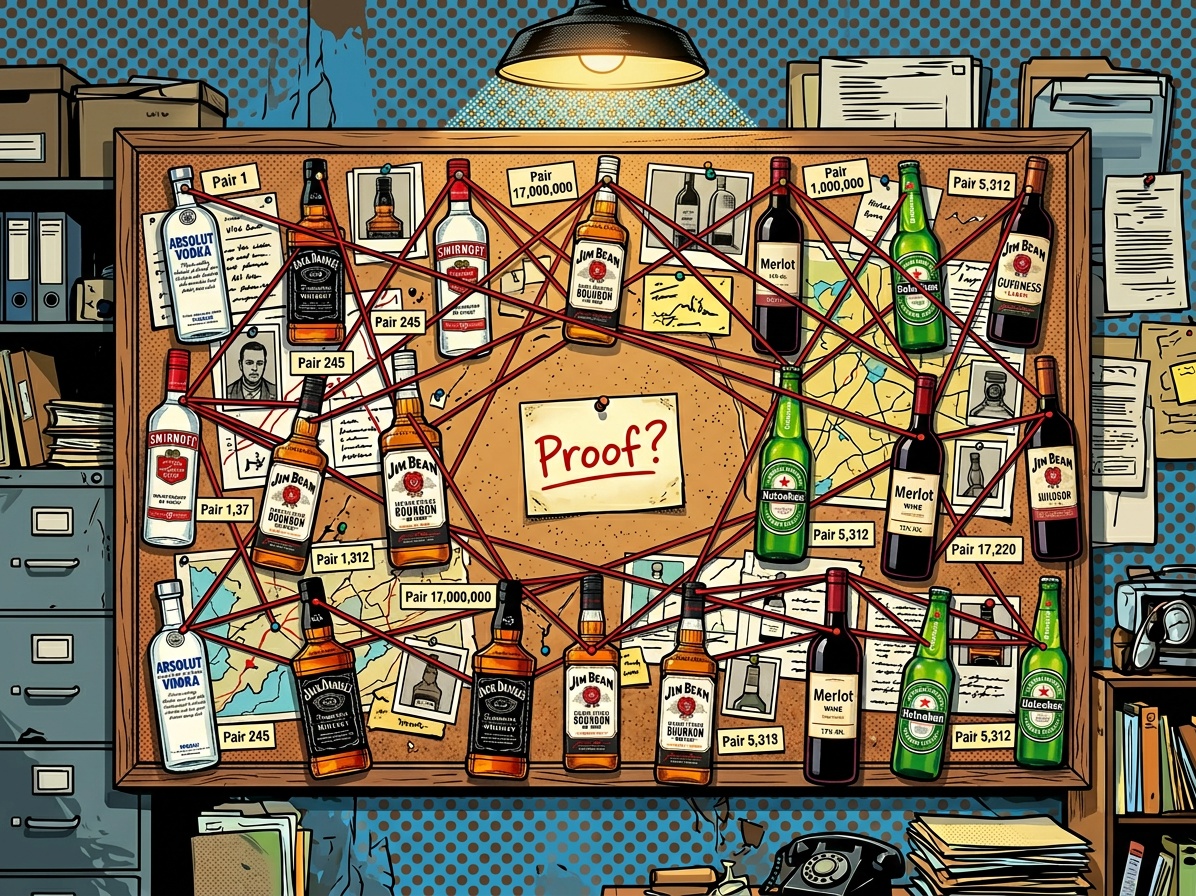
17 Million ‘Paired Transactions,’ Zero Clear Violations
The FTC’s case rests heavily on 17 million “paired transactions”—comparisons between prices offered to different customers. In theory, that approach could flag discriminatory pricing. In practice, the analysis appears detached from economic reality.
As part of a joint discovery stipulation, the FTC and Southern Glazer’s embedded Vimeo links to deposition testimony directly into the record, allowing the court to view exchanges in real time. The clips depict an agency unable—or unwilling—to answer basic questions about its theory of liability.
When asked whether the FTC could identify any specific diverted customer, an agency witness responded: “The FTC cannot identify any diverted customer. As of today, discovery is ongoing.”
Pressed on whether the FTC could identify a retailer that lost profits due to alleged price discrimination, the same witness admitted: “I can’t identify an instance of a retailer suffering… lost profits as a result of discriminatory conduct by Southern.”
This is more than an evidentiary gap; it is a chasm. The FTC’s answers suggest it lacks evidence to satisfy the core elements of a Robinson-Patman claim. Even after years of investigation, the agency cannot point to a single concrete example.
The deposition conduct only heightens the concern. As Southern Glazer’s filing explains:
FTC counsel’s interruptions included over 80 instructions not to answer, sometimes referencing the witness’s status as trial counsel. In total, counsel objected at least 160 times, often at such frequency and length that the witness forgot the question posed.
That pattern raises obvious questions about whether the agency is testing its case—or shielding it from scrutiny.
The FTC’s Mismatched Pairs
The FTC’s methodology presents a deeper problem. To identify allegedly unlawful price discrimination, the agency paired transactions between entities that do not compete.
One pairing compared a major supermarket chain with a restaurant and lounge. Another matched a wholesale retail giant with an airport hotel described during questioning as an “adult-themed fantasy hotel.” These businesses do not compete for the same customers in any meaningful sense. Big-box retailers offer a wide array of goods and services. “Adult-themed fantasy hotel” experiences are not among them.
Southern Glazer’s counsel captured the issue succinctly:
Is the FTC’s testimony under oath that a consumer deciding whether to buy alcohol thinks to themselves, “Gee, I’m really torn between the Publix supermarket or Truth Nightclub to pick up my bottle of vodka?”
The FTC objected to the question and declined to answer.
The Robinson-Patman Act does not prohibit price differences in the abstract. It applies when sellers discriminate between competing purchasers—businesses that actually compete for the same customers. Pairing entities with fundamentally different business models, customer bases, and purchasing contexts stretches that concept beyond recognition.
One might ask: Where, exactly, is the beef?
Despite relying on millions of data-driven pairings, the FTC has yet to explain whether those comparisons reflect real-world competition. The agency’s posture resembles another recent case. In litigation that invalidated the FTC’s new Hart-Scott-Rodino reporting form, the court observed that “although repeatedly asked, counsel for the FTC could not identify a single illegal merger in the forty-six-year history of the prior Form that the Final Rule’s new form would have prevented.”
When Discovery Becomes the Theory
The FTC appears to still be determining which transactions matter. As one witness explained, “Closer to trial, we will determine which transactions would be the focus of the trial.”
That approach inverts the purpose of discovery. Discovery tests defined allegations; it does not supply them. Even now, after years of investigation and litigation, the agency has not identified the core of its case. It cannot point to specific unlawful transactions, specific injured parties, or even defensible comparisons between competitors.
So what, exactly, is being enforced?
The FTC has framed its renewed Robinson-Patman enforcement as a return to protecting small businesses. The approach here suggests something else: an expansive enforcement model untethered from actual evidence.
Aggregating millions of “paired transactions”—some facially implausible—while deferring judgment on which violate the law invites overreach. That approach risks sweeping in standard competitive practices, such as bulk discounts and volume-based pricing, without evidence of harm to consumers or competition.
Antitrust enforcement works best when grounded in identifiable harm, coherent economic reasoning, and administrable limits. The record here raises serious questions on all three fronts.
These shortcomings lend weight to FTC Chairman Andrew Ferguson’s earlier dissent when the prior administration filed the case. As the litigation proceeds and the absence of evidence becomes harder to ignore, the FTC may need to revisit that assessment.