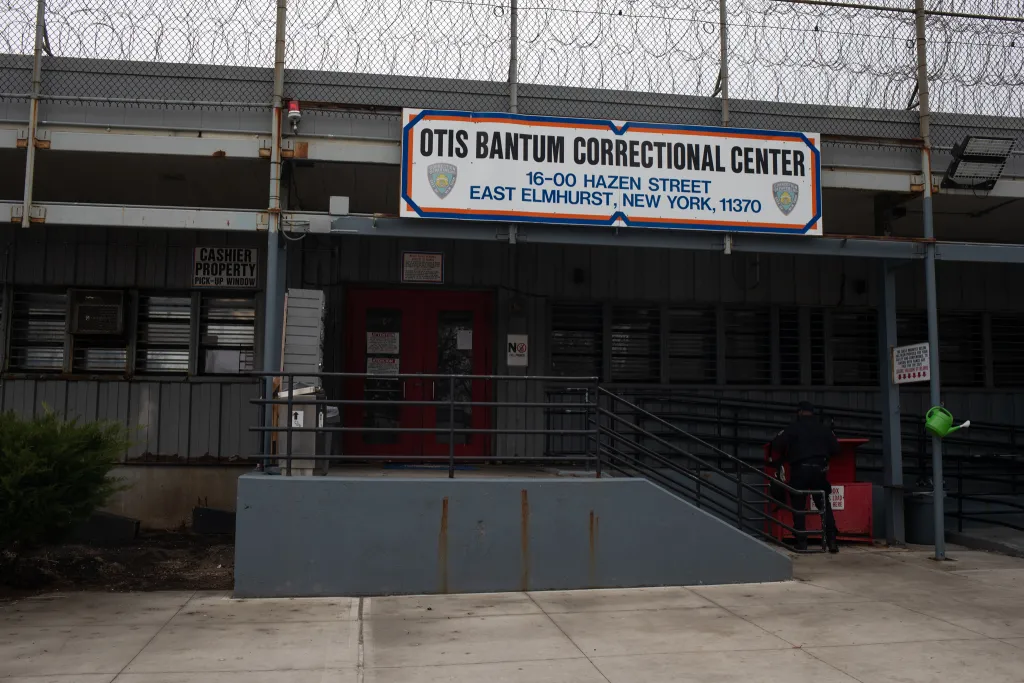
The city’s Department of Correction has blown past a new deadline to give Rikers Island detainees a digital platform to review evidence in their cases.
The access was mandated by the City Council last year which gave DOC nine months — until July 1 — to find a vendor and implement the evidence review system through tablets or another secure platform.
The legislation could have a game-changing impact for detainees at the scandal-scarred jail complex who are fighting criminal cases. About 85% of the nearly 6,500 people held on Rikers Island are awaiting trial and have not been convicted of a crime.
There’s no timeline in place to meet the new legal requirement. A jail source told The City Reporter that security concerns had slowed the project.
“It’s been a long time coming, but they just haven’t got it done yet,” said Zachary Katznelson, executive director of the Independent Rikers Commission, which advocates for the closure of the jail complex and wrote a report advocating for digital access.

The DOC has been working on it for at least two years and is in talks with a tech company called Lighting Law which provides similar evidence-access technology to other lockups around the country, according to multiple jail insiders.
In those locations, each detainee receives an individual account that they can use on their department issued tablet and via computers in law libraries. Their defense lawyers can upload the evidence — including large videos — onto the site.
The delayed implementation comes as a court-appointed remediation manager has ordered top jail officials to come up with a series of other reform plans over the next year after more than a decade of failed similar attempts led by Steve Martin, a federal monitor based in Texas.
MORE: ‘Bedlam’ as Rikers Island Can’t Keep Its Doors Locked
As for the evidence initiative, at stake is the ability for Rikers detainees to fully participate in their defense. Currently, Department Correction officials cannot provide detainees with an easy way to review electronic evidence.
“So to watch videotapes, to listen to phone calls, any of that is incredibly difficult, and sometimes virtually impossible,” Katznelson told The City Reporter. “And that means that people can’t prepare properly for their trials.”
Detainees can receive discovery materials by snail mail or review them by using drives accessible on law library computers located in each jail facility. They can also talk about the case with their lawyers by phone, video conference, or during in-person visits.
But they often struggle to get all the information they need to make informed decisions in court, according to criminal defense lawyers and jail reformers.
“Right now, people in custody face enormous barriers to defending themselves,” City Councilmember Jennifer Gutiérrez (D-Brooklyn), the lead sponsor of the bill, said last September as the bill passed in the Council.

“It is much harder, if not impossible, to meaningfully participate in your own defense simply due to a lack of access,” she added. “Technology has transformed nearly every part of our lives, including our courts and justice system, so it must transform in our jails as well.”
Patrick Rocchio, a DOC spokesperson, said the department is “actively working to finalize a contract for the required technology.”
“And we expect to have more to share on this soon,” he added.
Rocchio declined to detail who at the department was leading the negotiations and why it had dragged on so long.
A jail source familiar with the talks said the department has been worried about potential security lapses in which detainees are granted access to materials they’re not cleared to view. One hypothetical example involved a defendant facing child abuse charges receiving a video of the alleged misconduct. Only defense lawyers should have access to those manner of videos; they are not cleared to be shared online via the Lighting Law site.
MORE: Rikers Remediation Manager Unveils Blueprint for Overhauling City Jails
Lighting Law is already in place in approximately 15 other jails throughout the country.
But none are as large as Rikers.
The tech firm was started by Alisa Brodkowitz, an attorney who represents the families of plane crash victims. She got the idea to create an online access system as she struggled to share information with family members in Ethiopia and Kenya with loved ones who died in a crash of the Boeing 737 Max.
The new Council law did not include any penalty for a failure to implement the initiative.
But the ongoing delay could open the department to a potential class action lawsuit by detainees seeking better access to evidence.
The DOC has blown past several other legally mandated deadlines.
The department was obligated to issue a report by May 1 updating the public on its broad plan to close Rikers. The DOC also had recent deadlines for a report detailing ways it plans to reform the department, as well as one explaining how it uses powers to let some people serving a year or less out early.
“These are answers that New Yorkers are hungry for,” Katznelson said. “How are we going to have a system that actually keeps people safe? How are we going to have a system that actually is effective at improving public safety instead of hurting it?”
Our nonprofit newsroom relies on donations from readers to sustain our local reporting and keep it free for all New Yorkers. Donate to THE CITY today.
The post Rikers Misses Deadline to Give Detainees Digital Access to Case Evidence appeared first on The City Reporter.