
The Hechinger Report is creating a print edition, and wants young artists to contribute. Find out more here.
This spring, I spoke to a mom in suburban Washington, D.C., who was growing increasingly worried about a lack of filters on her kids’ school devices. During class this year, her kids watched Kendrick Lamar videos on YouTube, she told me. One came home knowing the words to a semaglutide commercial. Parents at the school shared concerns that their fourth graders regularly played a game called BitLife, a text-based life simulation game created in 2018.
She was one of more than 45 parents, educators and experts across the country for my recent story about the dangerous content and games children access on their school-issued devices,
From my reporting, I had already heard of — and tried out — other games elementary students are playing at schools around the country, one featuring Jeffrey Epstein and another where a “corpse-like grandmother” chases players with a bloody baseball bat. In comparison, BitLife’s premise sounded less disturbing than some others I had played, perhaps even relatively innocent. (Spoiler alert: It’s not.)
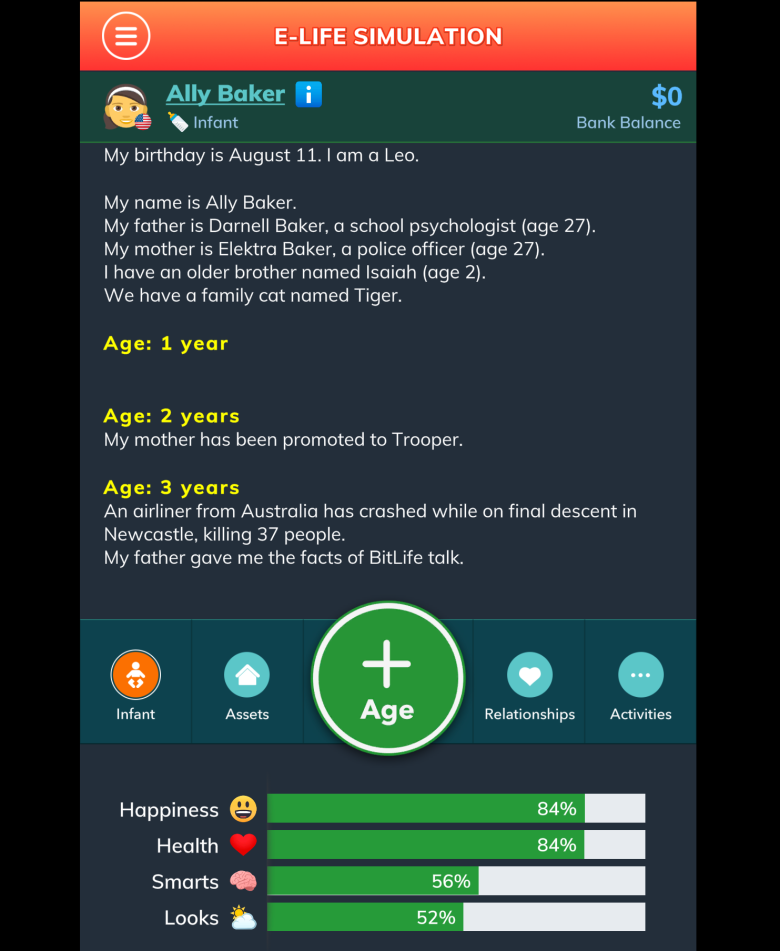
I started the game as “Ally Baker,” the daughter of a school psychologist and police officer. The game then presented me with random life scenarios and asked me to choose how to respond. When my character was 5 years old, a screen popped up that read, “You broke your parents’ sex toy while you were trying to understand what it was. What will you do?” (The options were to admit it or lie about it.) My character went on to be assaulted by her brother, diagnosed with depression and diagnosed with cervical cancer. (Between those events, I also failed my driver’s test.) Ally Baker died at age 21.
As disturbing as it is to think about elementary-age children playing this game, I learned while reporting my recent story that this is just the tip of the iceberg. While some districts have layers of blocks and filters, others have a piecemeal approach, with far fewer blocks. And even in some districts that try to block content, children are often able to outsmart the filters and access wildly inappropriate content. In fact, many game designers — and fellow students — are helping them do so.
When I first navigated to BitLife, for example, the website boasted about being able to circumvent blocks because it was using a proxy server: “BitLife is available to play unblocked right here on Bitlife.School. This means you can start a new life on your school Chromebook, library computer, or even at work during a break.” I found another website hosting the game that advised players they could “press CTRL+Q to hide your screen.” Doing so changed the screen to a page titled “Math Lesson Notes — Week 3 Overview” with notes about a fake math lesson. (Although the tab at the top still read “Bitlife.”) Questions sent to an email address on the Bitlife website were not answered as of Thursday morning.

I also came across a Google Doc with dozens of links to unblocked games. (Schools use, and do not block, Google Docs.) Not only are these websites well aware of schools trying to block games, some of them seem to be actively trying to enable students to keep playing, illustrating just one more of the many challenges schools are up against when it comes to young children and technology.
Read my story, published in partnership with Mind/Shift.
This story about games on schools devices was produced by The Hechinger Report, a nonprofit, independent news organization focused on inequality and innovation in education. Sign up for the Hechinger newsletter.
The post Many game sites evade school web filters appeared first on The Hechinger Report.
