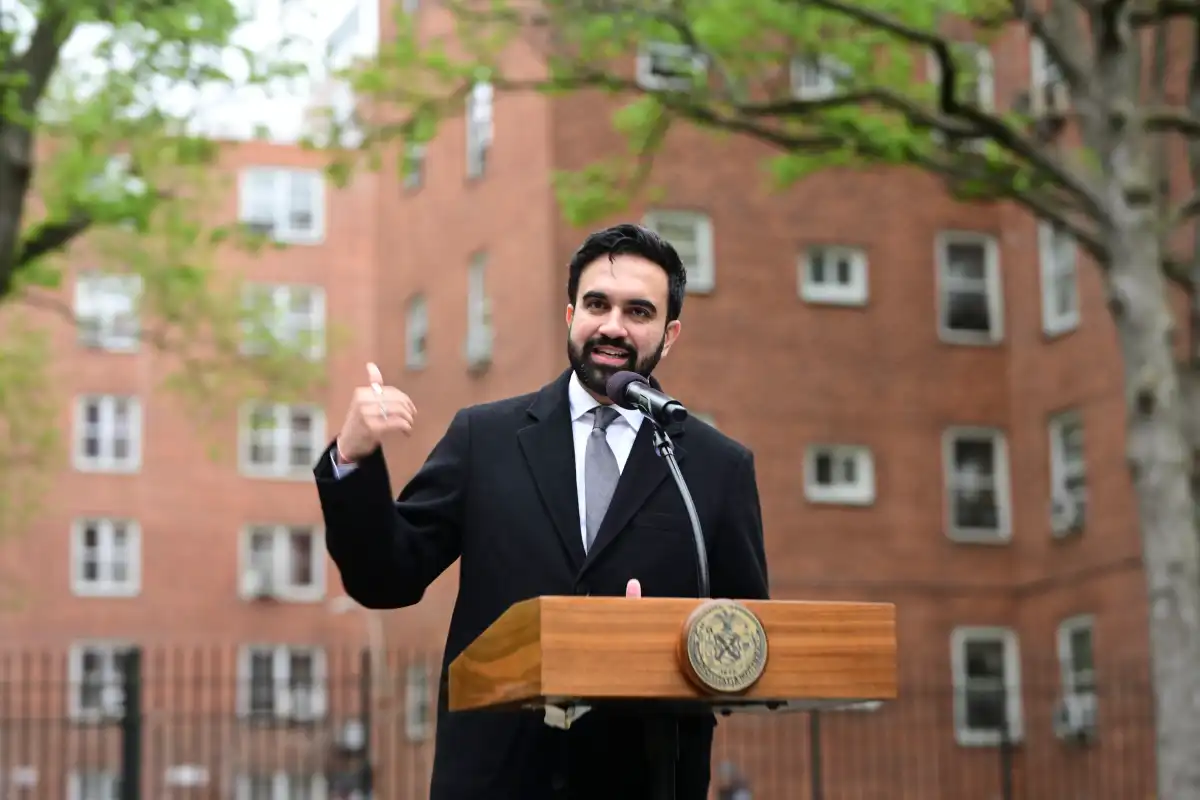
Mayor Zohran Mamdani believes that a $150 round-trip fare to get to and from MetLife Stadium for the 2026 FIFA World Cup will make the upcoming tournament “out of reach for many.”
Mamdani, who launched a “Game over Greed” campaign while running for mayor last year, calling on FIFA to reduce the prices of match tickets for the World Cup, was speaking after NJ Transit announced that it would charge $150 for a round-trip rail fare between New York’s Penn Station and MetLife Stadium, a journey that usually costs $12.90.
NJ Transit has also announced that round-trip shuttle bus services from Manhattan and New Jersey will cost $80 for all eight World Cup matches hosted at the East Rutherford venue, including the World Cup Final on July 19.
The transit agency made the announcement last week, noting a $48 million investment is needed to ramp up capacity for the tournament.
NJ Transit has capped rail capacity at 40,000 per game, with shuttle buses expected to bring another 10,000 fans to the 82,500-seat venue. Rail tickets will be available only to ticket holders and must be purchased in advance of games at the stadium, NJ Transit said last week.
Ridesharing is expected to play a major role in bringing fans to the stadium, with premium parking at the nearby American Dream shopping mall severely limited and priced at $225. NJ Transit will also shut down its section of Penn Station to non-ticket holders for four hours before every World Cup match at MetLife.
FIFA, meanwhile, has faced criticism for not contributing to the cost of operations or infrastructure, despite reports that it would generate $11 billion in revenue from the tournament.
Mamdani said Wednesday that the price of tickets, coupled with the cost of traveling to and from MetLife, is pricing fans out of the tournament.
“This World Cup is pricing out so many working-class supporters of the game,” Mamdani said. “Soccer, as a game, is born out of the working class. And when you’re looking at the ticket prices to attend the game. You’re looking at the cost of getting to the game. It is something that is out of reach for many.”
The mayor added that he understood the stance of both NJ Transit and New Jersey Gov. Mikie Sherrill in light of FIFA’s projected $11 billion in revenue. Mamdani added that he is “hopeful” that both New York and New Jersey can make the tournament a “more affordable experience” for fans.
“They (NJ Transit and NJ electeds) are reckoning with the fact that a lot of the cost is placed upon them,” Mamdani said. “And all of this while FIFA is anticipated to have about $11 billion in revenue over the course of this tournament.”
Sherrill had frequently stated that she would not pass the cost of the infrastructure upgrade onto New Jersey taxpayers.
Sherrill, who entered office earlier in 2026, also criticized FIFA for not contributing toward World Cup operational or infrastructure costs despite reports that it would generate an estimated $11 billion in revenue from the upcoming tournament. Sherrill said she “inherited” an agreement that would see New Jersey shoulder the operational costs of hosting the tournament.
FIFA, on the other hand, said it was “surprised” by the decision to hike transit fares for the tournament, noting that World Cup host city agreements signed in 2018 required free transportation for fans to all matches. FIFA then adjusted that agreement in 2023 so that host cities could deliver transportation “at cost” to match-going fans, a spokesperson told multiple publications last week.
Heimo Schirgi, chief operating officer for the 2026 World Cup, alleged that the pricing structure would have a “chilling effect.” Schirgi further described the move as “unprecedented” and accused NJ Transit of “arbitrarily” setting elevated prices.
“Elevated fares inevitably push fans toward alternative transportation options. This increases concerns of congestion, late arrivals, and creates broader ripple effects that ultimately diminish the economic benefit and lasting legacy the entire region stands to gain from hosting the World Cup,” Schirgi said in a statement to amNewYork last week.
FIFA also pointed to several host cities that have not raised transportation costs for the tournament, including Houston, which is charging $1.25 one-way fares for World Cup transportation. In the past week, Philadelphia announced that it will provide free transit for fans after all six games at Lincoln Financial Field, while charging regular fares for travel to the stadium.
But soccer’s governing body has faced consistent criticism over the cost of match tickets at the upcoming tournament, not least from Mamdani himself.
While running for mayor last year, Mamdani accused FIFA of implementing “predatory ticketing prices” that would price locals out of going to games at the tournament. He also called on FIFA to ditch dynamic pricing and set a price cap on resale tickets.
Tickets for the upcoming tournament are the most expensive in World Cup history, with Category 1 tickets for the final now topping $10,000. The same ticket was listed at $6,370 when FIFA first launched ticket sales last October.
Resale prices for the group-stage match between Brazil and Morocco, the most sought-after game at MetLife Stadium, have topped $1,000, while resale prices for England vs. Panama have also reached $1,000.
In December, Football Supporters Europe (FSE) estimated that it would cost an individual over $8,000 to follow their country all the way to the World Cup Final if they were able to secure the cheapest ticket at every stage of the Tournament.
FIFA has consistently defended its ticket pricing strategy, stating the practice reflects the reality of high-profile events in North America and the “extraordinary” demand for the World Cup.
For more on the World Cup, visit AMNY.com
