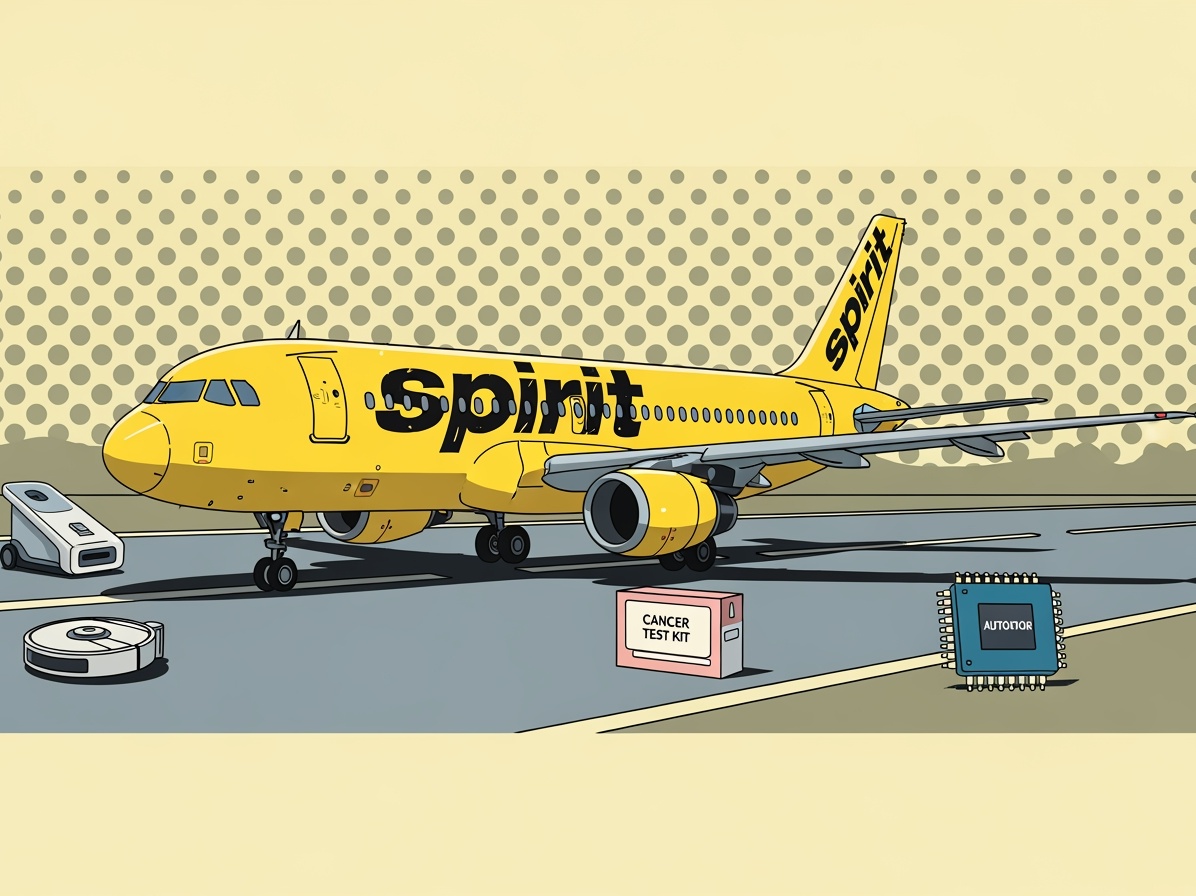
Spirit Airlines was supposed to be the “maverick” antitrust saved from JetBlue. Instead, the deal died, Spirit followed it into bankruptcy, and the maverick exited the market altogether. That is an awkward result for a merger challenge brought in the name of preserving competition—and a useful place to start a broader reconsideration of error costs.
A growing share of scholars, advocates, and policymakers now rejects much of conventional antitrust doctrine and method. They argue that this framework enabled the rise of purported digital monopolies in platform markets and contributed to a broader, purported decline in competition.
Among the favorite targets is the “error-cost” principle: the view that the costs of antitrust overenforcement typically exceed the costs of underenforcement, in part because market forces tend, over time, to compete away inefficient practices. If that proposition is correct, regulators and courts should hesitate before condemning business practices as antitrust violations without compelling evidence of anticompetitive harm. Much of federal antitrust case law reflects this prudential approach.
Critics of the error-cost principle have offered little by way of hard numbers to show the competitive harms supposedly caused by caution in antitrust enforcement and adjudication. Nor have they seriously grappled with the countervailing costs of overenforcement. Even so, competition agencies in the United States, European Union, and United Kingdom have made significant interventions and pursued far-reaching remedies on this theory, brushing aside concerns about false diagnoses of anticompetitive maladies.
In the antitrust equivalent of Silicon Valley’s “move fast and break things,” agencies have been especially eager to block mergers based on inherently conjectural theories of potential future harm. Debates over whether such challenges are premature rarely yield clear answers at the time, precisely because they require crystal-ball predictions about future market trajectories. But now that critics of conventional antitrust have led several major competition agencies around the world, we have some accumulated evidence to inform the policy debate.
That evidence casts doubt on the merger-review strategy of “challenge first, ask questions later,” and on the assumption that false-positive error costs can be ignored or heavily discounted. It now appears that several recent merger challenges by U.S., EU, and U.K. regulators destroyed significant economic value—often accompanied by substantial losses in employment and related business activity—without any clear improvement in competitive conditions. In at least one case, those conditions worsened.
JetBlue-Spirit: The Maverick That Got Grounded
Let’s start with Spirit Airlines’ recent shutdown, which came just a few years after JetBlue’s failed 2022 attempt to acquire the low-cost carrier. The U.S. Justice Department (DOJ) and seven states challenged the transaction in court, arguing that it would eliminate a “maverick” carrier that disciplined pricing by larger airlines.
Concentration metrics offered only limited support for that theory. As the district court observed, Spirit accounted for about 4% of the U.S. passenger-airline market, and the combined firm would have represented only about 10%. That was far smaller than the market shares held by each of the four largest airlines—United, American, Delta, and Southwest—which together accounted for about 80% of the domestic market. The JetBlue-Spirit combination would, however, have produced high concentration levels on certain routes, particularly those connecting some Northeast cities with destinations in Florida and the Caribbean.
JetBlue argued that the combined entity would still face pricing pressure from the four largest airlines, as well as from smaller carriers such as Alaska and Frontier, in relevant geographic markets. It also argued that, for a smaller low-cost airline like Spirit, which tended to operate on thin margins, consolidation into a larger entity could provide the scale needed to improve economic viability and operational continuity for consumers. At the same time, acquiring Spirit would enable JetBlue to compete more vigorously against the legacy carriers.
To address concerns about competition on routes with high overlap between acquirer and target, JetBlue committed in the acquisition agreement to divest assets—slots and routes—to secure regulatory approval, “up to a material adverse effect” on the combined airline. As the district court acknowledged, JetBlue also agreed to asset divestitures in the Boston, New York, and Fort Lauderdale markets and, at the time of the litigation, had entered into divestiture agreements with several low-cost airlines.
Despite these concessions, the district court insisted that the merger would do “violence to the core principle of antitrust law to protect the United States’ markets . . . from anticompetitive harm.” Recent developments suggest the decision helped produce something closer to the opposite result.
Several economic factors contributed to Spirit’s demise. But its complete exit from the market raises serious questions about whether the DOJ’s challenge and the court’s decision harmed the very consumers antitrust law is supposed to protect. Blocking the JetBlue acquisition most likely contributed, at least in some measure, to Spirit’s inability to weather volatility in the air-travel market. The result was value destruction for shareholders, lost jobs for Spirit’s workers—about 15,000 layoffs at the time of the airline’s shutdown—and lost business for the airline’s contractors and suppliers.
In the JetBlue acquisition, Spirit shareholders would have received $3.8 billion in consideration. Today, Spirit shares are largely worthless, as the company enters bankruptcy. It is impossible to know precisely how much blocking the merger contributed to Spirit’s demise. But the realized outcome is plainly worse for consumers than the alternative remedy on the table: a merger with asset divestitures to competitors.
That targeted intervention would have produced a combined entity better positioned to harness the scale efficiencies and financial stability of a larger carrier, while using divestitures to mitigate potential competitive harms on specific routes.
Illumina-Grail: The Cancer-Test Merger Regulators Diagnosed Too Early
Let’s turn to Illumina/Grail, which involved Illumina’s reacquisition of Grail, an emerging firm it had spun out a few years earlier. Illumina is the world’s leading producer of DNA-sequencing equipment.
Grail had developed a pioneering multicancer early detection, or MCED, test with the potential to save lives by identifying cancers earlier, enabling earlier treatment and improving the odds of success. After the approximately $8 billion deal was announced in September 2020, regulators in the United States and European Union challenged the transaction. Their theory was that Illumina, as the leading DNA-sequencing platform, would have incentives to foreclose access to that platform for Grail’s competitors in the nascent MCED-test market.
Keep in mind: Grail’s MCED test was not yet commercially available, and the MCED-test market was still in its earliest stages.
Illumina sought to allay regulators’ concerns about the acquisition’s effect on this emerging market. First, Illumina argued that it would have no incentive to foreclose other MCED-test providers, because doing so would likely produce revenue losses exceeding any prospective gains from excluding rival test developers. Second, Illumina publicly issued a binding “open offer” to maintain access for all other test providers on fair, reasonable, and nondiscriminatory terms for 12 years.
As I have shown elsewhere, platform providers often make this type of commitment voluntarily to encourage adoption of new technology—such as MCED tests—and to seed the market by assuring users that access will remain available on comparable terms going forward.
The agencies were unconvinced. In September 2022, the Federal Trade Commission (FTC) lost its challenge before an administrative law judge. The commission reversed that decision, and Illumina appealed to federal court.
In the EU, the European Commission accepted “referrals” from national competition authorities to review the transaction, even though Grail had no EU revenue and the deal therefore did not meet EU or national reporting thresholds. When challenged in court, the commission’s assertion of jurisdiction was initially upheld. On appeal, the European Court of Justice annulled it in September 2024.
By then, Illumina had already elected to terminate the transaction and divest Grail. The company faced the Commission’s decision to block the deal and impose a €432 million gun-jumping fine for closing the acquisition before securing EU merger approval, ongoing FTC litigation, and intense shareholder pressure amid mounting regulatory costs and delays. In June 2024, Grail was divested as an independent public company.
This two-front international regulatory challenge coincided with a precipitous decline in Illumina’s stock price. Illumina’s stock fell by approximately 52% between the deal’s announcement on Sept. 21, 2020, and its termination on Dec. 17, 2023, using the closing price on Dec. 18, 2023. That compares with an approximately 11% gain in the iShares U.S. Medical Device ETF (IHI) over the same period.
This is not to say regulatory challenges were mostly responsible for this exceptional decline in Illumina shareholder value. But they likely accounted for some material part of it, especially given Illumina’s dramatic underperformance relative to the broader medical-device and equipment sector.
In retrospect—which admittedly benefits from hindsight—the regulators’ foreclosure theory has lost even more force. During the Illumina/Grail litigation, the FTC asserted that Illumina controlled approximately 90% of the global market for high-throughput next-generation DNA-sequencing systems, leaving MCED-test developers with no comparable sequencing platform as a viable alternative.
That market share was critical to the agencies’ theory that Illumina would have an incentive to forfeit sequencing-platform revenue by excluding MCED-test developers, thereby capturing supracompetitive gains from Grail’s product. Today, Illumina faces increasing competition across segments of the next-generation DNA-sequencing market from BGI/MGI, Thermo Fisher, PacBio, Oxford Nanopore, Element Biosciences, and others.
At the same time, Grail faces growing competition from multiple MCED tests, although none—including Grail—have yet secured Food and Drug Administration (FDA) approval. For 2025, Grail reported revenue of $147 million and a net loss of $408 million—hardly the stuff of a dominant provider.
None of this could have been known with certainty at the time of the Illumina/Grail transaction. But the FTC specifically dismissed the possibility that new competitors to Illumina’s platform would emerge, stating that Illumina had failed to show that “new entry of an MCED test that does not rely on Illumina’s [] platform would be timely, likely, or sufficient to offset the anticompetitive effects” of the acquisition.
Subsequent developments suggest the FTC understated both the pace of technological change in the sequencing-platform market and the pace of adoption and clinical success in the testing market. About five years after the FTC challenged the Illumina/Grail deal, adoption of MCED tests has proceeded more slowly than expected, reflecting in part continued uncertainty about their clinical utility. Given the market’s uncertain trajectory, any sequencing platform would seem to have little incentive to limit access for MCED-test developers.
The Illumina/Grail litigation and its aftermath suggest that regulatory caution is especially warranted when a market remains in its infancy. That is precisely the opposite of the view now fashionable among some regulators, who seek to act preemptively as a kind of social planner steering the market’s future course.
At a minimum, this still-developing market does not appear to present the level of anticompetitive risk needed to justify the investment of significant taxpayer resources by two major competition agencies—especially in exchange for little, if any, apparent improvement in competitive conditions.
Amazon-iRobot: Antitrust Vacuums Up the Roomba Deal
In August 2022, Amazon announced an agreement to acquire iRobot, producer of the Roomba robotic vacuum and a pioneer in the home-robotics market, for approximately $1.7 billion. The transaction drew scrutiny from the FTC, the European Commission, and the UK Competition and Markets Authority (CMA).
Regulators relied on a foreclosure theory of anticompetitive harm. They focused on Amazon’s purported incentive to favor Roomba after the acquisition and disadvantage rival robot-vacuum manufacturers on Amazon’s platform. In broad strokes, the concern was that Amazon could leverage its position in online marketplace services to restrict competition in the vertical market for robot vacuums, hampering rival suppliers’ ability to compete on a level playing field.
That theory depended on two key assumptions: first, that Amazon could charge supracompetitive prices for Roomba; and second, that the additional revenue from Roomba sales would exceed the losses from depressing sales of rival robot-vacuum products.
Both assumptions were hard to square with the competitive reality of the robot-vacuum market, even at the time of the proposed acquisition. The market included multiple competitors, including larger and more established firms such as Dyson, SharkNinja, and Ecovacs, as well as lower-cost entrants. Those firms also had several channels to reach consumers, including direct-to-consumer websites, other online marketplaces such as Walmart, big-box retailers such as Best Buy, Target, and Costco, and brand-owned stores and showrooms.
Given those alternative distribution channels, and consumers’ resulting ability to vote with their feet—or their digital equivalent—Amazon likely had limited ability or incentive to disadvantage rivals. It would more likely do best by maximizing sales of robot vacuums across the market. Regulators also seemed to place little weight on the efficiencies that could come from integrating iRobot into Amazon’s product-development and distribution infrastructure, especially given iRobot’s precarious financial condition at the time of the acquisition.
The CMA eventually withdrew its objections. The FTC and European Commission persisted, and in January 2024, Amazon abandoned the transaction in light of regulatory scrutiny.
Here, the evidence more clearly indicates that regulators’ challenge played a significant role in iRobot’s post-termination financial decline. Immediately after the acquisition fell apart, iRobot laid off about one-third of its workforce. In the ensuing months, it continued to face serious financial distress—due in part to the very competition the agencies had downplayed.
The company filed for bankruptcy in December 2025, wiping out shareholders’ investment. iRobot was then acquired by a China-based manufacturer in January 2026, raising concerns about the security of users’ home-mapping data.
Qualcomm-Autotalks: Regulators Pump the Brakes on V2X
Let’s end the review with Qualcomm’s proposed acquisition of Autotalks. Qualcomm is a leading chip developer focused on the mobile-communications device market. Autotalks is a fabless semiconductor startup that designs pioneering vehicle-to-everything, or V2X, chipsets for the automotive market.
The technology is compatible with both leading V2X standards and enables cars to communicate with other vehicles, road infrastructure, pedestrians, and wireless networks. That, in turn, can improve road safety and support advanced driver-assistance and autonomous-driving systems. The acquisition appears to have been part of Qualcomm’s strategy to expand beyond telecommunications and deploy its connectivity solutions in the automotive sector. For Autotalks, it was a mechanism to realize the value on the innovative technology that its founders and employees had been developing since 2008—a classic startup story.
Qualcomm announced the proposed acquisition in May 2023. The deal would have paid $350 million to $400 million to Autotalks’ founders, employees, and investors. Despite that relatively small deal value, the transaction attracted close scrutiny from the FTC, European Commission, and CMA. The agencies expressed concern that Qualcomm’s acquisition of a leading independent supplier of V2X chips could help it secure a dominant position in the automotive-connectivity market.
As in the other merger challenges, regulators seemed to give little weight to the synergies that could come from combining a small startup’s innovation with a larger company’s scale economies, infrastructure, and institutional expertise. As I have documented elsewhere, significant evidence shows that platform-startup acquisitions—a regular feature of healthy tech ecosystems—typically accelerate diffusion of the target’s technology through new products and services for businesses and consumers.
Here, the transaction likely would have promoted the build-out of connectivity solutions for assisted-driving and self-driving technologies, while encouraging adoption by original-equipment manufacturers and Tier 1 suppliers and broader market growth.
Regulators’ opposition to the Qualcomm-Autotalks acquisition rested on the implied premise that Autotalks could efficiently develop and diffuse its technology as an independent firm. Yet Autotalks had been attempting to do just that for about a decade since its first “design win” in 2016. If the premise was unfounded, the merger challenge risked suppressing the startup’s technology or slowing market adoption—the sort of cure that leaves the patient wondering why they came in.
Qualcomm terminated the deal in March 2024 amid regulatory scrutiny. It ultimately completed the acquisition in June 2025 at a substantially reduced price—reportedly less than $100 million—and under terms that rendered the startup employees’ stock options worthless.
That steep decline in consideration implies a more than two-thirds reduction in deal value relative to the original transaction. The reduced valuation suggests Autotalks continued to struggle to deploy the technology independently after the initial deal was withdrawn. It also likely reflects the company’s limited exit options under the cloud of regulatory scrutiny.
The transaction eventually closed. But the regulatory delay may have slowed deployment of V2X technology in the automotive market and effectively shifted economic value from a startup to the larger acquirer.
When Error Costs Come Due
A significant share of antitrust scholars, advocates, and policymakers now argues that the error-cost principle—specifically, its emphasis on avoiding overenforcement relative to underenforcement—helped produce purported increases in concentration and entrenchment in tech and other markets. They would therefore discard it.
The practical result is a green light for regulators to act with little concern for the costs of getting it wrong, reinforced by a policy audience that sometimes seems to welcome intervention—especially against the largest firms—for its own sake.
Even without the benefit of hindsight, the transactions discussed here rested on tenuous factual grounds for inferring a material competitive threat. In two cases—JetBlue-Spirit and Illumina/Grail—regulators rejected significant concessions from acquirers that likely would have preserved the transactions’ efficiencies while safeguarding against anticompetitive side effects.
This rush to intervene reflects too little attention to the error costs of unwarranted action, especially in cases involving nascent markets, as in Illumina/Grail; financially precarious targets, as in Amazon-iRobot and, to a lesser extent, JetBlue-Spirit; or small acquisitions, as in Qualcomm-Autotalks. Those costs seem to have been overlooked by regulators as they challenged transactions based on largely conjectural theories of anticompetitive harm.
The interventions discussed here did little to enhance competition. In JetBlue-Spirit, intervention likely reduced it. They also contributed to significant losses in shareholder value and employment, reduced startup valuations, and delayed technological deployment.
Some scholars, advocates, and policymakers may place little weight on the costs of erroneous intervention. These merger challenges show why that confidence is misplaced. Error costs are not an abstraction; they are borne by the consumers, entrepreneurs, and workers that regulators purport to protect.