Putting on a 2026 Thanksgiving feast is significantly tougher on the wallet than in years past, and immigrant-rights advocates and agriculture groups blame part of the increase on President Donald Trump’s immigration crackdown.
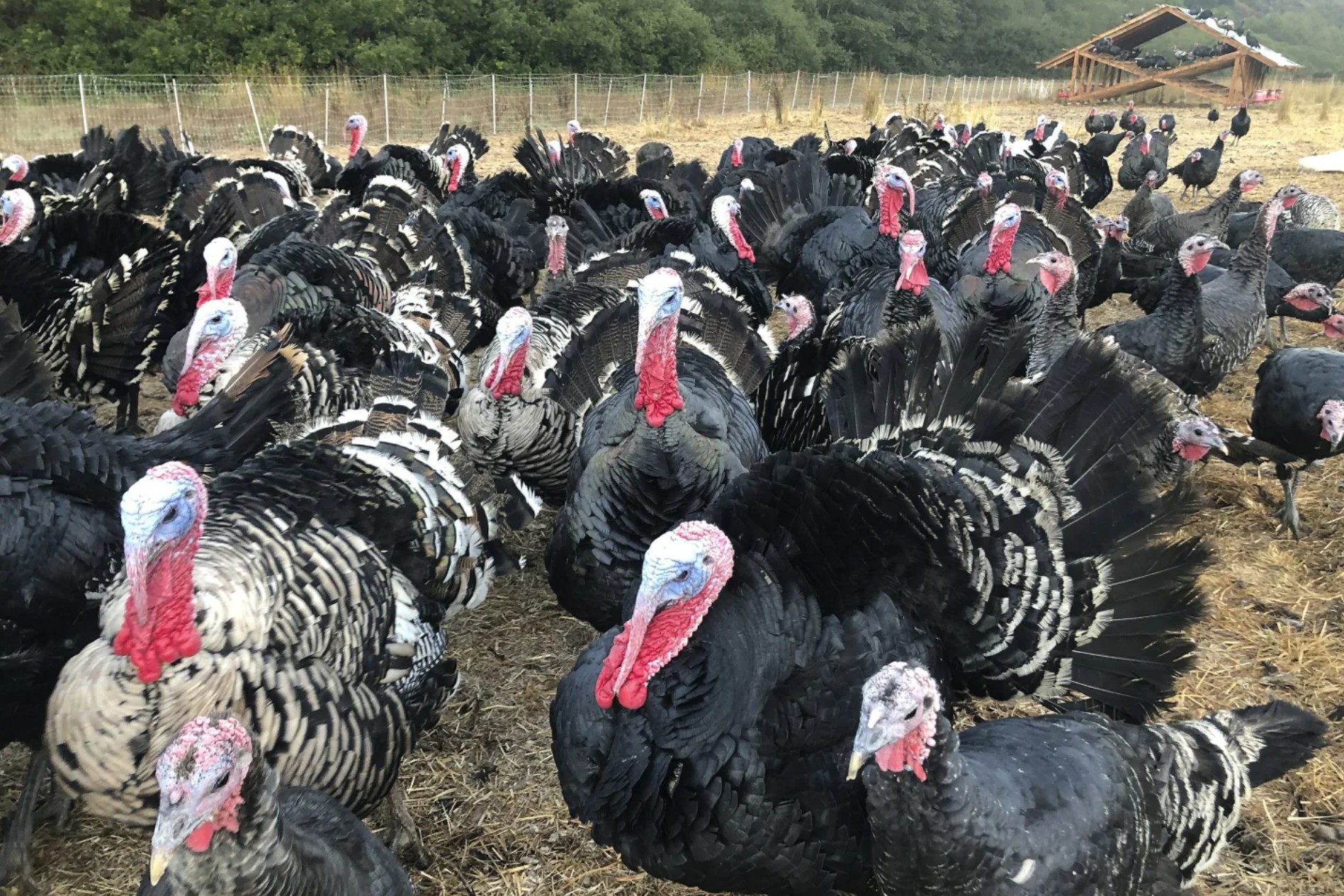
An analysis of U.S. Department of Agriculture reporting by Auburn University and the Alabama Cooperative Extension System (ACES) found turkey prices alone shot up 24% since 2025.
For a 15-pound bird, that’s a nearly $4 year-over-year hike, from $15.53 in 2025 to $19.35 this November.
The average price of fresh green beans, meanwhile, climbed 70% (from about $1.92 to $3.26 per pound). Pie pumpkins jumped about 57%, while yellow squash and zucchini climbed somewhere between 18% and 21%. Milk prices rose 19%.
Some costs dropped. The price of butter dipped about 21%. Collard greens costs also dropped sharply, by about 64%.
Overall, a Thanksgiving meal basket this year will cost about 10% more than last year, ACES said. The American Farm Bureau Federation placed the increase at a more modest 6%, according to the Associated Press, which cited diesel prices, increased year-round turkey demands and bird flu as contributing factors.
Wendiam Sawadgo, an ACES economist, said seasonal factors can impact fresh produce prices and demand can drive up costs. He attributed much of this year’s change to increased fuel and fertilizer prices stemming from the ongoing U.S. conflict in Iran.
But he also chalked up the price uptick to increased labor costs, which he said “have an especially large adverse effect on fruit and vegetable production.”
The price increases this year, according to the nonpartisan Migration Policy Institute (MPI), accompany a 151% surge in interior immigration enforcement since January 2025, when Trump took back the White House and enjoyed majorities in both chambers of Congress.
More than two-thirds (68%) of U.S. crop workers are foreign-born, and 42% of them are undocumented immigrants, according to America’s Voice, a progressive immigration-reform advocacy group.

About 80% of U.S. Immigration and Customs Enforcement (ICE) arrests since January 2025 have involved people with no criminal records, MPI said.
Researchers from Economic Insights and Research Consulting, commissioned by America’s Voice, found what they characterized as a correlation between enforcement-driven reductions in agricultural labor and price increases for foods more dependent on immigrant work.
“For example,” the group wrote, “apple prices rose 7.2% between January 2025 and August 2026, but grocery prices as a whole grew by 3.4%.”

“Immigration is a pocketbook issue and the mass deportation agenda is making it harder for Americans to afford their Thanksgiving meal,” America’s Voice Executive Director Vanessa Cárdenas said.
“Instead of deporting hard-working people, we should be focused on creating a path to legality for the workers that keep food on our tables through good times and bad. American families are paying an ICE Tax and the mass deportation agenda is making this holiday season more expensive for everyone. Congress must rein in ICE and protect the workers who feed this country.”
The timing of ICE’s agriculture industry arrests can affect how severe the economic hit is downstream. Losing workers during planting and harvesting seasons can be especially hurtful, according to the conservative American Enterprise Institute, which said farmers risk losing all their yearly profits if workers are unavailable at peak need times.
Take Pennsylvania, where continuing ICE operations have hit the industry hard, leading dozens of farmers to complain that arrests — some of which have been of immigrants with legal status — have made their workers fearful of clocking in and cut into productivity.
Many of those farmers penned a letter last week to U.S. Homeland Security Secretary Markwayne Mullin and U.S. Agriculture Secretary Brooke Rollins seeking worker visa reforms and a reduction in hardline ICE activities.
Turkey is among the products affected by the ICE raids. The busy season of poultry processing begins in the late Summer and Fall, ahead of Thanksgiving and Christmas. Because its specialized workforce, populated markedly by immigrants, has been devastated, employees who can still come to work unfearful of arrest are working longer hours and in different jobs to compensate for the absences, industry leaders said.
“These raids targeting long-term immigrant workers are driving up the cost of your Thanksgiving meal,” said Chris Herr, Executive Vice President of the nonpartisan PennAg Industries Association.
“President Trump and Congress have the opportunity to get a historic win for affordability, our communities, farmers and the American people if they are finally able to create legal pathways for long-term immigrant workers. I guarantee no one in the administration or Congress could do the jobs these workers are doing.”

Rebecca Shi, CEO of the American Business Immigration Coalition, a bipartisan corporate interest group focused on strengthening the U.S. economy through immigration reform, said targeting foreign-born agricultural laborers is “hurting all Americans.”
“The wholesale arrest and deportation of long-term, law-abiding immigrants puts America’s food supply and agricultural businesses at risk,” she said. “Lawmakers should give Americans more to be grateful for this year and grant legal pathways for long-term immigrants now.”
And federal lawmakers have indeed floated several bipartisan immigration reform proposals in recent years, though none has gotten much play on Capitol Hill.
Republican U.S. Rep. María Elvira Salazar of Miami has carried her signature legislation, dubbed the “Dignity Act,” for years. It would, among other things, allow eligible immigrants who came to the U.S. before 2021 to obtain renewable legal status, with no route to citizenship.
Recent surveys by D.C.-based Wave Polling and Research found 52% of registered Florida voters oppose creating a legal classification allowing longtime immigrants to stay while preventing them from applying for citizenship. A whopping 75% of voters in the state and 79% nationwide instead prefer a pathway to citizenship for immigrants who have lived here for at least 10 years, paid taxes and passed a background check.
In July, Republican U.S. Sen. John Curtis of Utah and Democratic U.S. Sen. Mark Kelly of Arizona introduced a measure (S. 5197) that would allow states to issue their own temporary work visas, with the Department of Homeland Security approving each application.
Republican Oklahoma Gov. Kevin Stitt told POLITICO last week that immigration, while a hot-button issue, is “not that complicated.” But he said a gridlocked D.C. apparatus has exacerbated it, with policymakers on either side of the argument more inclined to fundraise and campaign on the problem than fix it.
“That’s why you saw this huge swing in the Midterm,” he said, adding that he had spoken with Mullin about changing tack. “I think you’re seeing … some adjustments there in the organization that he’s leading.”
This month, during an hour-long interview with “60 Minutes,” Trump said his mass deportation push was “too tough,” adding that while he believes he earned “an A-plus for closing up the border” and “getting the bad ones out” — meaning violent and otherwise deleterious criminals — he “got hurt because we also took people that had good jobs” whose only infraction was entering the country unlawfully.

Trump’s inclination toward a more measured approach to immigration enforcement, perhaps like the kind Salazar, Curtis, Kelly and Stitt have advocated for, apparently isn’t shared by the President’s second-in-command or by Oklahoma’s incoming Lieutenant Governor.
Shortly after Stitt’s sit-down with POLITICO, Vice President JD Vance took to X to call the Governor’s perspective “morally and electorally disastrous.”
“I like Kevin, but what does ‘bipartisan immigration reform’ mean? If you mean making it harder for megacompanies to defraud our visa system, great. If you mean we should pass legislation to make it harder for employers to violate our immigration law, I’m all ears,” Vance wrote.
“But to a lot of people, this sounds like an effort to give amnesty to people who have broken our laws.”
Oklahoma Lt. Gov.-elect T.W. Shannon posted his response an hour after the Vice President, arguing most Americans disagree with Stitt’s comments.
“The only people who want ‘immigration reform’ are the ones who want amnesty for illegal immigrants. They want to wave a magic wand and make them suddenly ‘legal.’ They talk about the small percentage of illegals who are leading an otherwise peaceful and productive life and say, ‘See, we need more of these people!’ But that’s all a cover for giving the radical left what they have always fought for: open borders and unlimited immigration, with effectively zero deportations,” he wrote.
“We absolutely must keep our border secure and deport every illegal immigrant. No amnesty, no matter what you call it.”

A July Gallup poll found 73% of Americans believe immigration is a good thing for the U.S., down from 79% last year, including 91% of Democrats, 73% of independents and 50% of Republicans.
Thirty-five percent favor keeping immigration at its present level, compared to 31% who want it increased and 29% who want it decreased.
And notably, 81% favor giving immigrants who were brought to the U.S. illegally as children the chance to become citizens if they meet certain requirements over time, while 75% say the same of undocumented immigrants in general.
By comparison, 49% support hiring significantly more Border Patrol agents, 43% support banning so-called “sanctuary cities” and 39% back deporting all immigrants living in the U.S. illegally back to their home country.
“Americans’ broadly positive views of immigration have generally been on the rise and remain near their record highs, even as they fluctuate slightly from year to year in response to the political environment,” pollsters wrote, adding that positive views of immigration remain “well above the lows recorded in the early 2000s.”
“The enduring popularity of citizenship pathways, even among Republicans, alongside majority-level opposition to deportation and bans on sanctuary cities, suggests that public appetite for the most aggressive enforcement measures is currently limited.”