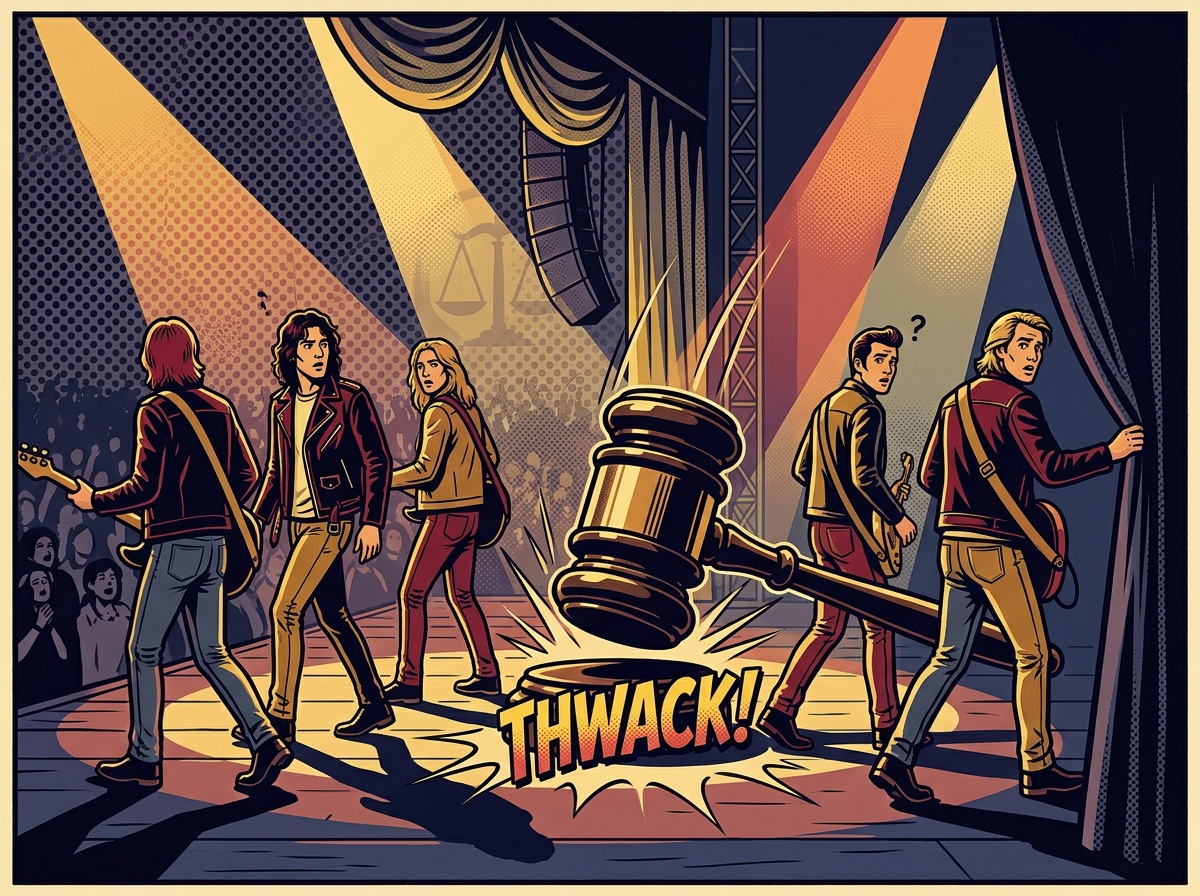
The Stay Nation/Ticketmaster antitrust trial now presents a paradox. The U.S. Division of Justice (DOJ) reportedly has settled its claims, but the litigation continues—with a skeptical choose and 32 state plaintiffs nonetheless urgent for a breakup. That uncommon posture raises deeper considerations about economics, separation of powers, and the boundaries of antitrust federalism.
U.S. District Choose Arum Subramanian, who reportedly described the DOJ–Stay Nation/Ticketmaster settlement as “completely unacceptable,” will proceed to preside over the trial with the present jury. Reviews point out that the choose was pissed off by what he described as a “lack of communication” relating to the DOJ’s settlement negotiations with Stay Nation.
The dealing with of the LNTM case raises severe questions on financial effectivity and the separation of powers. A judicial order requiring divestiture of Ticketmaster additionally would create vital antitrust federalism tensions.
A Settlement With out a Breakup
Key phrases of the tentative DOJ–Stay Nation/Ticketmaster settlement—outlined in a time period sheet filed with the courtroom—reportedly embody the next:
- No Divestiture: Stay Nation wouldn’t be required to divest Ticketmaster. The remaining state plaintiffs, in contrast, proceed to press for divestiture.
- Ticketing Alternative: Stay Nation would enable venues to make use of competing ticketing platforms, resembling SeatGeek or AXS, enabling as much as 50% of tickets to be offered by rival companies.
- Venue Divestitures: Stay Nation agreed to divest possession or management of 13 amphitheaters, together with venues in Milwaukee; Cincinnati; Syracuse, New York; and Austin, Texas.
- Price Caps: Ticketmaster’s service charges at Stay Nation-owned amphitheaters can be capped at 15%.
- Monetary Penalty: The settlement would set up a $280 million settlement fund to pay civil penalties to states that be part of the deal.
- Behavioral Modifications: The settlement would enable artists to hire Stay Nation-owned venues no matter whether or not they use Stay Nation’s promotional companies. It additionally would require termination of Ticketmaster’s ticketing settlement with Oak View Group.
Breaking Up the Band Isn’t At all times Procompetitive
Based mostly on what we all know to date, there may be little cause to view the proposed DOJ–Stay Nation/Ticketmaster antitrust settlement with alarm. The settlement seems prone to generate financial advantages, as mentioned beneath. Eradicating contractual boundaries that prohibit venues from working with a number of ticket distributors and promoters—adjustments the settlement reportedly requires—would promote competitors.
In contrast, requiring Stay Nation to divest Ticketmaster, because the DOJ initially sought, may have eradicated cost-saving efficiencies from vertical integration with out materially enhancing competitors. Ticketmaster already held a big market share earlier than Stay Nation acquired it—certainly, barely bigger than at present—and it’s removed from clear that ticketing competitors would improve if Stay Nation and Ticketmaster have been separated. Market realities additionally matter: well-liked artists exert substantial affect over ticket pricing and gross sales phrases, and that dynamic would stay whatever the end result of the antitrust case. (See this 2024 Fact on the Market commentary on LNTM.)
A divestiture, furthermore, would change a streamlined built-in system with a fragmented one, probably rising prices for artists and followers. Stay Nation’s built-in construction generates a number of varieties of financial advantages.
Elimination of Double Marginalization
Vertical integration permits a single agency to coordinate pricing throughout a number of levels of the provision chain—promotion, venue operation, and ticketing.
In a fragmented market, every unbiased agency—resembling a standalone promoter and a separate ticketing service—provides its personal markup. That dynamic creates “double marginalization,” through which successive corporations every impose their very own margin. Divesting Ticketmaster may due to this fact increase remaining ticket costs for shoppers in contrast with an built-in agency that optimizes a single mixed margin.
The ‘Flywheel’ Effectivity Mannequin
Stay Nation operates a “flywheel” mannequin through which higher-margin segments—resembling ticketing and promoting—assist subsidize lower-margin actions like live performance promotion.
Vertical integration permits Stay Nation to supply artists bigger monetary ensures whereas recouping prices by different elements of the ecosystem, together with venue concessions and sponsorship offers. Management throughout a number of levels of the enterprise additionally helps the corporate soak up the substantial dangers of live performance promotion, which regularly operates on skinny—and even unfavourable—margins for particular person exhibits.
Transaction-Price Discount
Bringing promotion, venue administration, and ticketing underneath one company umbrella reduces the time and expense required to barter complicated agreements amongst separate corporations.
An built-in platform can also streamline tour planning and ticket distribution, which proponents argue results in better-attended occasions.
Know-how and Information Integration
An built-in Ticketmaster can use Stay Nation’s in depth client information to focus on promoting extra successfully, doubtlessly reducing advertising and marketing prices for artists.
Breaking apart the businesses may sever these information hyperlinks, forcing venues and promoters to rely extra closely on third-party advertising and marketing companies.
Funding and Stability
The knowledge created by Stay Nation’s built-in construction encourages long-term funding in venue upgrades and new applied sciences.
Separation may introduce vital financial uncertainty for buyers, decreasing capital flows into the stay music trade and doubtlessly resulting in fewer exhibits or less-innovative venues.
Courts Aren’t Tremendous-Prosecutors
A robust authorized argument holds {that a} federal choose’s opposition to an antitrust settlement proposed by the DOJ might exceed the courtroom’s Article III authority and create a separation-of-powers battle. The priority rests on a primary constitutional precept: the chief department—appearing by the DOJ—has unique authority to determine learn how to implement federal regulation and allocate enforcement assets. (See right here, for instance.)
Prosecutorial Discretion
The U.S. Supreme Courtroom has lengthy acknowledged that the chief department has broad—certainly “absolute”—discretion to determine whether or not to carry a case and learn how to resolve it. If a choose compels the DOJ to proceed litigating a case it now not needs to pursue, the courtroom successfully assumes the function of a super-prosecutor.
Useful resource Allocation
Solely the chief department can determine learn how to allocate its restricted finances and personnel. Blocking a settlement forces the DOJ to commit public assets to litigation it has already concluded ought to finish.
Coverage Balancing
Antitrust settlements typically mirror complicated financial tradeoffs. These judgments contain coverage selections that historically belong to the political branches—to not the judiciary, whose function is to resolve disputes quite than make enforcement coverage.
The Tunney Act’s Constitutional Tightrope
The Tunney Act, 15 U.S.C. § 16 (1974, as amended), requires federal courts to find out whether or not a proposed antitrust consent decree is within the “public curiosity.” The Supreme Courtroom has by no means invalidated the statute. Authorized students—and even some former DOJ officers—nonetheless argue that it sits uneasily with the Structure. The statute additionally raises considerations from a regulation & economics perspective.
Making a ‘Chancellery of the Public Curiosity’
One critique holds that the Tunney Act successfully turns judges into “ministers of trade.” As a substitute of resolving instances or controversies—decoding and making use of the regulation—the act invitations judges to guage the knowledge of a negotiated settlement. That inquiry dangers pushing courts right into a legislative or government function by asking them to determine what end result is “finest” for the economic system.
Infringing on the Unitary Govt
If the president, appearing by the legal professional normal, concludes {that a} settlement advances the federal government’s enforcement targets, the act successfully offers a non-elected official (the choose) a possible veto. Critics argue that this association conflicts with the unitary-executive principle, which holds that the president should retain full management over the execution of federal regulation.
Slender Judicial Scope (The ‘Rubber Stamp’ Pressure)
Courts have lengthy acknowledged these constitutional considerations. Appellate selections due to this fact instruct trial judges to offer the DOJ “broad latitude” and “substantial deference” when reviewing consent decrees underneath the Tunney Act. Pressure arises when a courtroom applies the statute aggressively. If a choose treats the public-interest inquiry as a license to rewrite a settlement or demand a particular treatment—resembling a breakup—the courtroom dangers substituting its judgment for that of the president’s appointees.
A Regulation & Economics Perspective
Lively judicial assessment of antitrust consent decrees—negotiated between the Division of Justice (DOJ) and personal events—can lead to increased transaction prices, slower decision of anticompetitive points, and inferior financial cures in comparison with the expertise-driven strategy of the DOJ.
The Present Context
Within the Stay Nation case, Choose Arum Subramanian’s frustration over a reported “lack of communication” from the DOJ seems to mirror a procedural grievance. A special challenge would come up if the courtroom invoked the Tunney Act to dam the settlement on the bottom that solely a breakup would suffice.
Stay Nation’s legal professionals may then pursue an interlocutory enchantment, arguing that the courtroom violated separation-of-powers ideas by displacing the DOJ’s enforcement judgment. They may contend that the courtroom’s function is restricted to figuring out whether or not the settlement falls “throughout the reaches of the general public curiosity,” not whether or not it represents the absolute best end result.
Such an argument may draw assist from Justice William Rehnquist’s dissent in Maryland v. United States. It may additionally depend on the U.S. Circuit Courtroom of Appeals for the D.C. Circuit’s reasoning in U.S. v. Microsoft, which emphasised that though the Tunney Act requires courts to evaluate whether or not a consent decree serves the general public curiosity, that authority doesn’t allow a courtroom to conduct a full trial or rewrite the settlement.
Too Many Cooks within the Antitrust Kitchen
The states’ choice to proceed in search of divestiture of Ticketmaster from Stay Nation after the DOJ settled its claims additionally raises vital tensions in antitrust federalism.
U.S. antitrust enforcement operates by a distributed-enforcement structure through which federal and state authorities share enforcement energy. Their targets typically align, however they will diverge on cures for a similar alleged conduct.
Underneath ideas of aggressive federalism, state attorneys normal possess unbiased discovery and enforcement authority underneath their very own statutes. They might pursue structural cures even when the federal authorities opts for behavioral ones, as long as they assert unbiased grounds underneath state or federal regulation.
That framework creates vital problems in a case like LNTM. The litigation’s end result will form nationwide practices in leisure promotion, tour scheduling, and ticketing markets. Divergent cures throughout jurisdictions may due to this fact produce regulatory fragmentation in an trade that operates on a nationwide—certainly world—scale.
Don’t Flip a Settlement Right into a Constitutional Drawback
The uncertainty created by the unfavourable response of the trial choose and most state co-plaintiffs to the DOJ–Stay Nation/Ticketmaster settlement is troubling. It reductions sound economics. Critical separation-of-powers and federalism questions additionally would come up if Choose Subramanian finally approved the compelled divestiture of Ticketmaster. The higher course can be for the remaining state plaintiffs to rethink their place and endorse the tentative settlement now on the desk—with the courtroom’s approval.
The LNTM matter illustrates federalism and separation-of-powers dilemmas—although not but crises—which might be prone to problem the U.S. antitrust system within the years forward. Federalism considerations are particularly salient, given the rising tendency of state antitrust officers and legislators to broaden state-level enforcement exercise.
Congress is unlikely to preempt—or considerably restrict—state antitrust regulation within the close to future. Higher consideration to Dormant Commerce Clause and conflict-preemption points in antitrust enforcement might due to this fact change into more and more vital. (See right here, for instance.)
Put merely: antitrust enforcement works finest when economics guides cures, the chief department units enforcement coverage, and courts resist the temptation to rewrite negotiated settlements.