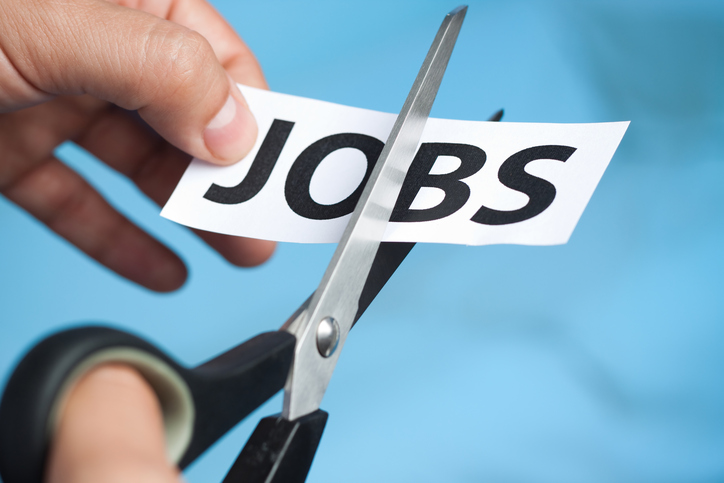
Artificial intelligence is rapidly reshaping the modern workforce, and healthcare is no exception. Job reductions continue to accelerate across all industries as economic headwinds persist and companies deploy generative artificial intelligence (AI) as part of their core operations. Research firm Forrester projects that 6.1% of U.S. jobs – approximately 10.4 million positions – will be lost to AI and automation by 2030, with generative AI now accounting for half of expected job losses. Layoffs tied to AI adoption will not be uniform; they will vary by sector, job function, and regulatory exposure. Nowhere is this more complex than in healthcare, where legal constraints, patient safety obligations, and labor dynamics intersect with rapid technological change. This article examines key employment-law risks of AI-related layoffs, unique challenges for healthcare employers, and practical steps to mitigate liability while preserving patient care and institutional trust.
Why AI-related layoffs are different
As employers adopt AI at scale, workforce restructuring is inevitable. Amazon recently announced an additional 16,000 AI-related layoffs in corporate jobs, cutting a total of 30,000 white collar jobs since October 2025. UPS has announced plans to reduce its overall workforce by 48,000 employees in 2025 and 2026, and Verizon announced more than 13,000 job cuts along with the creation of a $20 million “Reskilling and Career Transition” fund to help displaced employees “focus on the opportunities and necessary skill sets as we enter the age of AI.” In healthcare, a physician-owned organization in Utah announced job reductions in November exceeding 10% of its workforce, citing rapid AI/automation adoption as the primary factor. More recently, CVS Health notified Connecticut regulators that it will cut 313 positions in Aetna’s small group insurance business between April and July 2026, affecting roles from analyst to executive director in sales, underwriting, and account management. These cuts are part of CVS Health’s broader $2 billion cost-cutting initiative, which has already eliminated approximately 1,500 Aetna positions since late 2023.
While the legal frameworks governing reductions-in-force (RIFs) remain largely unchanged, AI-driven restructuring introduces novel risks for employers. Notably, many of these job eliminations will occur quietly-in increments too small to trigger WARN Act notice requirements, spread across sufficient time and geography to avoid significant publicity. But the cumulative changes are likely to be profound, nonetheless.
Core employment law considerations
Any AI-related workforce action must be anchored in employment law principles to mitigate risk to employers:
1. Disparate treatment and disparate impact. Employers must ensure that selection criteria for layoffs are neutral, consistently applied, and documented. Statistical adverse impact analyses should be run across protected classifications at the planning stage, not after the fact. If adverse impact is evident, employers must assess less discriminatory alternatives and document the business necessity.
2. Age discrimination. AI-related cuts may disproportionately affect longer-tenured or higher-paid employees, increasing exposure. OWBPA-compliant releases, complete and accurate decisional unit disclosures, and individualized consideration of accommodation or reassignment obligations are essential.
3. WARN and mini-WARN Act compliance. If headcount reductions meet statutory thresholds, employers must provide timely written notice to affected employees and governmental entities. Employers must pay particular attention to staggered layoffs across subsidiaries or facilities, remote workers’ assignment to single sites of employment, and state mini-WARN laws that have lower thresholds, severance requirements, or longer notice periods.
4. Retaliation and whistleblower protections. Healthcare employers face an elevated risk when employees who raise concerns about AI safety, accuracy, or regulatory compliance become protected whistleblowers. Any adverse action close in time to protected activity requires heightened scrutiny and clear documentation of legitimate reasons
5. Pay equity and compensation transparency. Eliminating roles and consolidating responsibilities can create new pay differentials. Employers should audit for pay, considering gender, race, and other protected classifications, and ensure communications comply with compensation transparency statutes.
Special complexity in healthcare
Healthcare organizations face unique constraints that complicate AI-related workforce actions. Patient safety obligations, licensure regimes, reimbursement rules, and privacy laws drive a more cautious, evidence-based approach to restructuring.
Clinical safety and scope-of-practice – When AI is used to triage, code, summarize notes, or suggest diagnoses, role redesign can implicate scope-of-practice laws and clinical supervision requirements. Reassigning or reducing licensed staff must be reconciled with minimum staffing requirements, accreditation standards, and medical staff bylaws. If layoffs undermine supervision chains or clinical coverage, regulators and accreditation bodies may scrutinize operations.
Quality of care and standard of care – Reducing clinical or support staff based on expected AI productivity gains poses malpractice and regulatory risk if quality metrics deteriorate. Plaintiffs may argue that staffing reductions were negligent given known limitations of AI tools, especially in populations underrepresented in training data.
HIPAA and data governance – Workforce changes often expand or reallocate access to PHI as tasks shift to smaller teams or AI-assisted workflows. Employers must reassess role-based access, vendor BAAs, and monitoring controls, especially where generative AI tools interface with PHI. Improper disclosures during the transition, including through shadow IT, can trigger breach obligations.
Regulatory approval and billing integrity – AI that influences clinical documentation, coding, or utilization review can affect reimbursement accuracy. Layoffs that remove experienced coders or auditors while introducing AI-assisted coding may increase false claims risk if error rates rise. Oversight, sampling, and post-implementation audits should intensify during and after workforce changes.
State staffing and patient ratio laws – Certain states regulate nurse-to-patient ratios or impose staffing plan requirements. AI-enabled scheduling or acuity tools may not satisfy legal staffing minimums. Layoffs that compromise compliance invite enforcement and private litigation.
Medical staff relations and peer review – If AI reconfigures clinical decision support, physicians may resist perceived encroachment on autonomy. Employment actions against clinicians who raise safety concerns can intersect with peer review protections and anti-retaliation laws. Clear delineation between employment decisions and medical staff processes helps mitigate risk.
Emerging laws
Several states and municipalities now regulate the use of AI in RIF decision-making.
For instance, effective October 1, 2025, California FEHA regulations prohibit discrimination using automated decision systems – including AI – in hiring and termination, and recognize an affirmative defense grounded in documented anti-bias testing and mitigation.
Other states, such as Colorado and Illinois, have already adopted similar laws, and bills are pending before the legislatures of various other states, including Connecticut, New Jersey, and New York.
Staying in New York, New York City Local Law 144 regulates the use of automated employment decision tools when used in employment decisions (including promotions or RIF selections). Also in 2025, New York state added a new checkbox to its WARN Act form, requiring covered entities to indicate if “technological innovation or automation” is a reason for the layoffs. If checked, employers must specify the technology involved, such as AI or robotics.
Anticipated litigation and enforcement trends
AI-related layoffs will likely spur multiple dispute categories:
- Disparate-impact and age-discrimination claims testing employers’ statistical analyses and alternatives.
- Algorithmic-decision challenges demanding discovery into model logic, training data, and vendor documentation—raising trade-secret vs. transparency issues.
- Healthcare whistleblower and retaliation claims linked to patient-safety or billing-integrity concerns, particularly if quality metrics worsen post-RIF.
- Regulatory focus on false-claims liability and data-privacy lapses where new AI tools coincide with reduced human oversight.
Communications, morale, and litigation posture
How healthcare and other employers communicate about AI-driven restructuring often shapes litigation risk and institutional culture.
Message discipline – Public and internal statements should accurately reflect the business rationale and avoid sweeping claims that AI “replaces” clinicians or guarantees error-free performance. Overstatements can become admissions in litigation.
Respectful process and humane execution – Provide clear notice, severance consistent with policy and precedent, and meaningful assistance for transitions. OWBPA-compliant releases in age-impacted decisional units should be carefully prepared. For clinicians, consider tailored career pathways or retraining opportunities that align with patient safety needs.
Training and role redefinition – Where roles are retained but transformed by AI, update job descriptions, provide training, and re-evaluate essential functions. Document the interactive process for accommodation requests.
Record retention and audits – Preserve planning documents, selection matrices, validation studies, and adverse impact analyses. Schedule post-implementation legal and compliance reviews to identify and remediate drift.
Strategic takeaways for healthcare employers
In healthcare, defensibility hinges on demonstrating that AI deployment and any associated layoffs were undertaken carefully and equitably. Healthcare employers should move deliberately when considering AI-related layoffs, as the legal frameworks are familiar. Done well, AI can improve efficiency and care. Done hastily, AI-related layoffs can invite employment litigation and scrutiny from regulators, government officials, and constituents.
Photo: MarsBars, Getty Images
Christopher Mayer is General Counsel and serves as the Chair of Frier Levitt’s Employment Law practice. Christopher prepares employment policies and counsels his clients on day-to-day issues concerning harassment and discrimination complaints, employee leave requests, disability accommodations, compensation matters, employment agreements, releases, hiring, terminations, and reductions-in-force. Recognizing the transformation underway as businesses implement AI (including generative artificial intelligence and machine learning) and, eventually, quantum computing, he guides employers through the evolving risks and legal and ethical implications of using these tools in recruitment, screening, discipline, employee-monitoring, HR management, and termination/layoff decisions.
This post appears through the MedCity Influencers program. Anyone can publish their perspective on business and innovation in healthcare on MedCity News through MedCity Influencers. Click here to find out how.
