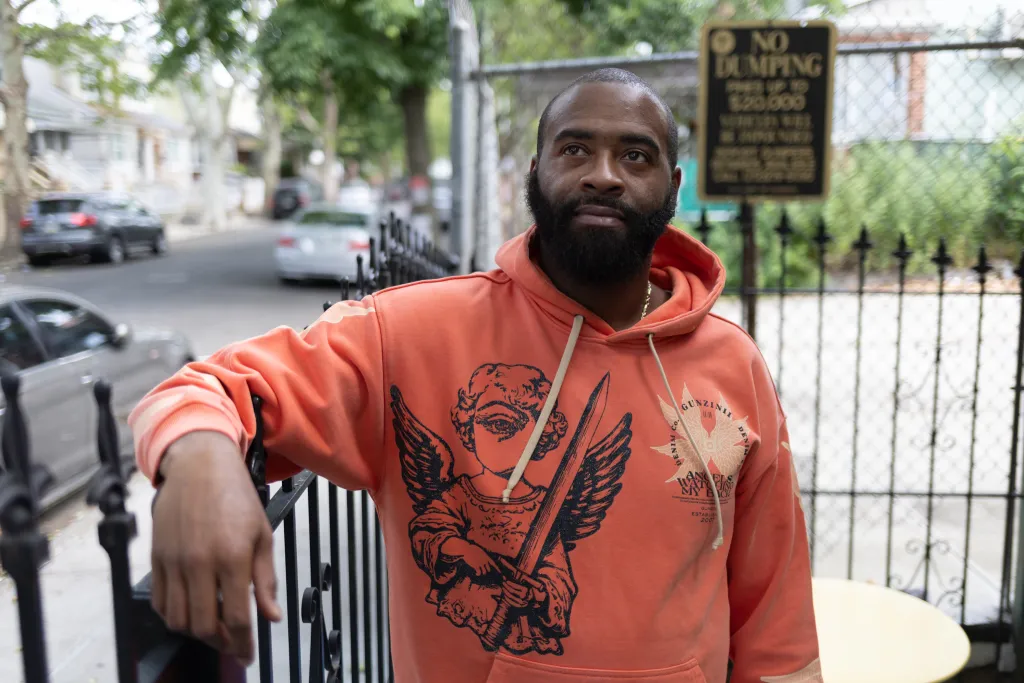
Antoine Galloway still remembers the moment he was surrounded by seven corrections officers upset over a sexual assault grievance he’d filed against a guard at Clinton Correctional Facility in February 2016.
First came a punch to the face.
The Harlem native then felt large fists hitting his body, steel-toed boots kicking his legs, and a baton striking his ankle.
Everything went dark.
“I was covering my head to protect my face,” Galloway, 48, who was serving a sentence for robbery, told The City Reporter. “I blacked out twice and I knew it because I kept snapping back. They were just kicking, stomping, yelling all kind of racial slurs.”
Eight years later, New York State agreed to pay Galloway $150,000 to settle a lawsuit alleging the assault left him with sustained injuries and trauma.
His case is one of at least 170 lawsuits against the state prison system that resulted in settlements totaling $25.7 million over the last five years, according to records obtained by The City Reporter through a Freedom of Information Law request.
The payouts offer a rare glimpse into conditions inside New York’s prisons at a time when state officials face renewed scrutiny following the recent deaths of prisoners Robert Brooks and Messiah Nantwi at the hands of prison guards and following a debilitating strike last year by 2,000 state corrections officers.
(function(){function e(){window.addEventListener(`message`,function(e){if(e.data[`datawrapper-height`]!==void 0){var t=document.querySelectorAll(`iframe`);for(var n in e.data[`datawrapper-height`])for(var r=0,i;i=t[r];r++)if(i.contentWindow===e.source){var a=e.data[`datawrapper-height`][n]+`px`;i.style.height=a}}})}e()})();
Gov. Kathy Hochul has vowed to make sweeping changes but some of those, like installing security cameras in each of the state’s 44 correctional facilities and a comprehensive review by outside experts, remain stalled nearly two years later.
A state corrections spokesperson said the agency is continuing to expand camera coverage across the prison system and that 11 facilities have been fitted with security cameras, with dozens of others in various stages of design or construction.
Corrections expert Dean Williams, who previously led prison systems in Colorado and Alaska, cautioned against viewing any single lawsuit or settlement in isolation.
“Of course, mistakes are going to be made,” Williams told The City Reporter. “The difference between functional and dysfunctional places is that the one-offs are anomalies.”

In healthy correctional systems, he said, serious incidents trigger intensive reviews aimed at understanding what went wrong and preventing similar failures from recurring.
But when allegations repeatedly surface involving excessive force, medical neglect, or other misconduct, the issue becomes harder to dismiss as a series of isolated incidents.
“It’s the pattern and consistency of the dysfunction,” Williams said. “One thing happens, then another, then another. That’s not normal. But in dysfunctional systems, it becomes the normal.”
Some notable cases:
- The state recently agreed to pay $850,000 to settle a lawsuit alleging a guard at Green Haven Correctional Facility repeatedly slammed Melvin Virgil’s head into a wall and metal bars while he was handcuffed. Body-camera footage later contradicted major sections of officers’ written accounts of the incident, and one officer ultimately pleaded guilty to a federal criminal charge related to the assault. An officer who allegedly lied on the report remains on the force.
- New York agreed to pay $200,000 to settle a lawsuit filed by a former Clinton Correctional Facility prisoner who alleged officials failed to protect him from two separate prisoner assaults in 2015. According to court filings, Rico Santana suffered a broken jaw in the first attack and alleged prison staff delayed surgery for a week before returning him to the general population, where he was assaulted again and suffered another jaw fracture.
- The state shelled out $90,000 to settle a medical malpractice lawsuit filed by a Washington Correctional Facility prisoner who alleged medical staff failed to promptly diagnose and treat severe pain and swelling in one of his testicles in 2015. According to court records, the delays resulted in the removal of one of the prisoner’s testicles.
The lawsuits that led to the legal settlements — which generally do not include admissions of wrongdoing by the state — describe brutal officer assaults, severe medical neglect and failures of the prison system to take accusations from prisoners seriously.
“I sue the state all the time and twice on Sunday,” Brian Dratch, Galloway’s attorney, who has also represented dozens of other incarcerees, told The City Reporter.
Roughly 71 cases were concluded in 2024, while another 71 closed in 2025; some date back to 2008. At least 20 cases are still pending in court, according to the data given to The City Reporter. Overall, 65% were decided by a judge’s verdict, while 33% of the payouts were settled.
Medical Neglect Cost New Yorkers the Most
Some of the largest awarded settlements stemmed from medical malpractice lawsuits.
Since he started practicing personal injury law 15 years ago, Dratch said his caseload of lawsuits against the state corrections department has only increased.
“I kind of want it to slow down, but you can imagine how bad the prison system is,” Dratch said. “People get hurt all the time and medical care is very substandard in the state, so I get a lot of cases. It never stops.”

At least 13 of the cases reviewed by The City Reporter were classified as medical malpractice.
Those cases alone have cost New York taxpayers nearly $3.8 million.
Stage 4 Cancer
Among the group is Jordan Warner, who was incarcerated for four years. At 20 years old, he was serving time at Upstate Correctional Facility, near the Canadian border, when he started noticing changes to his typically healthy body.
“I had lumps growing out of the side of my neck, I lost a lot of weight, and I couldn’t stand up straight,” Warner told The City Reporter in a phone interview.
In addition to the pain, Warner said it was hard to get comfortable and sleep through the night.
“I had night sweats and every time I would close my eyes. Even if it was just for a few minutes, I’d just be baking in sweat,” he said. As his symptoms persisted, he routinely asked to see a doctor.
Five months and multiple formal requests later, Warner still hadn’t been seen by a doctor and instead was accused by prison staff of lying about his condition. He said prison nurses would walk past his cell as they handed out medicine to other incarcerated people.

It wasn’t until he collapsed in the hallway and a nurse found him wheezing, with an elevated heart rate and plummeting blood pressure, that Warner’s health was taken seriously. “I almost died,” he said.
Warner was taken to a local emergency room and was quickly transferred 3 hours and 30 minutes south to Albany Medical Center, where doctors performed emergency surgery to remove fluid that built up around his lungs.
After multiple CT scans and medical tests, doctors diagnosed Warner in October 2019 with Stage IV-B Hodgkin’s Lymphoma, which is the most advanced form of the cancer that originates in the lymphatic system and then spreads to other parts of the body.
Following the surgery, he called his mom to tell her the news.
“She hadn’t heard from me for forever and she thought I was wishing her a Happy Birthday and I was telling her I had Stage 4 cancer and that she needed to call a lawyer,” Warner said.
“You hear a lot about broken bones and crazy beatings that nobody wants to hear about, but I knew the level of this, and how serious it was,” Warner recalled. “And how much I wrote every day and it was only until I lost consciousness that they actually cared.”
Still, Warner said the medical neglect he experienced is just the tip of the iceberg for other abuse he experienced and witnessed others go through.
“The mistreatment is so severe there on the daily basis,” Warner remembered. “It happens to so many people, and it’s not behind closed doors because no one in there is going to say anything.”
In at least three instances, Warner said he was denied chemotherapy and was written up by correctional guards who said he refused it. “Who in their right mind is refusing chemotherapy when you need it to live?” Warner said.
Warner sued in 2021. After four years in court, the state agreed to pay him $950,000.
DOCCS declined to discuss Warner’s allegations, citing federal medical privacy laws. In a statement, the agency said all incarcerated people have access to medical professionals through sick-call procedures, routine physical examinations and specialty care, and that the department spends hundreds of millions of dollars annually on medical services for people in its custody.
Warner said the money is just one part of the state being held accountable. “I would have rather not got the money and then everybody that was in the wrong lose their job,” Warner said.
He was released in 2020. “I’m in a lot better health than I was then,” Warner said. He recently celebrated his son’s first birthday. “He’s the size of a two-year-old, so healthy and big.”
Suing Behind Bars
At least 15 cases in the dataset had been filed and won by people who are still incarcerated, totaling roughly $652,187.
Even when incarcerated people successfully sue the state, they may not ultimately keep the money.
Under New York’s Son of Sam law, crime victims must be notified when a person convicted of a crime receives a significant financial award, including certain legal settlements. Victims can then seek civil judgments against the recipient and potentially claim a portion of that money.
The law was enacted after public outrage that serial killer David Berkowitz, known as the “Son of Sam,” might profit from selling the rights to his story to a major book publisher.
How Much in Prison Settlements?
The settlements remain difficult for the public to track.
Neither the attorney general’s office nor the state comptroller routinely publishes detailed information about prison-related settlements. By contrast, the city’s comptroller maintains a public database and regularly analyzes settlement trends in New York City.
When The City Reporter sought records of prison settlements over the past five years through a Freedom of Information Law request, the attorney general’s office provided cases filed in the New York State Court of Claims, but withheld most settlements tied to federal lawsuits, which often generate larger payouts.
The office said those cases were excluded because federal civil rights lawsuits generally name individual state corrections employees rather than the agency itself, which cannot be sued under federal civil rights law.

DOCCS said it is working to improve its tracking of settlements and plans to use data analytics to better monitor settlement costs, trends and claim types across the prison system.
Lawsuits against the state corrections agency also take a long time to progress in court. The City Reporter also found that, on average, it took six years from the day a suit was filed to the day it closed.
In one instance, a case alleging an incarcerated person was in the solitary confinement unit for 12 extra days dragged on for 15 years before it settled for $748.
DOCCS officials said the department has implemented a series of reforms in recent years, including expanded body-worn camera requirements, increased audits of camera usage, enhanced training on use-of-force policies and duty-to-intervene requirements, and the creation of a Public Integrity Division within its Office of Special Investigations to investigate staff misconduct.
The litany of cases and large-figure settlements indicates the state is acknowledging some wrongdoing, according to Jaeok Kim, the Interim Director of the Vera Institute of Justice Greater New York Initiative.
“I think it’s very important for the public to be aware of these findings as a way of holding corrections system accountable when the basic rights of incarcerated people are violated,” Kim said. “Access to appropriate medical care is critical, and so is ensuring that people are not unlawfully held in solitary confinement.”
‘Bruised for Life’
As for Galloway, when he got his senses back after the 2016 beating, the pain in his ankle made it hard for him to walk. But officers lifted him anyway and cuffed his hands behind his back. He was sent to the hospital unit and as nurses slid off his sock, they noticed blood leaking from his foot.
Galloway suffered a fractured right ankle, abrasions to his left knee, both elbows and forehead, a swollen left cheek, and pain in his right hand, according to DOCCS records.
He sat in an isolation room for three days and then was moved to an isolation unit for a year, according to court records, while receiving treatment and surgery to fix a bone infection in his ankle at a wound clinic near the Canadian border.
He wore a cast on his leg until it fully recovered, and more than 10 years later, said he wakes up with a throbbing and aching ankle.

After he’d served his sentence, Galloway started working at homeless shelters across the city, but his main passion is throwing community events with his friends on the same block he grew up on.
“We threw a block party and had a kids giveaway with food and supplies — those things are cool to me,” Galloway said. And anything that involves traveling, swimming, and gives him peace is his priority now.
While enjoying his freedom, Galloway said he’s frustrated with how the corrections officers who beat him never faced any retribution and the sexual assault he alleged was ignored.
“I’ll never be satisfied. I’m bruised for life and you get to keep your job,” Galloway said. “And I know they are doing this to so many people and still getting away with it. A few thousand dollars at a time isn’t fixing that.”
Our nonprofit newsroom relies on donations from readers to sustain our local reporting and keep it free for all New Yorkers. Donate to THE CITY today.
The post The Price of Prison Abuse: $25.7 Million in New York Settlements appeared first on The City Reporter.
