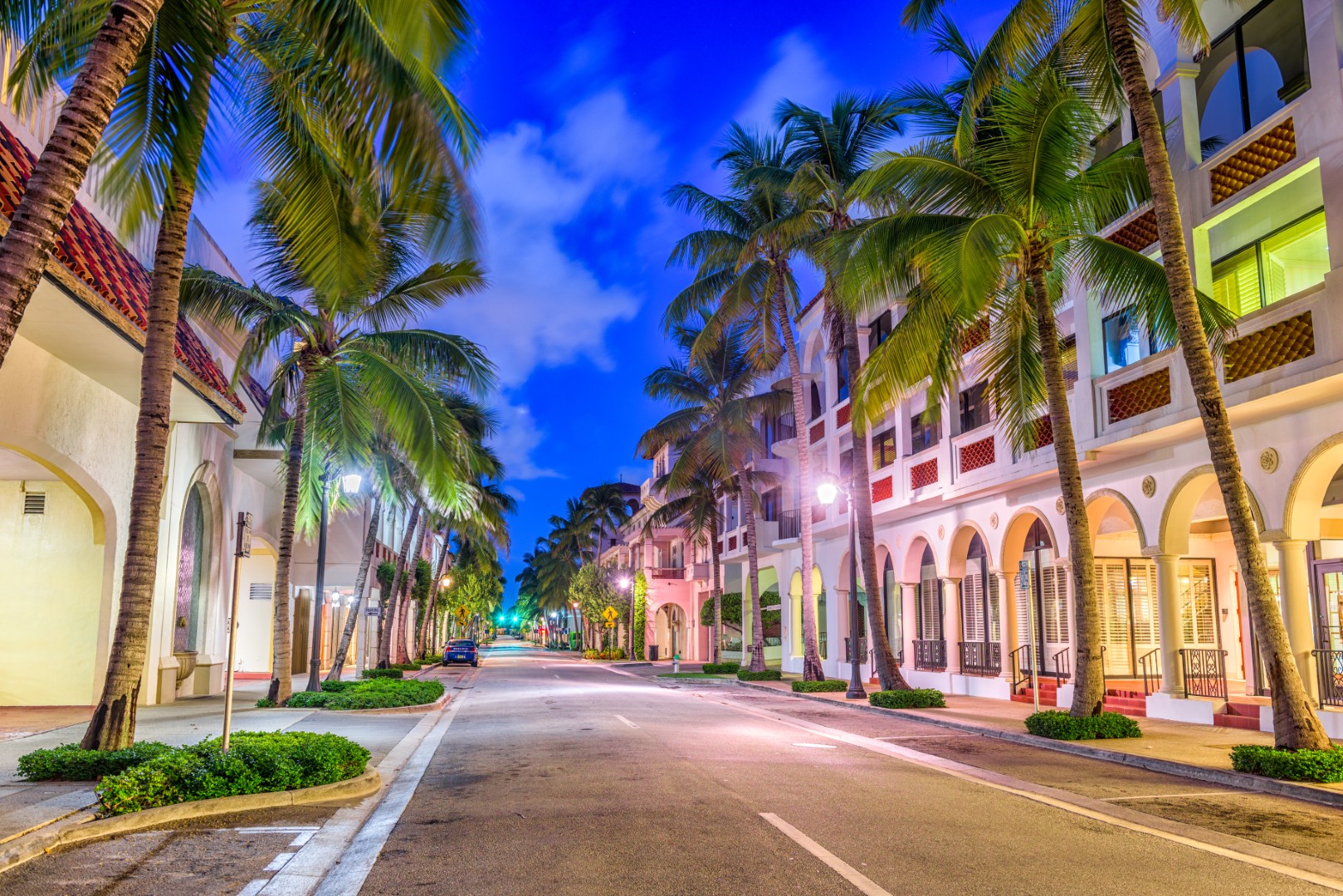
Palm Beach has always understood the language of influence.
It is visible in the architecture lining South Ocean Boulevard, in the private dinners held quietly behind hedged estates, in the institutions defining the island’s cultural identity and in the seasonal migration of political, financial and philanthropic power reshaping the region every Winter.
For generations, Palm Beach has occupied a singular place in American public life. Wealth, exclusivity, civic visibility and proximity to power have long defined its reputation. But beneath the galas, donor receptions, waterfront clubs and national headlines, another reality has steadily emerged.
Palm Beach has become one of the nation’s most concentrated ecosystems of political philanthropy.
Not simply campaign fundraising. And not traditional charitable giving alone.

Something broader. More durable. More institutional.
Americans donated an estimated $592.5 billion to charity in 2024, with foundation giving surpassing $109 billion nationally. Palm Beach alone is home to more than 290 foundations controlling nearly $3 billion in philanthropic assets. Those figures help explain why the region’s influence increasingly extends far beyond South Florida.
What is unfolding in Palm Beach is not merely about wealth. It is about how philanthropy, civic identity, institutional influence and political culture increasingly intersect in ways that shape public life long after election cycles end.
Political philanthropy in Palm Beach now flows through museums, preservation organizations, healthcare systems, educational initiatives, donor networks, policy conversations and civic institutions that quietly help define the region’s cultural and political gravity.
And as the country moves toward another consequential Midterm Election cycle, that influence is becoming harder to ignore.

Palm Beach has always attracted political proximity. Presidents vacation there. National donors gather there. Conversations with long-term implications often take place in private dining rooms, waterfront estates, boardrooms, donor salons and invitation-only gatherings that rarely become public. During the Winter season, especially, the island transforms into one of the nation’s most concentrated centers of political, financial and philanthropic activity.
But what makes Palm Beach consequential is not simply its concentration of wealth.
Many places have wealth.
Palm Beach stands apart because philanthropy there increasingly functions not alongside civic influence but as part of the infrastructure that sustains it.
That distinction matters.
Political philanthropy is often reduced to ideological giving or partisan infrastructure. In reality, much of it operates through civic institutions, cultural organizations, educational investments, healthcare initiatives, preservation efforts and community engagement, shaping how influence is experienced both locally and nationally.
In Palm Beach, those lines are especially fluid.
Organizations such as the Town of Palm Beach United Way, Norton Museum of Art, Preservation Foundation of Palm Beach and the region’s major healthcare institutions operate within a philanthropic environment supported by donor networks and family foundations with multimillion-dollar giving capacity. Family philanthropy and institutional giving circles shape not only charitable investment, but also civic visibility, convening power and long-term community influence.
And that influence extends far beyond visible donations.
Political philanthropy in Palm Beach often operates through donor-hosted policy discussions, issue-based initiatives, civic partnerships, educational investments and institutional relationships that continue shaping public life long after elections end. Increasingly, donors are investing not only in candidates or parties, but in institutions, preservation, healthcare, education and long-term civic positioning.
Those investments frequently carry influence far beyond any single election outcome.
This is where civic legacy becomes especially important.
Palm Beach has long understood the value of preservation. Historic estates, museums, cultural institutions and preservation organizations have helped shape and institutionalize the region’s identity for decades. Increasingly, however, legacy itself is being built not only through architecture or traditional philanthropy, but through civic infrastructure designed to carry influence forward across generations.
That includes support for museums, preservation organizations, healthcare systems, educational initiatives, veterans’ causes and nonprofit organizations. It also includes the quieter systems surrounding influence itself: boards, donor circles, institutional partnerships, policy discussions and philanthropic networks shaping how civic leadership is experienced and sustained over time.
Unlike Silicon Valley, where philanthropy often centers on innovation and disruption, or Washington, where influence moves more directly through policy institutions and federal systems, Palm Beach operates through a distinctly different model. Influence there is quieter, more relationship-driven and deeply woven into civic and cultural life. Legacy matters. Access matters. Institutional presence matters.
That is part of what makes the region so consequential.
The timing matters, too.
Palm Beach County now sits at the center of one of the nation’s most closely watched political landscapes heading into the 2026 Midterm Elections, with more than 855,000 registered voters and growing national attention focused on Florida’s expanding political influence. Increasingly, Palm Beach functions not simply as a wealthy community, but as a national hub where philanthropy, political influence, donor networks and institutional power increasingly intersect in highly visible ways.
At the same time, political philanthropy raises legitimate questions.
As philanthropy becomes more connected to civic visibility and institutional influence, questions naturally emerge about access, representation and whose priorities ultimately shape public life. Which organizations receive sustained support? Which voices gain proximity to these networks? Which civic priorities remain outside the reach of major philanthropic attention?
Studies examining charitable giving across Florida have shown philanthropy is becoming increasingly concentrated among wealthier South Florida donors, even as broader donor participation declines statewide. Nationally, participation among smaller donors has also continued to decline, raising broader questions about access, influence and who ultimately shapes civic priorities.
These are not abstract questions in Palm Beach.
They are becoming part of the region’s evolving civic structure.
None of this diminishes the meaningful impact philanthropy can have. Palm Beach has helped support hospitals, educational organizations, preservation initiatives, cultural institutions, medical research, veterans programs and nonprofit organizations that have strengthened lives both locally and nationally.
That philanthropic impact is real.
But philanthropy is no longer operating solely as charity.
Increasingly, it functions as civic infrastructure.
And ahead of the 2026 Midterm Elections, that reality becomes even more visible. As national political attention returns to Florida, Palm Beach will continue serving not only as a fundraising destination, but as a place where relationships, institutions, philanthropy and influence increasingly intersect in ways shaping broader civic conversations across the country.
That does not make political philanthropy inherently good or bad.
It does make it important to understand clearly.
Because what is happening in Palm Beach is not isolated. It reflects a broader national shift in which wealth, influence, philanthropy and public life increasingly converge through institutions designed to endure beyond political cycles.
With charitable giving, foundation assets and donor-advised funds continuing to grow nationally, philanthropic institutions are increasingly positioned to shape public life in ways once associated primarily with traditional civic or political structures.
Few places make that intersection more visible than Palm Beach.
And the implications extend far beyond South Florida.
The future of political influence in America may ultimately be shaped as much through philanthropic institutions as through campaigns themselves. Palm Beach is simply one of the clearest places where that transformation is already unfolding in real time.
The conversations happening there today are no longer only about politics or charitable giving.
They are about who shapes civic life, how influence becomes institutionalized and what kind of legacy will ultimately define American communities long after election seasons pass.
___
Andre Dowell is the founder and president of the National Philanthropic Foundation, a civic-focused organization centered on philanthropic legacy, institutional leadership and public engagement.
