We all remember those field trips to the science center or museum in elementary school—the ones that, almost unexpectedly, rearranged the way the world felt. A door would open and something would shift. Light pulsed through a transparent model of the human body, constellations of nerves and vessels glowing as if revealing a quiet truth, while small hands reached forward, guided less by instruction and more by instinct. For those who grew up watching The Magic School Bus, that same sense of boundless curiosity lingers, the idea that learning could be immersive, imaginative, and entirely alive, that individuality was not only welcomed, though essential to discovery.
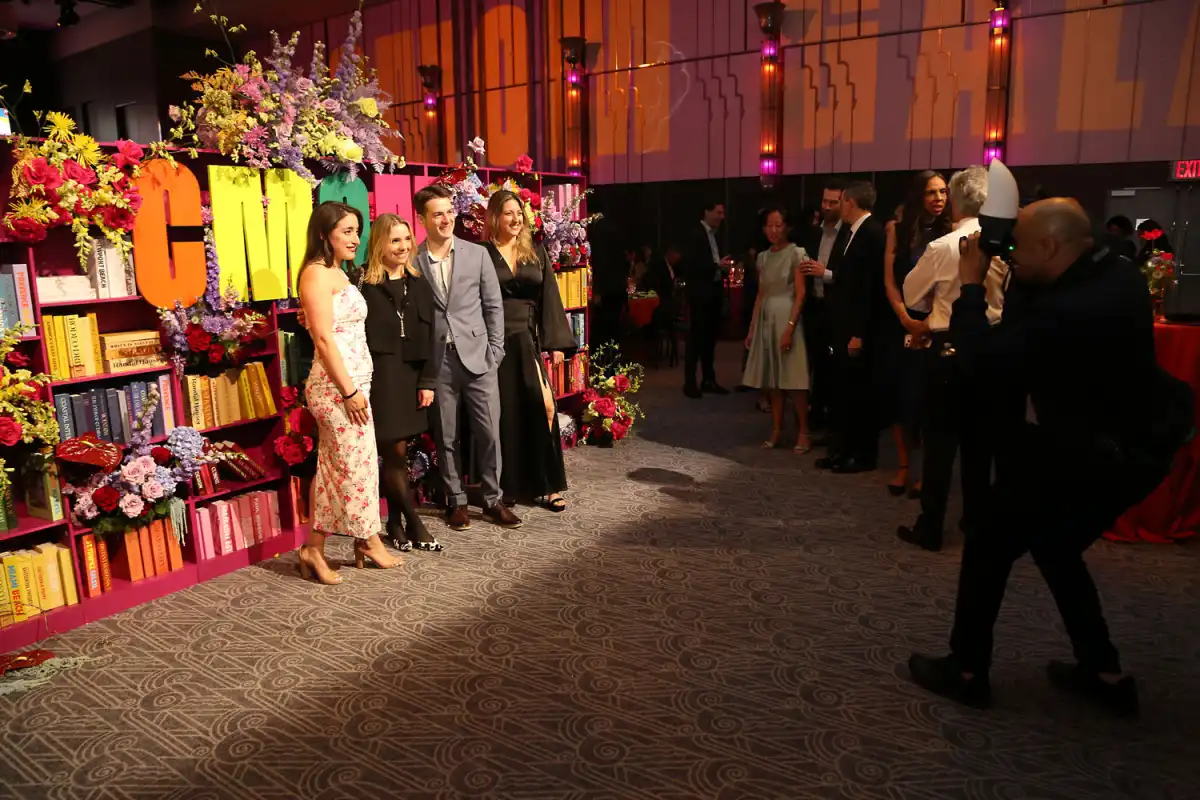
At the Children’s Museum of Manhattan, that early ignition is not left to chance, it is cultivated with care and intention, embedded into spaces that invite participation rather than observation. The recent gathering at the Ziegfeld Ballroom brought together more than five hundred individuals, though the true gravity of the evening rested in its focus on early literacy and the sobering reality that more than half of New York City students in grades three through eight are not reading proficiently, a statistic that quietly shapes the edges of opportunity long before adulthood ever arrives.
Reading, at its core, is an act of expansion, allowing a child to move beyond immediate surroundings and inhabit ideas, to form identity through language, and to translate imagination into something structured and lasting. Without that foundation, the world remains partially closed, while with it, possibility begins to unfold with a kind of quiet momentum. CMOM approaches this work with a deeply intentional sense of empathy, designing programs that are immersive and interactive, where language, movement, and expression intersect so that a child does not simply absorb information, though engages with it, tests it, and builds understanding through experience. As Nessia Kushner expressed with clarity, these spaces “send kids home with more words, more ideas, and more confidence than they arrived with,” a shift that may appear subtle in the moment, though becomes transformative over time as vocabulary evolves into agency and expression into access.


The reach extends deliberately into communities where access has historically been limited, with partnerships across Head Start programs, shelters, and organizations throughout the five boroughs ensuring that these opportunities are not reserved for a select few, though offered as a necessary foundation for growth . Within this framework, some of the most profound work unfolds in programs that connect incarcerated parents with their children, where the museum becomes a space of reconnection and shared discovery, allowing a child and parent to engage with an exhibit, a book, or a question in a way that restores presence and continuity. Science becomes a shared language, art becomes a bridge, and learning becomes a means of rebuilding bonds that extend far beyond the walls of the institution.
The evening itself reflected this ethos with cohesion and clarity, as Brooklyn United’s drumline brought a rhythm that felt both immediate and forward-moving, grounding the room in the very generation it aims to support, while Linda E. Johnson underscored the broader impact with the reminder that creating spaces where children can “dream boldly and build fearlessly” shapes not only individual lives, though the communities that will emerge from them. There is a growing awareness that meaningful impact is measured not by visibility, though by sustained influence, and the Children’s Museum of Manhattan operates within that understanding, investing in the earliest stages of development with the knowledge that this is where long-term change takes root.
Plans for the new space at West 96th Street and Central Park West will expand capacity and deepen reach, though the core intention remains steady, centered on nurturing curiosity, strengthening literacy, and cultivating a generation equipped not only with knowledge, though with the ability to think expansively, connect deeply, and lead with empathy.
That first moment of wonder—the one that quietly shifts perception and invites a child to engage fully with the world—remains the most powerful point of entry.
Here, it is protected.
Here, it is carried forward.
CMOM.ORG