Gov. Kathy Hochul on Tuesday shot down a request by Mayor Zohran Mamdani and City Council Speaker Julie Menin to change a tax credit to help fill a $5.4 billion city budget deficit.
Mamdani and Menin had asked state lawmakers to authorize changes to the pass-through entity tax, or PTET, which allows some business people to keep state and local tax deductions that were limited by a 2017 federal tax law. The mayor and speaker said the changes would generate an estimated $1 billion in revenue for the city.
But Hochul said she sees the proposed PTET cut as a personal tax increase.
“That’s why it’s not happening,” she said at an unrelated event outside Albany. “We’re not changing PTET.”
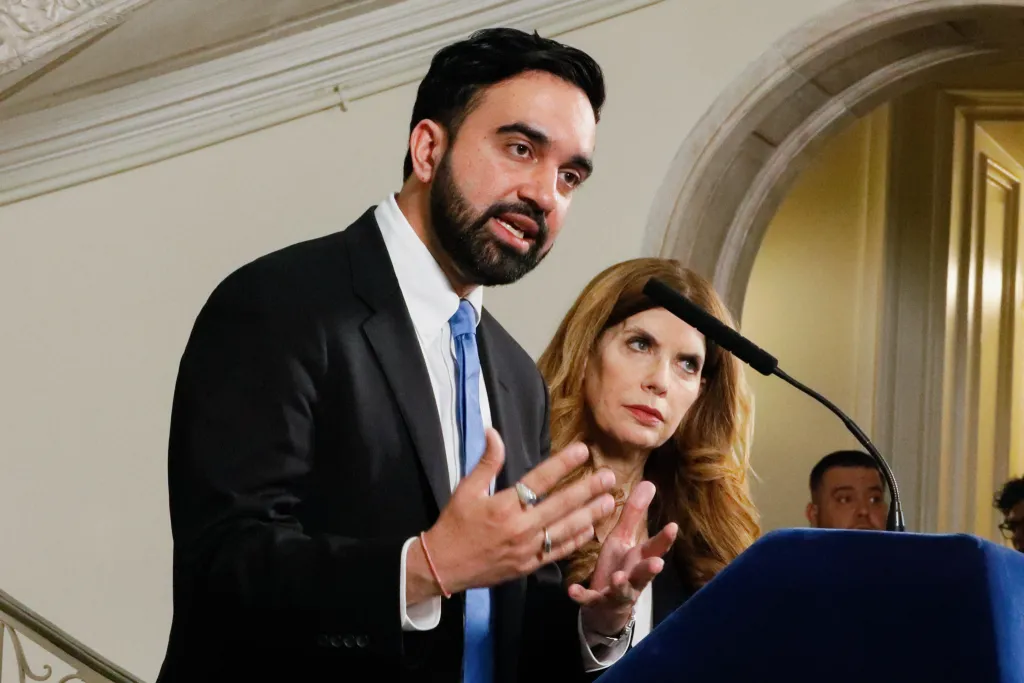
Menin and Mamdani, appearing in the City Hall rotunda at their the first joint press conference since they began their contentious budget negotiations, also announced an extension of the city budget, which is due May 1, until May 12. The state budget, which was due April 1, is nearly a month late.
“A crisis of this scale cannot be solved without state action,” the mayor said. “Speaker Menin and I have already identified meaningful savings and we will continue that work carefully, deliberately and without cutting the services that New Yorkers rely on. But we cannot do it alone.”

Hochul took issue with that framing.
“What you’re doing is independent of our budget process,” she said. “We don’t have to be done in order for you to do yours. We’re on different timetables.” Cities and towns typically set their budgets after the state budget is completed, so they know how much aid they’ll be getting from Albany.
“I think it’s crystal clear that we already have helped them,” Hochul said, pointing to $4 billion in assistance the state agreed to provide the city in this budget cycle, as well as the agreement for a new tax on luxury second homes in New York City.
Hochul, who is running for reelection this year, said Mamdani and Menin need “to do what every other city has had to do,” by looking at expenses and identifying the line items growing exponentially.
To save money, Mamdani has floated holding off on mandates to shrink class sizes and is fighting a lawsuit that would require the city to expand its rental voucher system.
He and Menin also asked the legislature to allow the city to reduce planned payments to the city’s five pension funds that are being made to make up for years of underfunding.
“There is no amount of savings that will absolve Albany from the partnership that’s required to get all of us to a balanced budget by the end of this process,” Mamdani said.
Trump Tax Law Work-Around
The PTET was instituted after the 2017 Trump tax cuts that sharply limited the state and local tax deduction. States like New York allowed people who owned closely held businesses or partnerships to pay state and local income taxes directly from their businesses, preserving the full federal tax deduction.
The state and local income tax payments were the same as if they paid the tax on their personal returns, but their federal taxes would be lower. The Mamdani-Menin plan would amount to a state and local tax increase for those people. The leaders said the proposed PTET change, from a full credit to 75%, would be temporary, though they did not name a timeline.

Mamdani described the PTET as “essentially a loophole that allows high-income earners to reduce their federal tax burden.”
In addition to the PTET changes, Menin and Mamdani also called on Albany to restore state Aid and Incentives to Municipalities funding, which the state stopped during the Great Recession of 2007 to 2009. They said it would amount to about $400 million per year.
Hochul, however, threw cold water on that ask, too, saying the state provides AIM funding for municipalities with property tax caps — and New York City does not have such a cap.
Mayor and Speaker Aligned
Menin and Mamdani’s joint request marks a turning point for the duo, who had been in opposition as city budget negotiations took shape.
The Council slammed the mayor’s last-resort pitch in February to increase property taxes, which would require approval from the 51-member body.
Mamdani later criticized the Council’s response to his preliminary budget, saying their savings plan – which filled a more than $5 billion deficit without taking from the city’s reserves, finding savings elsewhere – was “unrealistic.”
Still, on Tuesday, the two leaders struck the same note, emphasizing that New York City contributes over 55% of the state’s revenues but gets back 42% in return.
“Despite being the economic engine of the state, the city sends billions of dollars to Albany each year and sends more than it receives in return,” Menin said. “We must finally address this imbalance.”
Greg David and Katie Honan contributed reporting.
Our nonprofit newsroom relies on donations from readers to sustain our local reporting and keep it free for all New Yorkers. Donate to THE CITY today.
The post Hochul Refuses NYC Tax Move in Budget Showdown appeared first on THE CITY – NYC News.