Dario Amodei, CEO of Anthropic, recently declared that “50% of all entry-level lawyers, consultants, and finance professionals will be completely wiped out within the next 1–5 years.” That’s a remarkable claim—and probably wrong in a way that reveals something important about the gap between what AI can do and what the economy will actually do with it.
AI is undeniably impressive. It can already handle a wide range of professional tasks. Large language models draft legal memos, build financial models, and generate the sort of analysis that fills the early years of many careers. The technical capability is real.
But “can perform the tasks” does not mean “will eliminate the jobs.” Between those two claims lies an enormous institutional chasm—one the AI hype cycle, which conveniently serves both fundraising and regulatory agendas, tends to gloss over.
Someone Still Gets Sued
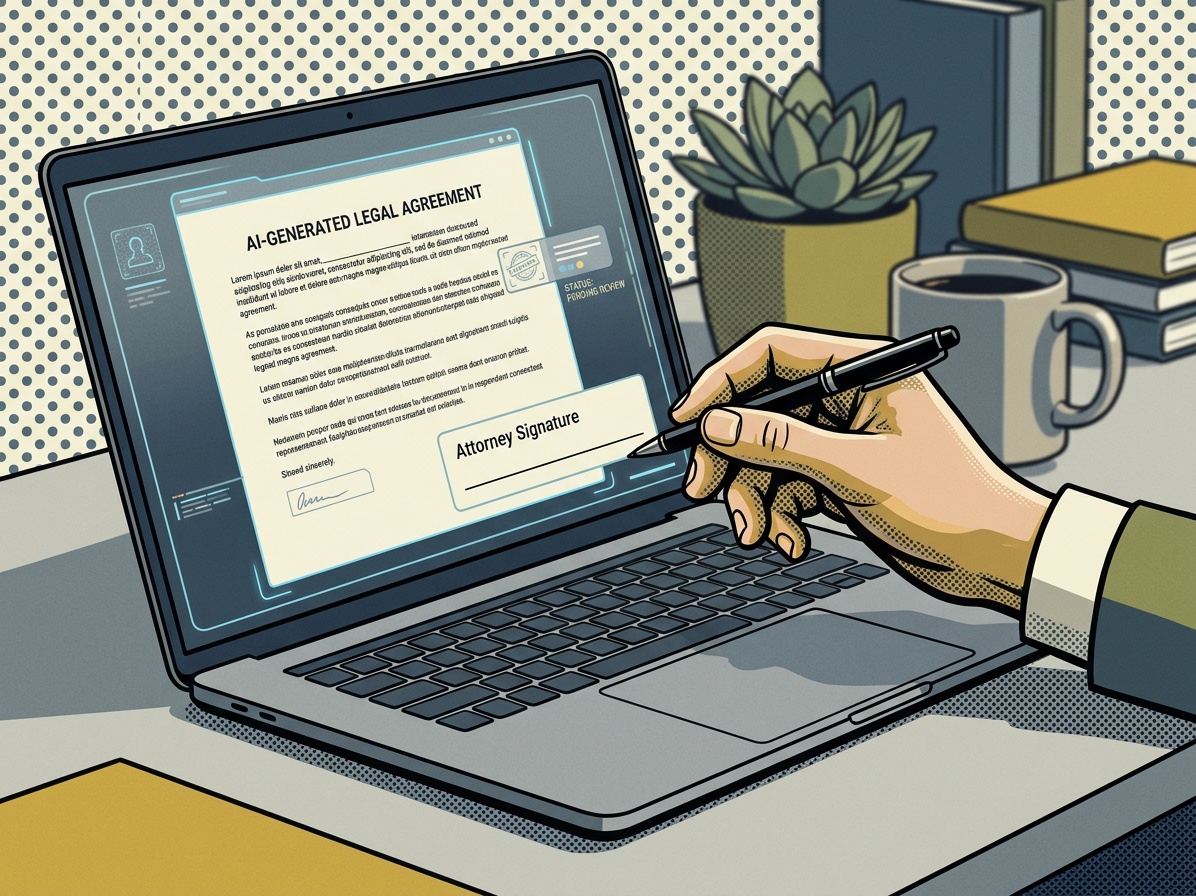
Predictions like Amodei’s run into a basic problem: someone has to be liable when things go wrong. When an AI-drafted contract contains an error that costs a client millions, who gets sued? When an AI-generated financial analysis leads to a bad investment, who faces the shareholders’ lawsuit? Not the AI—and not, in any practical sense, the AI developer. The information asymmetries involved in anticipating every downstream use of a general-purpose model are impossible to manage. Liability will flow, as it always has, to the human professionals who apply these tools.
That reality does more than preserve a thin accountability layer. It demands real judgment. A pilot doesn’t just confirm that the autopilot is engaged; he needs thousands of hours of flight time to recognize when the system is subtly off and intervene before it matters. An attending physician doesn’t simply initial an AI-assisted radiology read; she needs years of training to understand the clinical context the model never sees. The accountant signing off on AI-prepared tax filings must know the tax code well enough to catch the confident-sounding hallucination that triggers an audit.
Professional expertise is not a formality layered on top of automation. It is the prerequisite for using automation responsibly. The entire structure of professional licensing, fiduciary duty, and malpractice law reflects a simple reality: complex economies require people who can be held accountable for informed judgment. AI changes the tools. It does not change that institutional requirement, or eliminate the need for professionals who actually know what they are doing.
If anything, liability cuts the other way. These professions will invest more—not less—in training people to work effectively with AI. That means entry-level professionals who understand their domain well enough to supervise AI output, not a world in which they have been “wiped out.”
The Economy Isn’t in a Hurry
There’s a deeper reason to doubt dramatic displacement claims. Economists have wrestled with it for decades. In 1987, Robert Solow observed that “you can see the computer age everywhere but in the productivity statistics.” The IT revolution was supposed to supercharge output. Instead, productivity growth slowed—from about 3% annually in the 1960s to roughly 1% in the 1980s. Economists now call this the Solow Paradox. Despite a brief surge in the late 1990s, the broader patterns has held through successive waves of automation.
Why? The leading explanation comes from Erik Brynjolfsson, Daniel Rock, and Chad Syverson’s “Productivity J-Curve.” New technologies require costly, time-consuming complements: reorganized workflows, retrained workers, redesigned processes. Those investments depress measured productivity before gains materialize. That account explains a lot.
But a less polite explanation sits in plain view. A growing body of organizational-behavior research—beginning with Yili Hong Lim’s work on “cyberloafing“—shows that workers routinely repurpose workplace technology for personal use, and firms largely tolerate it. When email replaced memos, people didn’t produce more memos-worth of work. They spent some of the saved time in meetings, in workplace socializing, or in the ambient task-switching that looks like busyness but rarely shows up in productivity data. Management, broadly speaking, let it happen. Organizations are not pure productivity-maximizing machines; they are social institutions with a revealed tolerance for slack.
That insight connects to David Graeber’s thesis about “bullshit jobs.” Graeber relied more on anecdote than systematic evidence, and he pushed the argument too far. But he identified something real. A nontrivial share of modern employment exists not because it maximizes output, but because organizations and societies value other things—structure, social belonging, status hierarchies. How many corporate roles created in the past two decades reflect those preferences more than a drive to squeeze out every last unit of output?
If that sounds abstract, consider a canonical case. When ATMs spread in the 1980s, forecasts predicted the end of bank tellers. Instead, teller employment grew as ATMs proliferated. Lower per-branch costs led banks to open more branches. Tellers shifted from counting cash to selling financial products and managing customer relationships. The jobs changed; they didn’t disappear. Daron Acemoglu and Pascual Restrepo formalize this dynamic in their “Automation and New Tasks” framework: automation displaces labor from existing tasks, but it also creates new ones where human comparative advantage reasserts itself. The net effect on employment depends on institutions, not just technical capability.
The Apocalypse Has a Business Model
None of this means the transition will be painless, or that liability rules or regulatory requirements will—or should—freeze the workforce in place. AI will have real distributional effects, and those effects warrant serious policy attention. But “serious policy attention” is a far cry from “50% of entry-level professionals will be wiped out.”
It’s also worth asking who benefits from the apocalyptic framing. AI companies do. Existential predictions help justify extraordinary valuations. They also invite regulatory frameworks that tend to favor well-capitalized incumbents who can absorb compliance costs. The hype cycle serves financial and political interests at the same time. The loudest voices warning about the storm are often the ones selling the umbrellas.
The more likely outcome is messier—and more human. AI will automate tasks, reshape roles, and demand new skills. Some jobs will disappear; others will emerge. Organizations will convert some efficiency gains into slack, leisure, and the persistent preference for working with other people.
And when something goes wrong, someone will still be responsible. That means someone will still need to know enough to deserve that responsibility. This is not a world in which entry-level professionals vanish. It is a world in which they use better tools and do different work. History suggests that’s exactly how these transitions play out.