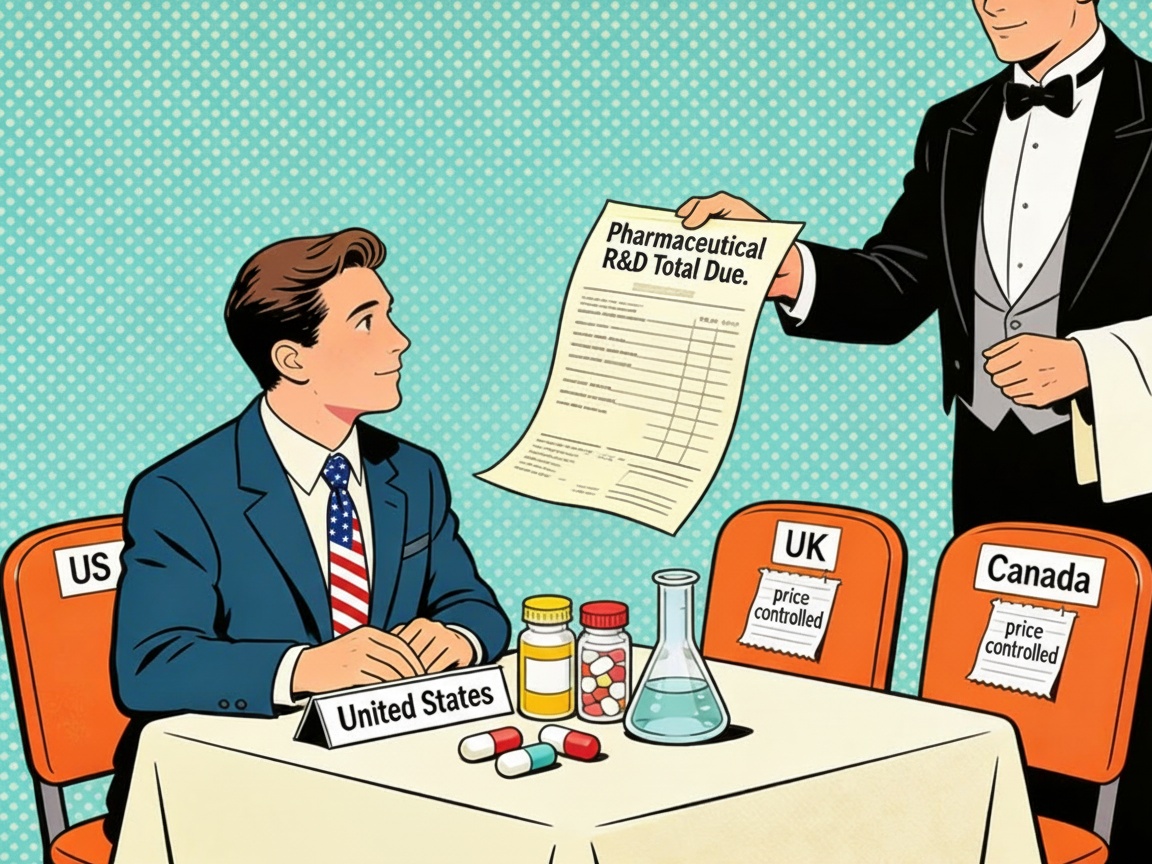
The Facilities for Medicare & Medicaid Companies (CMS) has proposed two sweeping Innovation Middle fashions—the International Benchmark for Environment friendly Drug Pricing Mannequin (GLOBE) and the Guarding U.S. Medicare Towards Rising Drug Prices Mannequin (GUARD)—that may tie Medicare drug funds to costs set by overseas governments. Framed as pragmatic cost-containment instruments, the fashions would import overseas worth controls straight into Medicare’s reimbursement structure.
That method rests on a false premise. American drug costs should not excessive as a result of U.S. markets lack regulation. The other is nearer to the reality. The US already operates inside a dense internet of federal and state intervention: Medicare reimbursement formulation, obligatory rebates, Inflation Discount Act “negotiation,” state-level protection mandates, and a Meals and Drug Administration (FDA) approval course of marked by excessive compliance prices, protracted overview timelines, and important boundaries to entry. Overseas governments then suppress pharmaceutical costs overseas, shifting a disproportionate share of world research-and-development prices onto the US.
If that’s the distortion, importing overseas worth ceilings into Medicare isn’t an answer. It’s capitulation—one other bureaucratic contrivance layered onto an already overregulated system.
The higher response is disciplined commerce enforcement: using Part 301 of the Commerce Act of 1974 to confront sustained overseas worth suppression as an unfair commerce observe that burdens U.S. commerce.
Low-cost Medicine, Costly Penalties
Many OECD international locations safe decrease drug costs not by decentralized competitors, however by centralized price-setting, monopsony bargaining, and specific or implicit rationing. Governments leverage nationwide buying energy to impose administratively decided ceilings beneath market-clearing ranges.
Pharmaceutical analysis and improvement appears to be like nothing like a typical manufacturing market. It includes excessive mounted prices, excessive uncertainty, and international scale. The price of a profitable remedy displays not solely that product’s improvement, but in addition the various candidates that fail. Corporations should recuperate these sunk investments someplace.
When overseas governments suppress costs by state energy, price restoration shifts to jurisdictions that retain comparatively market-oriented pricing. For many years, the US has carried a lot of that burden.
GLOBE and GUARD wouldn’t appropriate the asymmetry. They might prolong it. If the world’s largest pharmaceutical market adopts foreign-style administrative pricing, anticipated returns fall, marginal R&D tasks grow to be much less viable, and capital strikes away from high-risk therapeutic areas. The long-run impact of sustained worth ceilings isn’t merely decrease reimbursement outlays. It’s slower innovation.
Benchmarking Towards Politics
Overseas worth benchmarking additionally rests on a deeper financial error.
Market costs should not arbitrary. In aggressive markets, they mixture dispersed details about threat, shortage, time desire, and alternative price. As Ludwig von Mises defined in “Human Motion,” markets function as a dynamic course of that generates the worth indicators mandatory for rational financial calculation.
Overseas drug costs should not market outcomes. They’re political artifacts—merchandise of home finances constraints and monopsony leverage. Treating them as impartial benchmarks replaces entrepreneurial worth discovery with bureaucratic calculation.
That substitution could trim short-term Medicare spending. It additionally distorts capital allocation in an trade that depends upon forward-looking funding indicators. When authorities replaces market costs with administered ones, the informational operate of costs degrades, and long-run innovation follows.
Don’t Import Value Controls—Export Penalties
If overseas governments are free-riding on U.S.-financed pharmaceutical innovation, the response shouldn’t be imitation. It ought to be confrontation.
The Supreme Courtroom’s current determination in Studying Sources, Inc. v. Trump clarified that the Worldwide Emergency Financial Powers Act (IEEPA) doesn’t confer open-ended tariff authority untethered from statutory limits. The choice didn’t get rid of commerce cures. It reaffirmed that they need to proceed by correct statutory channels.
Part 301 of the Commerce Act of 1974 expressly authorizes the Workplace of the U.S. Commerce Consultant to research and reply to overseas acts, insurance policies, or practices which might be unreasonable or discriminatory and that burden U.S. commerce. Sustained, state-imposed pharmaceutical worth suppression that shifts international R&D price restoration onto American corporations matches squarely inside that framework.
A critical response wouldn’t be symbolic. It could contain escalating reciprocal tariffs utilized broadly—not solely to prescription drugs, however throughout traded items—in opposition to international locations that keep coercive pharmaceutical worth controls. The tariffs would stay in place, and improve if mandatory, till these governments abandon monopsony price-setting and permit market-based pricing for medicines bought inside their borders.
The target isn’t protectionism for its personal sake. It’s symmetry. If overseas governments suppress drug costs by state energy whereas benefiting from American innovation, they need to face corresponding financial penalties. Commerce enforcement creates leverage. Importing their worth controls into Medicare rewards the distortion.
Drug Pricing and Nationwide Safety
Pharmaceutical innovation capability is not only an financial asset. It’s a strategic one.
The power to develop vaccines, oncology therapies, biologics, and superior medical countermeasures depends upon a powerful home R&D ecosystem. Sustained suppression of anticipated returns in innovation-intensive sectors erodes that ecosystem over time.
Latest commerce debates more and more acknowledge that supply-chain resilience and home manufacturing capability carry national-security implications. Biomedical innovation isn’t any exception. The place technological management and emergency responsiveness matter, financial safety and nationwide safety converge.
Importing overseas administrative pricing wouldn’t merely lower expenditures. It could weaken resilience by undermining the American pharmaceutical innovation base.
Free Commerce Isn’t One-Sided
Some critics will argue tariffs are inconsistent with free-market rules. That objection misunderstands the classical-liberal place.
Ludwig von Mises, Friedrich Hayek, and Murray Rothbard opposed everlasting protectionism and home cartelization. They defended free commerce below voluntary alternate and within the absence of state-imposed distortions. Free commerce presupposes reciprocity.
When overseas governments impose coercive worth ceilings that systematically distort international markets, the buying and selling setting is now not impartial. A brief, focused response geared toward counteracting overseas intervention and restoring aggressive circumstances doesn’t abandon market rules. It makes an attempt to reestablish them.
The long-term goal stays the elimination of each tariffs and worth controls. It isn’t free commerce till each are gone. Importing overseas intervention into Medicare shouldn’t be mistaken for constancy to market rules.
Paperwork vs. Innovation
GLOBE and GUARD would layer new federal intervention onto an already distorted system. They don’t deal with the underlying causes of excessive drug costs. They exchange market self-discipline with bureaucratic engineering. Historical past—and the teachings of Austrian economics, specifically—recommend that increasing administrative worth management doesn’t treatment structural distortions. It compounds them.
Overseas governments suppress returns overseas, whereas the US absorbs a disproportionate share of world R&D price restoration. Importing overseas worth ceilings into Medicare weakens home innovation incentives with out prompting buying and selling companions to reform. That’s not a correction. It’s a retreat.
If policymakers wish to deal with international asymmetries in pharmaceutical pricing, disciplined commerce enforcement below Part 301 provides a extra coherent instrument.
The US doesn’t want extra authorities pricing formulation. It wants much less intervention and stronger market self-discipline. Markets—not bureaucratic contrivances—generate innovation. We should always not abandon them for foreign-style management.
