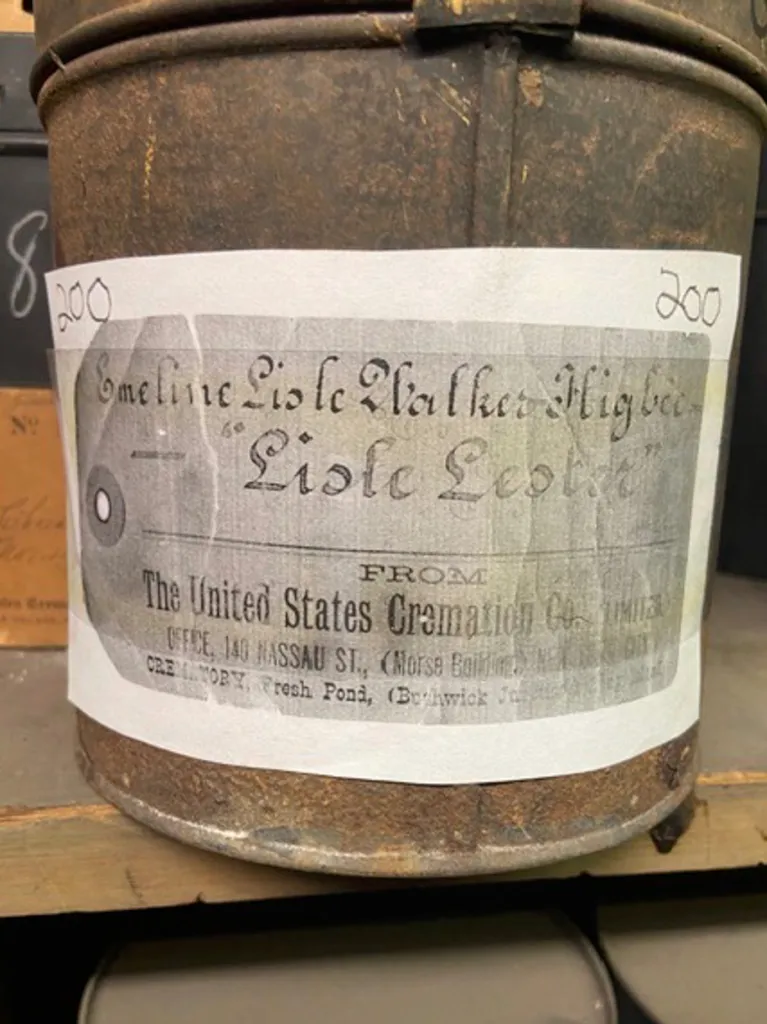
In the 1800s, a journalist using the pen name Lisle Lester left her childhood home in Wisconsin and set off to create a life of adventure and travel typically unheard of for a woman at that time.
She launched the first magazine in Wisconsin, The Badger State Monthly, and later hired and organized the first women typesetters at the Milwaukee Sentinel. She moved to San Francisco to become editor of the Pacific Monthly, and hired female typesetters there.
Lester, born Sophia Walker, traveled around the world as an orator, and her work as a journalist and dramatist took her to Hawaii, South America, the Sandwich Islands and the West Indies. She traveled around the world by stagecoach and boat, marrying twice, with the ups and downs of her life chronicled for years in newspapers across the country.
She was called a genius, and a thorough journalist. Mark Twain said she was “probably the worst writer in the world.”

Letser moved to New York City by her 40s as she looked for treatment for the deafness caused by diphtheria that put an end to her sold-out performances. Although she was working as a correspondent for a Washington newspaper, she had a hard time making a living without her performances, historians said; she worked at a boarding house on 29th and Broadway just to afford a place to live. Lester died alone at 51 of pneumonia, according to her obituary and historians.
It was a lonely and quiet end to a trailblazer for women, and to a life filled with adventure, bravery and literary feuds.
For 138 years, what’s left of Lisle Lester was kept in a rusty bucket on a shelf with the other unclaimed remains at a crematorium in Middle Village, Queens. And she was destined to stay there until a group of women from Lester’s hometown of Fond Du Lac, Wisc., stepped in to bring her home.
“It’s pretty amazing that they’re still sitting on a shelf,” Laurel Munger, a retired public defender and a member of Soroptimist International of Fond Du Lac, a global nonprofit focused on educating women and girls, told The City Reporter earlier this year.
Munger and other members of the Soroptimists spent years researching Lester and then hired a lawyer to petition a Queens court to get her remains shipped back. It took years of work, but Lester’s ashes were finally returned in June, underscoring the often complicated process of disinterning remains.
On Saturday, the Soroptimists will host a long-belated memorial service and burial at Calvary Cemetery in Fond Du Lac, where Lester will be memorialized and buried in a marble urn in the old section of the cemetery.

“It seemed like just an amazing fit to take this woman who was such a champion for women’s rights and a champion for women and honor her last wishes which were to be back in Fond Du Lac,” Dawn Nelson, a member of Soroptimist International and a funeral director, said.
“It’s a pretty small-knit community and this community really rallies around people when there’s an issue or a problem,” Nelson told The City Reporter. “That’s the kind of community she’s coming back to.”
138 Years of Storage Fees
Fond Du Lac’s interest in regaining their hometown hero kicked off in 2001, when a biography of Lester was released, according to historian Tracy Reinhardt. That book noted she had died in New York and, per her wishes, was cremated in Queens. An obituary at the time said her ashes were supposed to be returned to relatives in Wisconsin, and it’s unclear why they never were.
Local historians confirmed Lester’s remains were at Fresh Pond Crematory — where she was the 200th person cremated — and made an effort to bring her back by 2003. But they were told by the cemetery that they would have to pay an $8,000 fee for the storage since 1888, which didn’t even include the cost to ship her home.
They dropped the effort due to the century’s worth of storage fees.
The effort was stirred back up in 2022, when the Soroptimists began organizing a women’s history luncheon featuring Lester’s story.

Nelson was brought in because of her work as a funeral director. She called the crematorium repeatedly before she finally spoke to a funeral director, explaining what they were trying to do.
“I basically told them somewhat nicely to charge a daily storage fee from 1888 was ridiculous,” she said, and they eventually settled on $700. The Soroptimists a snag when the helpful funeral director left, and they had to hire a lawyer to file the petition to get Lester’s cremated remains.
A lawyer for Fresh Pond Crematory did not respond to multiple requests for comment.
“The court really needed to prove that there was no next of kin, that anyone knew of, and we had to show an exhaustive search of that,” Nelson said. “And we had to show that there was evidence that she wanted to be buried in Fond Du Lac or she had a significant reason she wanted to be.”
Worth the Wait
The Soroptimists continued holding events to educate the town about Lester and to fundraise for the legal fees, which came out to around $2,500.
But the years-long effort to bring her home is worth it, they said.
“Women’s history is very important, given that our current political figures are trying to erase women’s history and Black history — we consider this extremely important,” Munger said.
For Nelson, it’s honoring the wishes of someone who is still an inspiration so many years later.
“She just did so many things. Even when it didn’t work out she just kept going on to the next thing…she was a warrior for women,” she said.
Our nonprofit newsroom relies on donations from readers to sustain our local reporting and keep it free for all New Yorkers. Donate to THE CITY today.
The post Bucket of Ashes: Pioneering Journalist’s Remains Take the Long Way Home from Queens Crematorium appeared first on The City Reporter.