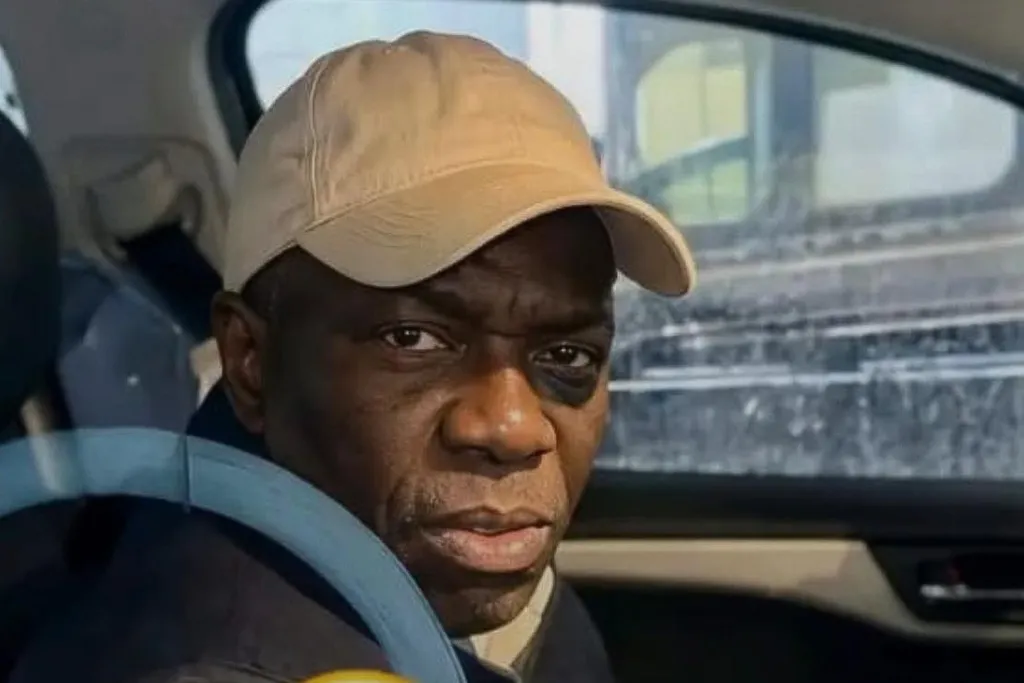
After driving a New York City taxi for nearly 20 years, the last trip Richard Coulibaly will take is home to Ivory Coast for his own funeral.
The cabbie’s return to the West African country he left three decades ago grew out of the New York Taxi Workers Alliance and fellow Ivorians tapping into a grassroots social media network to track down his relatives and raise at least $7,500 to help cover the journey and funeral expenses.
The union and police said Coulibaly was found dead at the wheel of his parked taxi in Harlem — not far from where he lived alone in a rented single room — around 5:30 p.m. on July 2, during a heat wave marked by the city’s first 100-degree day in more than a decade. The city’s Office of the Chief Medical Examiner said his cause of death remains under investigation.
His younger brother Christophe Coulibaly, 65, told The City Reporter he had not seen Richard since he left Ivory Coast for the United States in 1996, but the two kept in touch by phone and last spoke a week or two before he died. Yet, Christophe said he was unaware his brother was a cabbie until others informed him after his death.
“He told me he was doing other things,” the 65-year-old said in French in a phone interview this week.
He added that he was surprised to learn of his brother’s demise through the outreach from New York because he hadn’t seemed sick. The NYPD identified Richard as 68 years old, while his brother said he was 73.
“Was it too hot, did that have an effect on him?” Christophe said. “I really don’t know everything that happened.”
The father of four’s remains are set to be shipped in the coming days to the city of Abidjan, according to the Taxi Workers Alliance. As his loved ones await more details about when his body will arrive, Christophe said he is grateful to those who have pushed to return his brother to the family’s home village for burial.
“They have bled themselves dry, they have made an effort,” he said. “May God bless them and may their souls sanctify us for everything they have done.”
A Yeoman’s Effort to Find His Family
The search to locate Coulibaly’s relatives began taking shape in the hours after he was discovered in his cab at Frederick Douglass Boulevard and 116th Street.
“We started to get phone calls from drivers, like one who called and said, ‘I see a taxi pulled over, a lot of police there, an ambulance, looks like a driver died in his taxi,’” recalled Bhairavi Desai, executive director of the Taxi Workers Alliance. “So I went out there with another of our members.”
While they were initially unable to learn the man’s identity or get access to his phone from police because they weren’t next of kin, Desai said they confirmed Coulibaly’s name through a Queens taxi-medallion management company he worked with.
Connecting with his family in West Africa, however, presented a complex challenge that played out over several days. The cabbie’s last name provided a clue as to the southeastern region of Ivory Coast where some of his relatives live, but offered little else in the way of information.
The search was also hindered by Coulibaly’s largely solitary lifestyle, according to those involved in the endeavor.
Aboubacar Diakité, a Harlem small business owner whom Coulibaly had befriended over the years, acknowledged the cabbie led a “difficult” life centered around his job and would “start to cry” when he talked about his family.
“He just go home, sleep, come back to work,” said Diakité, who came to know Coulibaly after doing his taxes. “He was working, working, working, working, every day working.”
“He was isolated, his life was closed,” said Abdul Traore, 52, a fellow taxi driver who did not know Coulibaly but served as a contact to the Ivorian community and consulate.
Still, his last name was enough to start a search through Facebook and WhatsApp groups.
“I wrote a big note saying, ‘OK, we have a brother who just passed away in his yellow cab, and we wanted to know if anybody knows about his family or their whereabouts, they can contact me,’” said Saibou Sidibé, a one-time Uber driver from Ivory Coast. “I gave my phone number.”
Within days, he said, he received a call from a woman in the Washington D.C. area who turned out to be Coulibaly’s niece. Desai said the woman’s boyfriend had spotted a Facebook post about the driver’s death and flagged the last name for her.
“She said, ‘This picture looks like my uncle, so I want to confirm with you if this is him,’” Sidibé said. “I told her, ‘OK, I don’t have enough information, but I have his phone number. So if it’s your uncle, maybe you might know his phone number if he used to call you back home.’”
Sidibé said he heard back from her soon after the call ended, confirming the family connection. Then, he connected with Christophe Coulibaly to begin charting Richard’s long trip home.

‘This Is a Situation No One Will Forget’
An estimated 5,700 Ivorians live in the city, according to city Planning Department data. Among the 180,000 drivers licensed by the city’s Taxi & Limousine Commission, 1,179 — or just over a half-percent — identify their native country as Ivory Coast, TLC numbers show.
“It’s such a small community here, it truly was a needle in a haystack,” Desai said. “We are so grateful that there was a miracle that we were able to reach the family.”
Sidibé praised the Taxi Workers Alliance’s follow-through on a goal that seemed unlikely in the immediate wake of Richard Coulibaly’s death.
“This is a situation no one will forget,” he said. “When you pass away, we know how hard it is for people here, especially immigrants who know nobody. It’s luck, because some people pass away and the body’s there at the hospital, but nobody claims it.”
“This is the sad part of the story in the United States. Sometimes you’re by yourself and you’re just here to work and take care of your family,” Sidibé added.
Christophe Coulibaly said his family will set a date for his brother’s burial once his remains return home.
After that, Christophe said he will write a letter to “infinitely” express the family’s appreciation for everyone who helped Richard come back to Ivory Coast.
“Thank you to all the communities, all the religious communities, all the professional communities,” the younger brother said. “Thank you to the population, everyone who made an effort to gather the money to transfer his body to Abidjan.”
Our nonprofit newsroom relies on donations from readers to sustain our local reporting and keep it free for all New Yorkers. Donate to THE CITY today.
The post He Died in His NYC Taxi in a Heat Wave. Cabbies Are Returning His Body to Ivory Coast. appeared first on The City Reporter.
