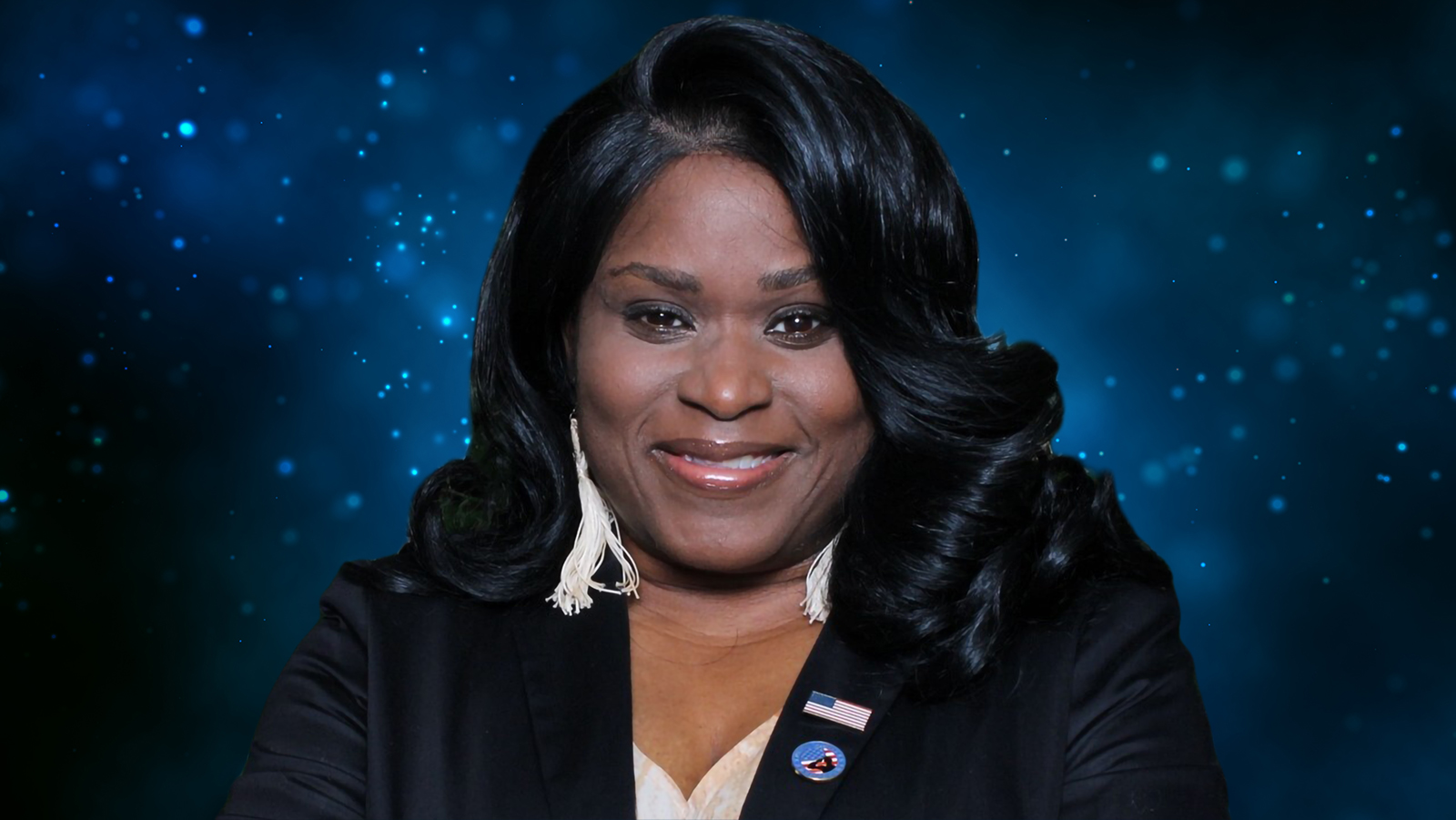
In the Democratic Primary, Lyles is competing with Army veteran Jon Harris, former Sarasota Mayor Kelly Kirschner, former broadcast journalist Glenn Pearson and healthcare policy expert Jan Schneider, the Democratic nominee in 2024.
The Democratic nominee will likely face Sydney Gruters, the wife of Republican National Committee Chair Joe Gruters, who is the heavy favorite on the GOP side.
Florida Politics asked all candidates to answer a few questions. We are publishing their responses unedited so voters can hear directly from candidates. Here’s what Lyles told us:
— Profession: Tamika Lyles is a United States Air Force veteran, healthcare professional, educator, adjunct professor, mediator, nonprofit founder, union member, and community advocate whose career has been dedicated to serving working families, veterans, students, and underserved communities.
— Education: Tamika Lyles holds a bachelor’s degree in Sociology with a concentration in Criminal Justice and a minor in Political Science, a Master of Science in Law, is a 2026 doctoral candidate in Law and Policy, and has dedicated her education to advancing justice, public service, and constitutional leadership.
— Years in district: 3 years but in Florida since 2012.
— Community involvement: Community service has been the foundation of Tamika Lyles’ life. She is the founder and president of Standing Heroes for Average Workers, Inc., where she has organized food drives, advocated for veterans, worked to prevent homelessness, and supported teachers, students, and working families. Tamika has served in numerous Democratic civic organizations, is an active union member, and volunteers her time mentoring future leaders and advocating for healthcare access and social justice. Whether serving as a veteran, educator, mediator, or nonprofit leader, she believes meaningful leadership begins with showing up, listening, and working alongside the community to solve problems.

— What are the biggest issues facing residents of this district? What’s one bill you’d like to introduce in Congress? The biggest challenges facing families in this district are affordability, healthcare, housing, and insurance. People are working harder than ever, yet too many still can’t afford groceries, rent, homeowners insurance, prescription medications, or a visit to the doctor. Veterans, seniors, teachers, and working families deserve an economy that works for them, not just for large corporations.
— What’s one bill you’d like to introduce in Congress? One of my first priorities in Congress would be introducing the Affordable Living and Healthcare Security Act. The legislation would expand access to affordable healthcare by creating a federal public option as a bridge to universal coverage, incentivize states to expand Medicaid, increase the supply of affordable housing through federal tax credits and workforce development, strengthen disaster mitigation to reduce insurance costs, and invest in infrastructure that creates good-paying union jobs. Every provision would be focused on one goal: lowering the cost of living while improving the quality of life for the people I represent.
Government should be judged by one simple question: Are people’s lives better because of the decisions we make? That’s the standard I’ll bring to Congress.
— Democrats blame Donald Trump for inflation, Republicans blame the lingering effects of the Joe Biden administration, while Americans just want their prices to go down. What can Congress do to ease the cost of living for working families? Congress should stop playing the blame game and start lowering costs. Working families don’t care whose fault inflation is; they care about whether they can afford to buy groceries, pay rent, fill a prescription, or keep their home insured.
Congress can reduce the cost of living by lowering healthcare costs through universal coverage and prescription drug negotiations, increasing the supply of affordable housing, investing in infrastructure and domestic manufacturing to strengthen supply chains, protecting competition by cracking down on price gouging and anti-competitive practices, and raising wages so they keep pace with the cost of living. We must also reform Florida’s property insurance system by expanding federal disaster mitigation investments that reduce risk and lower premiums over time.
— Do you believe AI will ultimately create more jobs than it eliminates, or should government slow its adoption to protect existing workers? What AI regulations or guardrails, if any, do you support? Artificial intelligence will transform the workforce, just as the internet did. Some jobs will be displaced, but AI also has the potential to create entirely new industries and millions of high-skilled jobs if we prepare our workforce. Government should not slow responsible innovation; it should ensure Americans are equipped to succeed in an AI-driven economy.
I support commonsense guardrails that protect privacy, require transparency when AI is used in critical decisions, prohibit algorithmic discrimination, strengthen cybersecurity, and hold developers accountable for harmful or negligent uses of AI. Congress should also invest in workforce retraining, STEM education, apprenticeships, and lifelong learning so workers are prepared for the jobs AI will create. The goal is not to choose between innovation and workers. We must lead the world in AI while ensuring technology expands opportunity, protects constitutional rights, and benefits the American people.
— Americans frequently complain about the cost and complexity of our healthcare system. What realistic solutions do you propose? America spends more on healthcare than any nation in the world, yet millions still struggle to afford care. The solution is to transition to universal healthcare through a phased approach that expands coverage while lowering costs. First, strengthen the Affordable Care Act, expand Medicaid in every state, and create a federal public option. Next, allow Medicare to negotiate prescription drug prices, increase price transparency, and reduce administrative waste. Finally, transition to a universal healthcare system that guarantees every American access to quality care regardless of income or employment.
Healthcare is a human right. We can lower costs, improve outcomes, and strengthen our economy by ensuring people receive preventive care before minor illnesses become expensive emergencies. Universal healthcare isn’t just good public policy; it’s a smart economic investment in America’s future.
— How should we counter China’s growing influence and power, and what can we do to ensure America retains its technological, military and economic advantages? China is America’s greatest strategic competitor, and we must compete by strengthening America. I support expanding domestic manufacturing of semiconductors, pharmaceuticals, and other critical technologies, investing in research, STEM education, and infrastructure, protecting intellectual property, strengthening cybersecurity, and maintaining the world’s strongest military. We should deepen alliances with our democratic partners while preserving diplomacy to reduce unnecessary conflict. America will lead by out-innovating, out-producing, and out-competing China while defending our economic security, national security, and constitutional values.
— About ending the ongoing conflicts in Iran and Ukraine, what should America’s goals and approach be? America’s objective must be clear: protect our national security, defend our allies, uphold international law, and avoid another endless war. In Ukraine, I support helping Ukraine defend its sovereignty while pursuing a negotiated peace that Ukraine freely accepts. With Iran, our focus should be preventing a nuclear-armed Iran, protecting U.S. personnel and freedom of navigation, and pursuing sustained diplomacy backed by strong deterrence. Recent events show that military pressure alone cannot produce lasting stability.
Congress must also reclaim its constitutional role in authorizing the use of military force. Diplomacy should always be our first option, military action our last, and any engagement must have clear objectives, congressional oversight, and a defined path to peace. America’s strength is measured not only by our military, but by our ability to lead with principle, resolve, and strategic judgment.
— Would you vote to continue funding Israel’s defense? Are there any conditions you want to impose on that funding? I support Israel’s right to exist and to protect its people from terrorism. I also believe the United States has a responsibility to uphold international law, human rights, and the consistent application of our values.
I cannot support unconditional military aid to any government whose leaders face credible allegations of war crimes. The International Criminal Court has issued an arrest warrant for Prime Minister Benjamin Netanyahu alleging war crimes and crimes against humanity. American taxpayer dollars should never be used in ways that contribute to violations of international humanitarian law or the deaths of innocent civilians.
I would support suspending offensive military assistance until there is meaningful accountability, compliance with U.S. and international law, protection of civilians, and unrestricted humanitarian access. At the same time, I support Israel’s legitimate right to defend itself against terrorist organizations such as Hamas, the immediate release of all hostages, and a negotiated peace that recognizes the security, dignity, and humanity of both Israelis and Palestinians. America must lead with principle, not selective accountability.
— The House recently voted to adopt year-round daylight saving time. How would you have voted? I would have insisted that Congress carefully evaluate the public health and safety impacts of permanent daylight saving time, particularly darker winter mornings for schoolchildren and early-morning workers before I could make a wholehearted decision. If the evidence ultimately shows permanent standard time better protects public health, I would support that. My priority is voting in favor of what best balances health, safety, and quality of life for the American people, guided by science rather than politics.
— Is there anything on which you disagree with your party? Yes. I believe elected officials should represent the people first and their party second. While I share the Democratic Party’s commitment to protecting civil rights, expanding healthcare, and strengthening workers’ rights, I won’t support any policy simply because my party does. For example, I believe the Democratic Party has too often accepted the influence of corporate money over the needs of working families, and I support stronger campaign finance reform. I also believe Congress should exercise greater constitutional oversight over military action and foreign aid, regardless of which party controls the White House. If my party is wrong, I’ll say so. My loyalty is to the Constitution and the people of Florida’s 16th Congressional District, not to a political party.
— Why are you the best nominee to win this seat in November? I believe I’m the strongest nominee because I’ve spent my career serving, not climbing the political ladder. As a veteran, educator, healthcare professional, nonprofit founder, mediator, and union member, I’ve fought for working families long before I asked for their vote. I understand the challenges facing this district because I’ve lived them; from navigating healthcare and housing insecurity to advocating for veterans, students, and families in crisis.
I’m offering practical solutions to lower the cost of living, expand access to healthcare, make housing more affordable, strengthen public education, and protect our constitutional rights. I will work with anyone, Republican, Democrat, or Independent, when it benefits the people of this district, and I’ll stand up to anyone when it doesn’t.
This campaign isn’t about political ambition. It’s about delivering results, restoring trust in government, and ensuring that every family in Florida’s 16th Congressional District has a representative who puts people before politics, every single time.
