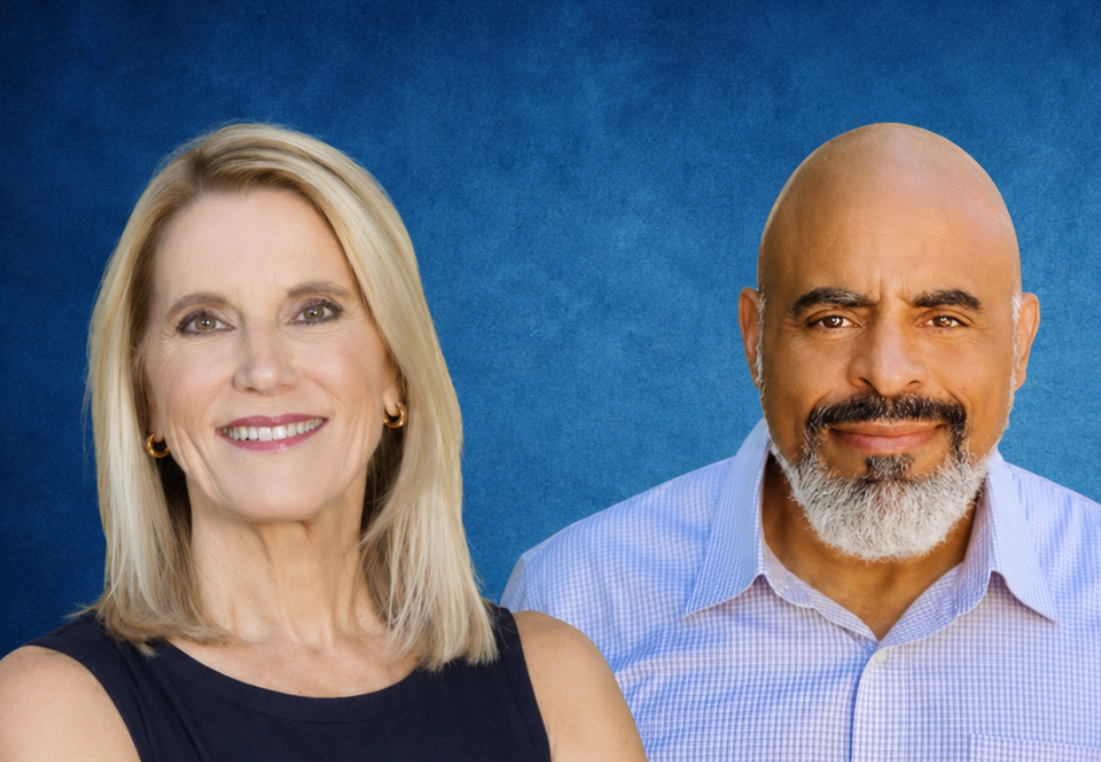
Voters in a District that spans Miami-Dade’s two most famous cities are set to weigh in on a runoff contest between an incumbent with ample advantages and an underdog challenger seeking his first elected post.
In one corner is Miami-Dade Commissioner Vicki Lopez, a seasoned political player with decades of experience, mounds of campaign cash, a plethora of endorsements and an existing claim to the seat.
In the other is Rob Piper, a Marine Corps veteran whom voters may know from his 2025 run for the Miami City Commission. He’s trying to deny Lopez a voter mandate after she joined the County Commission by appointment last year.
The contest tests Lopez’s legislative record and bipartisan support on what is technically a nonpartisan panel against Piper’s promise to curb development, challenge special interests, and make county government more accountable to residents.
In terms of money and institutional might, it’s a veritable David-versus-Goliath story.
Lopez, a Republican, won the most votes in a three-way race for the District 5 seat in August, taking 42.3% of the vote. Piper took 29.5%, edging out former Miami Commissioner Joe Sanchez for the runoff spot.
Neither reached the majority necessary to win outright.
District 5 spans parts of Miami and Miami Beach, including Brickell, Downtown, Little Havana, the Miami River, Mid Beach, The Roads, Silver Bluff, Shenandoah, South Beach and West Flagler.
Its elections are nonpartisan, but neither party holds a majority of the electorate. An October county tally counted 88,161 voters: about 33% Republican, 29% Democratic and 38% registered without party affiliation or with minor parties.
Hispanic voters account for roughly 57.5% of the electorate, non-Hispanic White voters 30.5%, Black voters 3% and other racial or ethnic groups 9%. About 26.5% are 66 or older.
Lopez, 68, beat out four other applicants for the appointment last November, after Democrat Eileen Higgins resigned to pursue her successful bid for Miami Mayor. Commissioners chose Lopez in a 7-5 vote after Chair Anthony Rodriguez rejected Vice Chair Kionne McGhee’s motion for a Special Election.
She joined the 13-member panel after three years in the House, where she passed most of the bills she filed, including the landmark Live Local Act, condominium oversight reforms, and legislation expanding access to condo-hardening grants.
She also sided against her Republican colleagues on prominent issues, opposing Florida’s six-week abortion ban and legislation aimed at lowering the minimum age for long-gun purchases — all while securing nearly $26 million in appropriations.
Lopez’s campaign to keep her County Commission seat has emphasized affordable and senior housing, cleaner waterways and help for small businesses. She has also sought housing eligibility calculations that better reflect neighborhood incomes, rather than measuring Little Havana households against wealthier Brickell residents.
Still, the Live Local Act, which has undergone three revisions since it passed in 2023, has become a flashpoint for residents.
The law gives developers unprecedented building allowances, letting them exceed local zoning limits if at least 40% of their units remain affordable at 140% of the area median income for 30 years.
Piper has argued those concessions favor developers and undermine local planning, telling WLRN recently that he wants the law repealed or substantially revised. He favors preserving existing affordable apartments and building on available lots without extending development toward the Everglades.
Lopez told the outlet the law still “needs reform,” noting that the Senate blocked protections she sought for barrier islands.
She’s since worked at the local level to address concerns she couldn’t in Tallahassee. One week after WLRN published its interview with her, Crescent Heights developer Russell Galbut withdrew three proposed Miami Beach towers after discussions with Lopez and Miami Beach Commissioner Alex Fernandez.
She also passed measures to approve revised lease agreements advancing a two-tower development with 439 affordable and workforce units and supported legislation to reassess federal area median income calculations and alternatives, including comparisons by Commission districts, to ensure the rates are accurate and reliable.
Officials backing Lopez’s election bid include Miami-Dade Mayor Daniella Levine Cava, the county’s most prominent elected Democrat; Sheriff Rosie Cordero-Stutz, a Republican; Miami Commissioners Miguel Gabela and Christine King; all six Miami Beach Commissioners; and former Miami Beach Mayor and state Rep. Dan Gelber.
Organizations endorsing her include the South Florida AFL-CIO, AFSCME Florida, two SEIU chapters, the South Florida Police Benevolent Association, two firefighter unions, Miami Realtors PAC and the Bay of Pigs Veterans Association.
Lopez’s decades-long public service record isn’t without controversy. She resigned from the Lee County Commission in the 1990s and served 15 months in prison for honest services fraud. Her sentence was commuted and the conviction later set aside.
She subsequently worked on criminal justice reform under former Gov. Jeb Bush, including leading his Ex-Offender Task Force.
In 2024, the Miami Herald Editorial Board rescinded an endorsement it had given her re-election campaign after reporting that her son joined a school bus camera company shortly after she co-sponsored legislation benefiting the industry. Lopez denied wrongdoing.

This year, the Herald Board is backing Piper, 54, who spent 23 years in the Marines, including three Iraq combat tours, before retiring in 2016.
He earned a doctorate in international relations from Florida International University, organized a 2020 recall campaign against then-Miami Commissioner Joe Carollo and unsuccessfully sought a Miami Commission seat last year.
Piper proposes a revenue-generation task force to scrutinize county finances, greater investment in flood protection and climate resilience, and a fee structure that asks wealthier residents to pay more.
He also wants to protect the Everglades- and Biscayne Bay-protecting Urban Development Boundary from expansion, increase affordable housing and reduce special-interest influence at County Hall.
His platform also includes monthly town halls, weekly constituent updates, and a public tool to track the county budget. On housing, he proposes a county-owned bank to finance affordable homes and small businesses, expanded community land trusts and tax relief for longtime homeowners at risk of displacement.
He also proposes expanding the county auditor’s resources and new “sunshine mechanisms” to better inform residents of the influence private interests have on county policymaking.
Both candidates oppose the proposed state property tax amendment, Amendment 3. Lopez, who co-chaired a special House panel in 2025 that helped produce several tax-cutting bills the Senate ultimately ignored, warned the change would cost Miami-Dade nearly $1 billion over two years.
Piper said he doesn’t agree with the proposal because it doesn’t do enough to help established, longtime homeowners over well-to-do transplants seeking more financially favorable environs.
Endorsers to his campaign include Surfside Commissioner Gerardo Vildostegui, former U.S. Rep. Joe Garcia, former state Rep. David Richardson, former Pinecrest Vice Mayor Anna Hochkammer and historian-activist Marvin Dunn, whose lawsuit last year temporarily stalled the transfer of valuable Miami Dade College land for a future Donald Trump presidential library.
Piper also has support from VoteVets, the Florida Coalition to Advance Racial Equity, and a handful of Democratic groups, in addition to the Herald, which called him a “critical thinker with a deep understanding of constituents” who is “not a practiced politician (but) appears committed to serve.”
On fundraising, the divide is gargantuan. Lopez raised about $468,500 through her county-level campaign account, with about $44,000 in mid-October. By then, her state-level political committee held another $134,000 after collecting and spending about $1.8 million since her appointment, including recent five-figure ad buys highlighting her legislative achievements and District 5 priorities.
Piper, meanwhile, raised about $17,000 and spent roughly $9,000, drawing overwhelmingly from individual donors.
Lopez’s funding came from a mix of personal checks, corporate contributions, and political donations.
Election Day is Nov. 3.