Iranian forces watched another one of their oil tankers go dead in the water in the Strait of Hormuz. U.S. naval assets from the Abraham Lincoln carrier group identified the vessel pushing through restricted waters in direct violation of the blockade. Warnings went out. The crew ignored them.
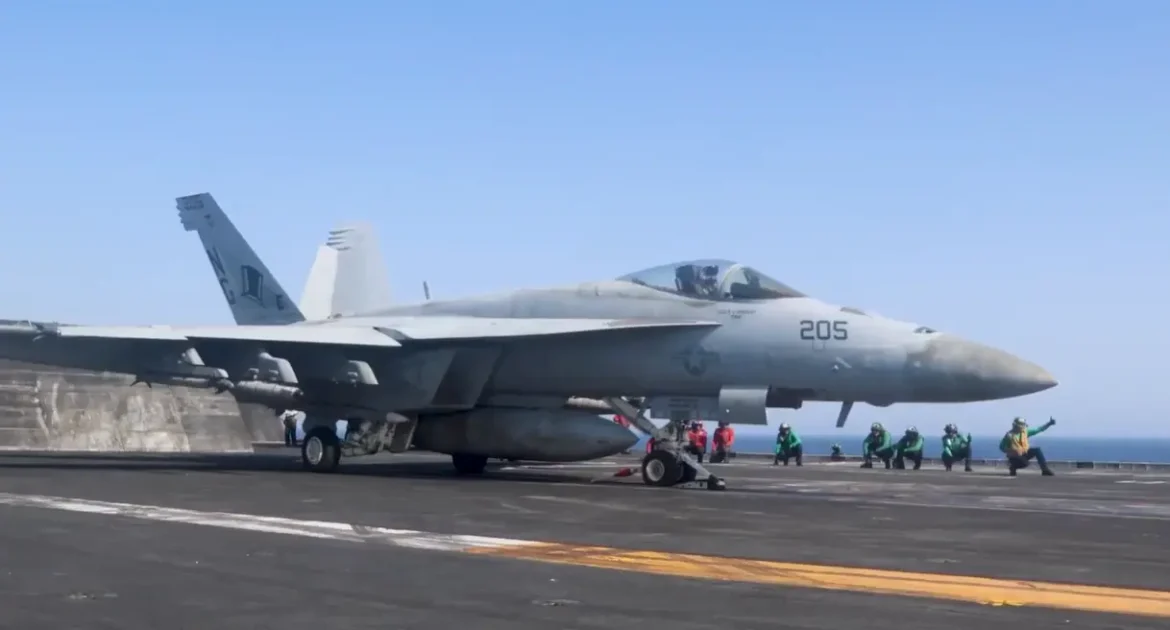
Precision cannon fire from an F/A-18 Super Hornet took out the rudder and engine. The tanker now sits immobilized, the second one stopped cold in recent weeks. CENTCOM holds the operational logs and sensor data that prove exactly what went down.
Tehran spun the story their way within hours. The regime claimed a full-scale counterattack: missiles, drones, and swarms of fast-attack boats targeting U.S. destroyers USS Truxtun, USS Mason, and USS Rafael Peralta. State media broadcast footage of explosions and declared direct hits that forced American ships to retreat.
IRGC commanders issued statements bragging about victory and American weakness. The message was aimed straight at their own population and their backers in Moscow and Beijing.
None of it matched reality. U.S. layered defenses intercepted every incoming threat. American ships returned fire with surgical strikes that destroyed Iranian launch sites, radar installations, and command nodes along the coast. No U.S. vessel sustained damage. The destroyers completed their transit and maintained position. The blockade continued without interruption.
This sequence exposes the regime’s operational playbook and its mounting desperation. Oil is the only real leverage Tehran has left. Every barrel that moves through Hormuz:
- Funds the IRGC
- Pays for proxy militias in Lebanon, Yemen, and Iraq
- Keeps the nuclear enrichment program alive
The blockade, tightened under the Trump administration’s enforcement rules in April, directly targets those revenue streams. Ships that comply pass. Violators get stopped. The system is simple, consistent, and effective. It cuts the financial oxygen the mullahs need to sustain their network of influence and internal control.
🚨 JUST NOW: Iran is FURIOUSLY claiming that the US military has disabled a tanker in the Strait of Hormuz — and claims the regime launched strikes on US Navy ships in response
Iran bluffs that the US “RETREATED” 🤡
As always CENTCOM will provide the ACCURATE depiction of what… pic.twitter.com/jqaLPpcBP4
— Eric Daugherty (@EricLDaugh) May 7, 2026
The regime knows the numbers. Sanctions already hollowed out their economy. Proxy wars drain cash and manpower. Domestic unrest simmers because people see the leadership living well while fuel prices spike and blackouts hit harder. Launching this latest provocation was a calculated gamble. They needed visible resistance to project strength at home and to reassure allies that Iran can still disrupt global energy flows.
The coordination runs deeper than public statements. Russian and Chinese interests benefit when oil prices jump or when U.S. attention stays fixed on the Gulf. Tehran feeds that cycle with staged incidents, hoping for just enough chaos to negotiate relief or buy time for their enrichment centrifuges (More Info on gazetteller.com).
U.S. intelligence and naval positioning have shut that door. Real-time tracking of Iranian missile sites, drone bases, and boat movements gives American commanders the ability to respond faster than the regime can escalate. The carrier group’s air wing and destroyer screen operate with rules of engagement that prioritize mission success over escalation theater. This is not random patrolling(More Info on gazetteller.com).
It is deliberate control of the chokepoint that carries twenty percent of the world’s oil. The regime once threatened to close the strait. Now the U.S. dictates who moves through it and under what conditions.
HEGSETH ENDS CONTRACTOR DOUBLE-DIP – THEY PAY FOR THEIR OWN FACTORIES NOW
Internal power struggles inside Iran add another layer:
- Hardline factions in the IRGC push for bolder moves to maintain their grip on the economy.
- Moderates understand the military mismatch but lack influence to change course.
- Failed attacks expose capability gaps while serving as internal propaganda tools.
The regime’s propaganda machine runs on state television and controlled social channels, feeding the population a steady diet of manufactured triumphs. That machine cannot hide the empty ports, the grounded tankers, or the growing list of neutralized assets.
The pattern is clear and repeatable:
- Iran tests boundaries while the U.S. enforces the line with minimal footprint.
- Proxies lose funding and the nuclear timeline stretches.
- International leverage shrinks as disabled tankers represent millions in lost revenue.
The military reality on the water shows who actually controls the flow. The cards stay stacked against Tehran. Their bluster changes nothing on the water. The blockade holds. Their tankers stay stopped. And the regime keeps bleeding resources it cannot replace.
