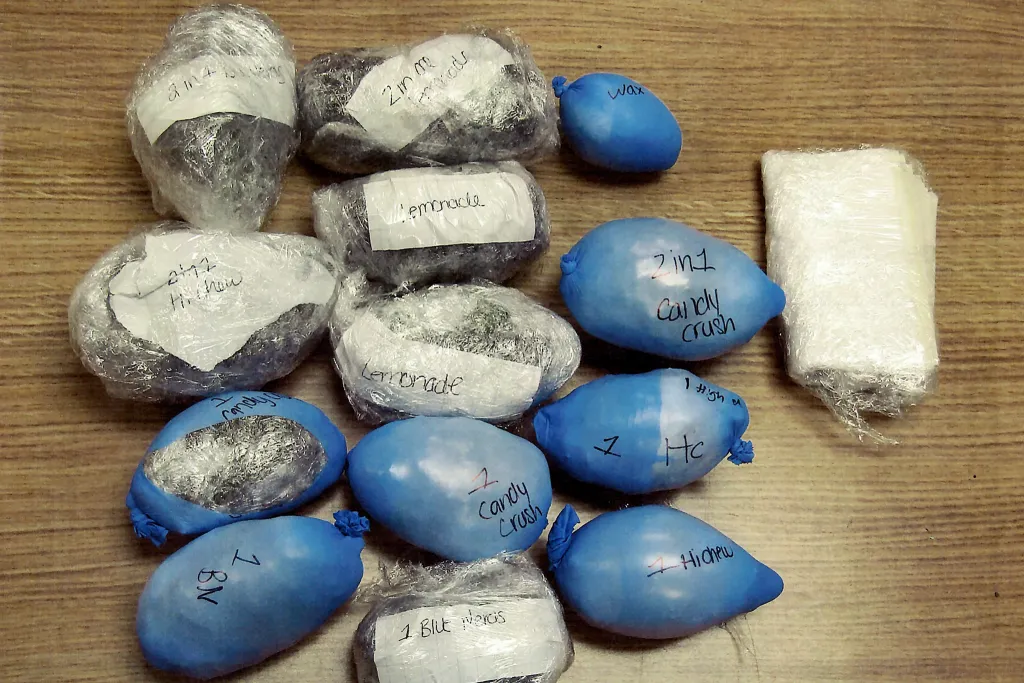
New York’s crackdown on physical mail in state prisons was supposed to help stem the flow of fentanyl and other dangerous drugs behind bars.
But the number of times prison staff administered Narcan after suspected overdoses jumped 51% last year, while fatal overdoses remain well above the level recorded before the mail restrictions, according to Department of Corrections and Community Supervision data compiled by the Correctional Association of New York.
In August 2021, prison officials banned most physical mail, arguing that drug-laced letters and packages were a major source of contraband.
Since then, overdose deaths have risen from two in 2021 to 11 in 2022, six in 2023 and 12 in each of the past two years, the data reveals.
The latest figures are being interpreted in different ways by prison officials, civil rights advocates and correction officers’ unions.

Prison reform advocates are calling on the state to reconsider the mail restrictions, arguing that they have failed to stop drugs from reaching incarcerated people while imposing unnecessary limits on their ability to communicate with family and friends.
They note that all visitors are required to walk through body scanners in each of the state’s 41 facilities while officers can simply decide if they want to be screened. (State law prevents the department from forcing correction officers to go through body scanners; they can refuse “for medical or other reasons” and opt for alternative methods of screening.)
“Make that make sense,” said Michelle Bonet, who founded the advocacy group NYS DOCCS Federal Oversight to help incarcerated people and their families.
“It’s very clear that contraband is an issue,” she added, “and it is very clear that (prison officials) utilize it as a means to impose measures that then justify what they are doing to the incarcerated people as part of a fearmongering campaign, completely dominated by the union.”
Nicole March, a DOCCS spokesperson, defended the mail restriction, and said there is “no one reason for the changes in the overdose deaths from year to year.”
The types of drugs and how they are used “have changed” over the years, she added. Some prisoners now smoke paper soaked in drugs, an issue that has plagued lockups throughout the country.
As a result, the department has strengthened its “contraband interdiction efforts” by boosting screening and investigative measures, March said.
James Miller, a spokesperson for the New York State Correction Officers Benevolent Association, did not respond to an email seeking comment.
‘Dangerous for Everyone’
In April, the union sent a letter to Gov. Kathy Hochul saying the department was in a “systemic emergency,” citing several incidents of officers injured by prisoners — and via contact with unknown drugs.
“This is not normal,” the union’s letter said. “These are not routine disciplinary issues. They are unmistakable warning signs of a correctional system under extreme pressure — one that is becoming increasingly unstable and dangerous for everyone who lives and works behind the walls.”
The most recent data covers 2025, when thousands of state correction officers went on strike after several of their colleagues were indicted for their alleged roles in fatally beating a handcuffed prisoner, Robert Brooks, in a prison infirmary.
The department says it fired 2,000 officers who refused to come back to work and it hasn’t been able to replace and augment many of them yet. Earlier this month, there were approximately 3,000 National Guard members providing support in 32 state correctional facilities.
MORE: Follow The City Reporter’s Award-Winning Coverage of NY’s Jails and Prisons
The lack of staff has meant people are spending a lot more time in their cells because there’s not enough officers to supervise out of cell time, said Sumeet Sharma, the Director of Policy and Communications for the Correctional Association of New York (CANY).
At the Coxsackie Correctional Facility, prisoners are only leaving their cells for a little over an hour for recreation time each day, a recent CANY review found.
“We know that people being confined to their cells for a long time has an impact on their mental health,” said Sharma. “Anecdotally, people told us that spending a lot of time in their cells means people have nothing to do, and then look to use substances or take other actions.”
As for the increase in Narcan use, March, a DOCCS spokesperson, noted that department staff are instructed to administer the potentially lifesaving medication “whenever an individual is found unresponsive, regardless of the suspected cause.”
But she also acknowledged that intoxications and overdoses have increased throughout the department’s 41 facilities, contributing to the rise in Narcan use.

One prison expert suggested the state take a more targeted approach, limiting mail restrictions to facilities where drug overdoses and contraband have gone up.
“Blocking paper does help, at least initially,” Dean Williams, who formerly headed prison systems in Alaska and Colorado, told The City Reporter. “It interrupts the established or routine way drugs have been funneled into prison.”
But Williams said he tried to avoid using such restrictions as a form of collective punishment unless absolutely necessary.
As an alternative, he blocked physical mail at prisons with high rates of drug smuggling while allowing homemade letters at other facilities.
Smuggler’s Tales
The approach raises a basic question: Where are the drugs coming from?
The New York prison system — like most correctional systems around the country — has never conducted a comprehensive review of how drugs enter its facilities.
But experts say it is clear that drugs aren’t coming exclusively through the mail or from visitors. During the height of the pandemic, when prison visits were canceled for months, drugs and other contraband continued to make their way into lockups.
“I knew that one corrupt staff could do tremendous damage,” Williams said. “Therefore, my team took a very aggressive stance on the investigation side of the equation.”
New York State has some recent examples.
In March, a correction officer at Cayuga Correctional Facility, a medium security prison near Syracuse, was arrested after a drug-detection dog caught him with about 28 grams of cocaine and 10 grams of heroin packaged in roughly 50 paper sleeves, according to police.
In another recent case, a former correction officer at Woodbourne Correctional Facility was indicted on allegations that he repeatedly smuggled methamphetamine and cellphones into the prison in exchange for money, according to the Sullivan County district attorney.
Fewer Prison Assaults
The recent New York data wasn’t all bad news.
The number of so-called unusual incidents — including everything from assaults on prisoners and staff to attempted escapes — across the state prison system fell 9% in 2025.
And, the number of assaults on correction officers fell 15%, while assaults on incarcerated people declined 11%.
Contraband incidents also decreased by 9%, including a 17% drop in weapons-related contraband.
MORE: The Price of Prison Abuse: $25.7 Million in New York Settlements
“That’s fantastic news,” said Michele Deitch, director of the Prison and Jail Innovation Lab at the University of Texas at Austin.
“Those are all great indicators,” she added. “Is it a long-term trend? Is it a blip? We don’t know. And why is it happening at this point?”
The number of assaults went down, in part, because all officers now have body cameras and there are fewer interactions between officers and prisoners because so many people are stuck in their cells for longer periods due to staff shortages, according to CANY’s Sharma.
“When you just have less people coming into contact with each other,” he said, “I would imagine that that would lead to less unusual incidents, especially when it comes to assaults.”
Our nonprofit newsroom relies on donations from readers to sustain our local reporting and keep it free for all New Yorkers. Donate to THE CITY today.
The post Suspected Overdoses Soar in New York Prisons Despite Mail Crackdown appeared first on The City Reporter.
