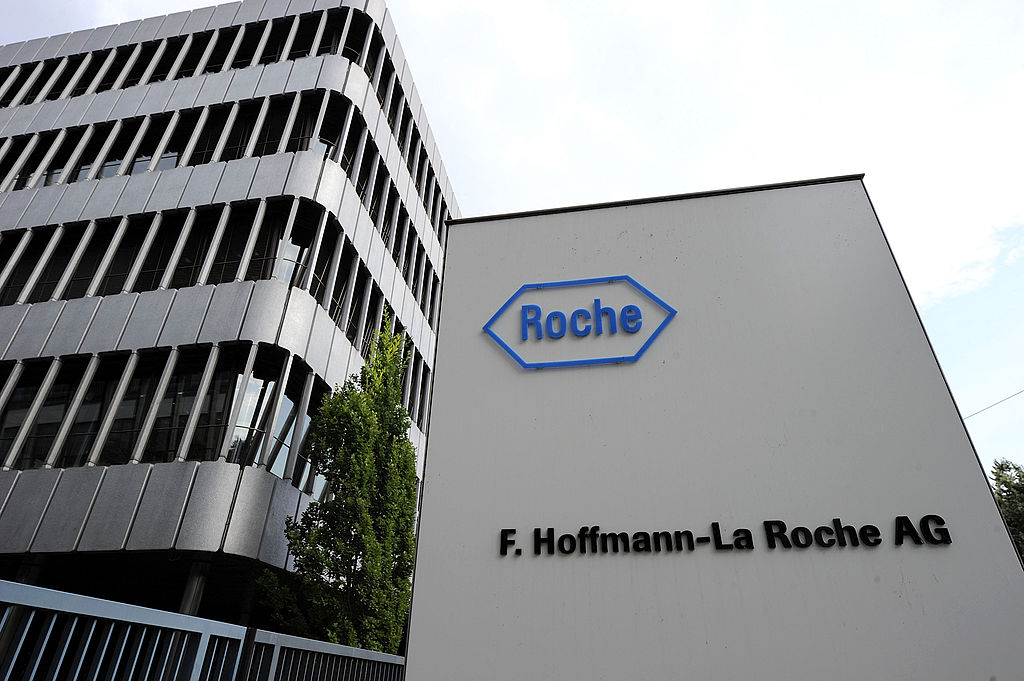
Roche built up its metabolic medicines pipeline with business deals, and its latest one gives the drugmaker a clinical-stage asset for a novel target with the potential to address one of the lingering problems for obesity drugs: the loss of muscle along with fat.
Per deal terms announced Monday, Roche’s Genentech subsidiary will pay $190 million up front for global rights to Hanmi Pharmaceutical’s HM17321. The deal excludes Hanmis’ home country of South Korea, where it retains rights. Besides obesity, the injectable Hanmi drug offers the potential to address related conditions such as type 2 diabetes and cardiovascular diseases.
The blockbuster obesity drugs currently available are peptides engineered to mimic gut hormones; Novo Nordisk’s Wegovy targets GLP-1 while Eli Lilly’s Zepbound hits both GLP-1 and GIP. But one of the side effects of these incretin therapies is the loss of lean body mass, which encompasses basically everything else in the body except fat.
HM17321 is a peptide designed to serve as an analog for urocortin-2 (UCN2), a neuropeptide in the body that binds to corticotropin-releasing factor type 2 (CRF2) receptors, which are found in the central nervous system and in skeletal muscle. Activating CRF2 in muscle tissue is intended to increase muscle mass and reduce fat.
In preclinical research, Hanmi said HM17321 showed reduction in weight, both as a monotherapy and in combination with GLP-1 drugs. The company said this peptide drug offers the potential to be used in fixed-dose combination products or in combination with incretin-based treatments that mimic gut hormones.
Hanmi has already begun a Phase 1 study enrolling healthy volunteers and people with obesity. The South Korean drugmaker is responsible for completing this study, after which Genentech will take over clinical development. Beyond the $190 million upfront payment, Genentech could pay up to $2.3 billion more if the drug achieves milestones, plus royalties on sales of an approved product.
There are other companies developing UNC2-targeting drugs. Last month, peptide drug specialist Gubra began a Phase 1/2a study evaluating GUB-UNC2 in obesity. Roche jumped into obesity drugs with the 2024 acquisition of Carmot Therapeutics for $2.7 billion, a deal that brought the dual-acting GLP-1 and GIP agonist CT-388 among other injectable and oral drug candidates for metabolic indications. The Swiss pharma giant has since broadened its scope to other targets.
Last year, Roche paid $1.65 billion up front to partner on Zealand Pharma’s petrelintide, a peptide engineered to activate the amylin receptor. In addition to helping patient’s feel full faster, this approach is also hoped to preserve muscle. Early this year, Roche reported preliminary mid-stage data showing petrelintide led to statistically significant and clinically meaningful weight loss, results the company said support further development of the peptide as a monotherapy and in potential drug combinations.
In a prepared statement, Boris Zaïtra, head of Roche corporate business development, said the Hanmi drug fits the pharmaceutical company’s strategy of developing a broad portfolio to meet the diverse needs of metabolic disorder patients.
“By licensing this next-generation investigational therapy with first-in-class potential from Hanmi, Roche and Genentech will pursue a differentiated approach to selectively reduce fat mass while improving both muscle mass and muscle function,” he said. We look forward to further developing this medicine in order to address important unmet needs for people living with obesity and other metabolic diseases.”
Photo: Giuseppe Aresu/Bloomberg, via Getty Images