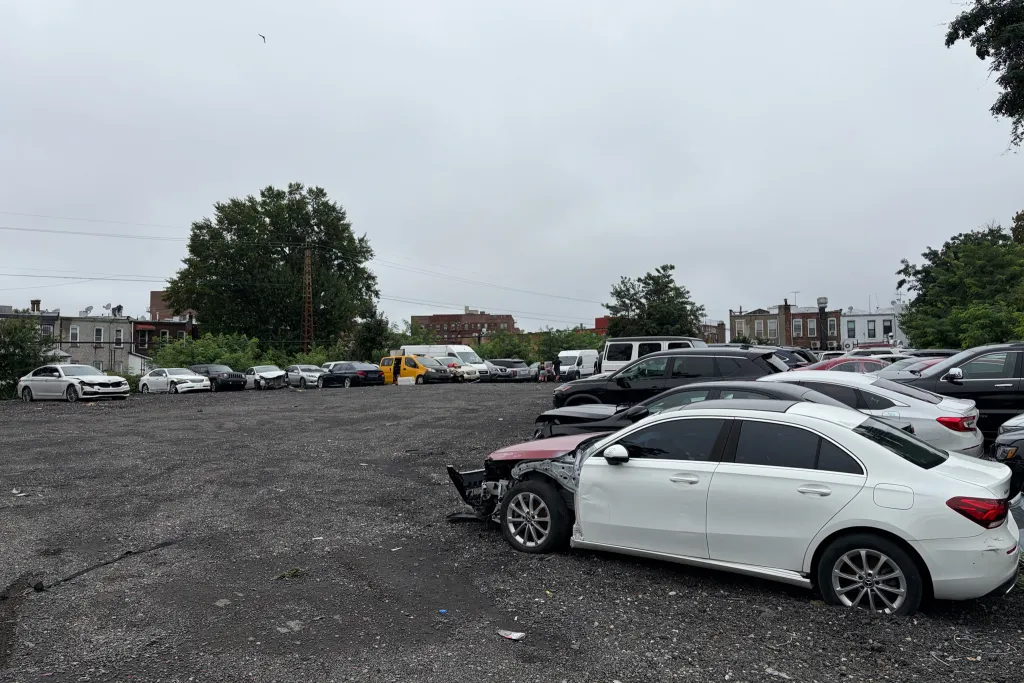
Researchers at the city’s Landmarks Preservation Commission have determined that an African burial ground in Elmhurst, Queens, that currently sits under an illegal parking lot is likely eligible for landmark status.
“We believe the former cemetery has cultural and historic significance related to the 19th Century Black and abolitionist history of New York City,” Margaret Herman, the commission’s director of research, wrote last month. “Research staff finds that the former cemetery may merit consideration for designation as a landmark.”
The finding is a preliminary step that could help transform a cemetery underneath an empty parking lot into a memorial for the upwards of 300 free-born and formerly enslaved Black New Yorkers buried there.
After The City Reporter revealed that tow trucks hired by the NYPD to remove abandoned vehicles from the streets were dropping cars and trucks there, a host of elected officials called on the administration of Mayor Zohran Mamdani to purchase the site and turn it into a memorial. The lot was soon shut down by the Buildings Department.

In August the Elmhurst History and Cemetery Preservation Society filed a request with Landmarks after the revelation about the parking lot’s use. Herman responded to the group’s president, Mariaelena Giampino, in October revealing that the commission’s research unit agreed the site was likely eligible to be landmarked.
The cemetery was formed in the early 19th century in a neighborhood then known as Newtown by the founders of what would become the St. Mark African Methodist and Episcopal Church. The church and its burial ground were sold in the 1930s and St. Mark moved a mile away to Jackson Heights. The church continues to serve as steward of the cemetery site and under state law can play a role in determining its ultimate fate. The Rev. Kimberly Detherage of St. Mark’s has called for the city to buy it.
“We are encouraged that the Commission has recognized the site’s historic significance and the merit of its preservation,” Detherage said. “The St. Marks African Methodist Episcopal Church believes that landmarking the site is the only appropriate consideration. Not to landmark the burial ground, which has been preserved over the centuries, is a travesty and an erasure of the contributions of people of African descent in Newtown and New York City.”
Mamdani Administration Cool to City Purchase
The site is currently controlled by a limited liability corporation that bought the loan of the previous owner after they defaulted on their mortgage when plans to build a luxury co-op building stalled. Over the summer Queens Borough President Donovan Richards Jr. called for the city to step in, and in September pushed the Mamdani administration to protect the site.
On Thursday, Matthew Rauschenbach, a spokesperson for the mayor, said the city has no current plans to purchase the burial ground. He declined to comment on the Landmarks letter. All of the commission’s 10 members are mayoral appointees.

In September, state Attorney General Letitia James also got involved, filing a motion in a pending foreclosure lawsuit demanding that, whatever happens to the burial ground, the bodies be treated respectfully under the state’s Unmarked Burial Site Protection Act.
“The New Yorkers laid to rest at this historic burial ground worked to build this city even while it denied them their freedom,” James said in a statement Wednesday. “Their final resting place deserves respect. I welcome any effort to offer these souls the permanent protection they are owed, including this first step toward landmark designation.”
In her letter, Herman cited that law in noting that the fate of the lot will likely be complicated.
Landmark status, she wrote, “may not be the only or most appropriate tool to achieve that community’s goals.” Landmarked burial sites are usually either on public land or are privately-owned cemeteries that are still in use. She said that moving the remains to another site “would not typically be considered appropriate.”
Herman noted that the Unmarked Burial Site law provides for the involvement of the state’s archaeologist in consultation with the church about “appropriate next steps.”
A spokesperson for the state archaeologist on Wednesday did not respond to a request for comment.
Our nonprofit newsroom relies on donations from readers to sustain our local reporting and keep it free for all New Yorkers. Donate to THE CITY today.
The post Paved-Over Black Cemetery Could Qualify as Landmark, Commission Says appeared first on The City Reporter.