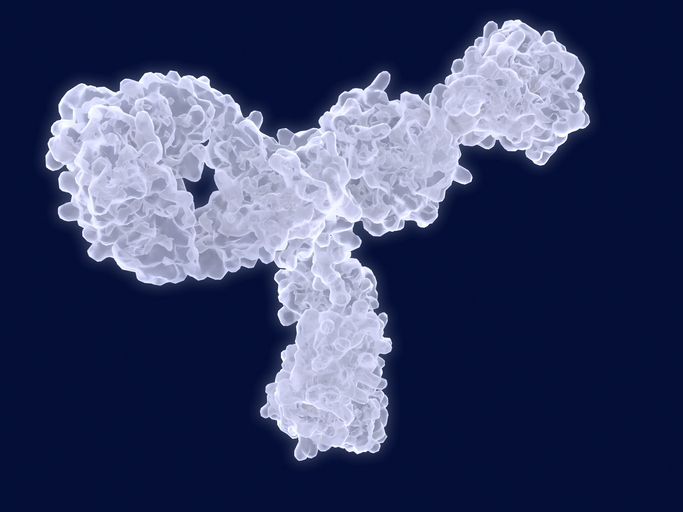
Many antibody drugs available to patients today trace their origins to rodents. By engineering mice with a humanized immune system, scientists could study the antibodies they produced in response to disease in periods ranging from weeks to months. Wyatt McDonnell, co-founder and CEO of Infinimmune, says there’s a better way to discover antibodies that are ultimately destined for the human body.
The human immune system evolved over millions of years, producing antibodies in states of disease and health. Infinimmune’s technology screens and analyzes human samples to learn what makes an antibody good for treating a disease, insight that helps the company design its antibody drugs. At the end of the day, an Infinimmune antibody may look like a traditional monoclonal antibody that got its start in transgenic mice. But McDonnell contends his company’s approach is speedier and more efficient, resulting in antibodies with better drug properties.
“What we’re trying to do is get to quality medicines faster,” McDonnell said. “We think the best way to do that is to circumvent trying to reinvent the human immune system and [instead] go directly to the human immune system.”
Infinimmune’s research has yielded two internally discovered programs for atopic dermatitis, both for competitive targets in a growing field of immunology medicines. With Infinimmune’s antibodies on track to start Phase 1 testing next year, the Alameda, California-based startup on Tuesday unveiled $75 million in Series A financing to support the clinical research.
The Infinimmune platform technology, Anthrobody, screens millions of memory B cells, which are immune cells that last for decades, remembering antigens from past diseases, McDonnell said. This living memory is what enables the immune system to quickly produce an antibody to respond to a pathogen. Screening human B cells against hundreds of targets guides the company’s selection and optimization of antibodies.
Atopic dermatitis is already served by several antibody drugs. The biggest is the blockbuster Sanofi and Regeneron Pharmaceuticals drug Dupixent, an antibody designed to block the pro-inflammatory pathways of two signaling proteins, IL-4 and IL-13. LEO Pharma’s Adbry, approved in 2021, and Eli Lilly’s Ebglyss, approved in 2024, are both antibodies designed to block IL-13. Dosing for these injectable medicines ranges from every two to four weeks.
In atopic dermatitis and other immunological disorders, one way to stand apart is by offering even less frequent dosing. In June, AbbVie announced an $11 billion deal to buy Apogee Therapeutics, a company whose lead program is a long-acting IL-13-blocking antibody with Phase 2 data that support dosing every three to six months. But there’s more to a better antibody drug than less frequent injections, McDonnell said. He noted that Apogee’s results so far show that three out of five patients treated with its drug did not achieve 100% skin clearance. That’s a bar competitors can aim to beat, he said.
Infinimmune aims to offer patients a better IL-13-blocking drug with its internally discovered antibody, IFX-201. But McDonnell added that many patients who don’t respond adequately to IL-13 therapies have inflammation driven a different signaling protein called IL-22. Infinimmune’s IFX-101 is an IL-22-blocking antibody that could address the barrier breach, the breakdown of the outer skin layer that affects many atopic dermatitis patients.
There are currently no FDA-approved therapies for IL-22. Johnson & Johnson has a contender from its 2024 acquisition of Proteologix, whose pipeline included a bispecific antibody designed to target IL-13 and IL-22. McDonnell said his company’s initial strategy is to develop IFX-101 and IFX-201 as monotherapies in order to independently establish the safety and efficacy of each candidate. But given that many patients have overlapping inflammatory biology, there may be an opportunity in the future to explore how these drugs could be used across different patient populations or even in combination, he said.
“What we’re going for here is a therapeutic portfolio that meets the needs of all patients across all of these different cytokine inflammatory profiles with convenience and dosing profiles that are best in class or certainly not any worse than tied for best in class,” McDonnell said.
Wyatt and the other Infinimmune co-founders are veterans of 10x Genomics, a biotechnology company that markets instruments and other products for single cell and spatial biology. Independent of 10x Genomics, the startup launched in 2022 with $12 million in seed financing led by Playground Global. In the past year, Infinimmune has inked antibody discovery partnerships with Immunome and Merck; targets for both alliances remain undisclosed. While McDonnell said the startup is open to additional partnerships, the near-term focus will be clinical development of its two lead programs.
Infinimmune’s latest financing was co-led by Regeneron Ventures and Playground Global. Other participants include RA Capital Management, Goldcrest Capital, Forge Life Science Partners, Godfrey Capital, and Wild Tree Ventures. Earlier investors Merck Global Health Innovation Fund, Everbright Biofund, Civilization Ventures, and Pear VC also participated in the new financing.
Illustration: Juan Gartner, Getty Images
