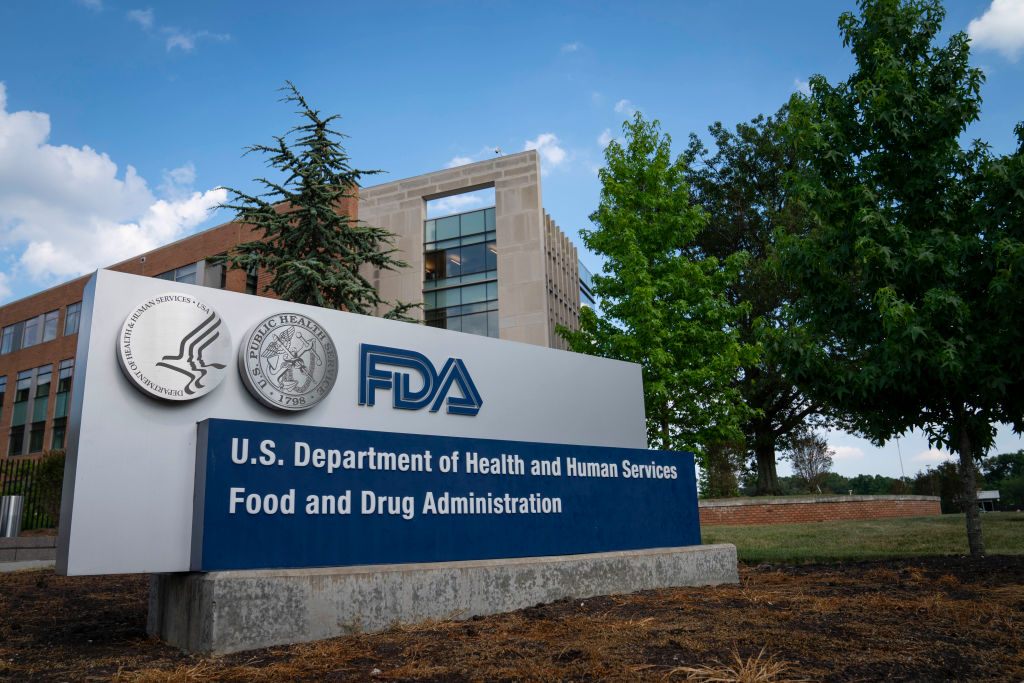
The FDA now agrees uniQure’s clinical data for its Huntington’s disease gene therapy can support a regulatory submission in this rare neurodegenerative disorder, reversing its stance just a few months ago that the company should run another clinical trial — a move that many considered impractical and even unethical.
The agency’s recommendation for another trial was made under the leadership of Commissioner Marty Makary and Director of the Center for Biologics Evaluation Research Vinay Prasad. Both have since left the FDA. UniQure said Wednesday that the FDA’s new thinking on the therapy, AMT-130, followed the company’s continued engagement with the agency. Netherlands-based uniQure now plans to file for accelerated FDA approval for what could become the first treatment for Huntington’s disease. The FDA’s change of heart on AMT-130 is another sign that the new, albeit interim, FDA leadership is exercising regulatory flexibility in its review of rare disease treatments.
AMT-130 uses an engineered virus to deliver to brain cells micro RNA that silences the gene that produces a highly toxic protein fragment that drives Huntington’s. This gene therapy is administered in a surgical procedure that requires drilling holes in the skull and using a microcatheter to deliver the one-time treatment deep into the brain. AMT-130 was evaluated in an open label Phase 1/2 study that compared treated patients to an external control, a natural history that tracks how patients with the disease progress over time. Such comparisons are common in rare disease and cancer clinical trials where a placebo is considered unethical because it means patients with a serious disease receive no treatment.
FDA leadership prior to Makary and Prasad had previously agreed AMT-130’s trial design, including the external control, could support a regulatory submission. Last September, uniQure reported results showing statistically significant slowing of disease progression as well as a reduction in blood levels of a protein believed to be indicative of neurodegeneration.
UniQure met with the FDA to discuss a potential biologics license application for AMT-130. Last November, the company said the agency no longer believed the three-year analysis from the Phase 1/2 study and natural history external control provided enough evidence for a regulatory submission. In March, the FDA reiterated its position and told uniQure it “strongly recommended” a double-blind study using a sham surgery as the control. That design would require control arm participants to receive burr holes in their skulls, anesthesia, and the pre- and post-operation procedures of surgery — all for no benefit. European Union regulators and some industry observers have deemed such a control would be unethical for an AMT-130 clinical trial.
If AMT-130 receives accelerated FDA approval, the therapy will need a confirmatory, post-marketing study. UniQure said it still needs to align with the FDA on the design of this study and the agency wants agreement on that design before the gene therapy’s regulatory submission. One option uniQure is considering for the control group is standard-of-care therapy instead of a sham procedure. UniQure plans an FDA submission for AMT-130 in the third quarter of this year.
“The consistency and strength of the clinical data generated to date give us great confidence in the product’s potential to make a meaningful difference for patients,” uniQure CEO Matt Kapusta said in a prepared statement. “We remain focused on bringing AMT-130 to patients and families as quickly and responsibly as possible in the US and globally.”
UniQure had previously said it planned a first quarter 2026 FDA submission for AMT-130. In a research note, Leerink Partners analyst Joseph Schwartz said a two quarter delay from the previous plan is “very clearly the best case scenario we could have hoped for.”
UniQure is now the latest company to receive reconsideration following a negative FDA decision. Capricor Therapeutics now has an August regulatory decision date for Deramiocel as a treatment for cardiomyopathy from Duchenne muscular dystrophy, an about-face that follows the FDA’s complete response letter (CRL) for the cell therapy last August. Last month, Pierre Fabre said it is working with the FDA on a resubmission for tabelecleucel, a cell therapy for a potentially deadly complication of organ and stem cell transplant procedures that the FDA had spurned in January.
In late May, Replimune announced it plans to resubmit its application seeking approval of RP1, an oncolytic virus developed to treat advanced melanoma. The FDA’s complete response letter last September said RP1’s clinical trial was not adequate and well controlled and did not provide enough evidence of efficacy. In a research note, William Blair analysts Myles Minter and John Boyle noted these reconsiderations and said the new path forward for uniQure’s gene therapy is the latest sign of renewed regulatory flexibility.
“Given Vinay Prasad’s and Marty Makary’s public opinion on this filing and CRL issuance and now the positive uniQure regulatory update for AMT-130, we believe the current FDA, largely in caretaker mode, appears to be more flexible on regulatory paths for applications where concerns were previously raised,” they said.
Photo: Getty Images, Sarah Silbiger
