A city investigation into allegations that correction officers at Rikers Island routinely confined severely mentally ill detainees to their cells for days or weeks at a time found the claims could not be substantiated — while also citing missing video footage and uncooperative witnesses.
The Department of Investigation probe examined conditions inside a mental health housing unit known as 13A after a jail social worker accused officers of “deadlocking” 11 detainees in their cells for prolonged periods in 2024.
Investigators said the “absence of portions of video footage,” “lack of cooperation/response from potential witnesses” and limited detail in the allegations constrained their ability to conduct a “meaningful investigation,” according to an internal closing memo obtained by THE CITY via a Freedom of Information Law request.
Still, DOI concluded that its review “did not reveal any instances where (detainees) were locked-in their cells for weeks or months at a time as alleged.”
The allegations added to a litany of long documented abuses by officers and institutional neglect at Rikers Island amid efforts to close the jail and replace it with modern facilities near criminal courthouses.

Investigators reviewed surveillance footage from August through October 2024 and found detainees in unit 13A both inside and outside their cells. The six-page report said detainees were seen showering, watching television, cleaning their cells, playing cards, participating in recreation, making phone calls and lining up for medication.
The memo also said that 11 detainees flagged by the whistleblower were seen via surveillance video outside their cells at various times, while other detainees housed in 13A were seen in common areas and participating in recreational activities.
Investigators also found that several detainees remained inside their cells for “prolonged periods of time.”
But the report said that each detainee’s cell door was “periodically opened” by correction staff and that all were provided food.
The DOI review identified roughly nine instances in which detainees were locked in their cells following housing-area searches, fights or use-of-force incidents, which investigators concluded followed department rules.
The whistleblower, social worker Justyna Rzewinski, said the investigation failed to accurately capture conditions inside the unit and at other locations on Rikers.
“Simply stating that cell doors were periodically opened does not mean individuals were actually able to leave their cells, access services, or experience meaningful out-of-cell time,” she told THE CITY.
The DOI report comes shortly after Mayor Zohran Mamdani ordered jail officials to come up with a plan to strictly limit the use of solitary confinement.
Since 2023, former Mayor Eric Adams and his predecessor used emergency executive orders to override Local Law 42, the sweeping solitary confinement reform passed by the City Council that caps isolation at 60 days annually and requires extensive due process protections.
The deadlocking allegations were first reported by the New York Daily News, which detailed Rzewinski’s firsthand account of life inside Rikers’ specialized mental health units. More than half of the people held at Rikers Island have some form of mental illness, according to city data.
Rzewinski worked with many detainees who were found unfit to stand trial and were awaiting transfer to state psychiatric hospitals such as Kirby Forensic Psychiatric Center on Randalls and Wards Island.
Because of chronic bed shortages, those transfers were often delayed for months, leaving people with severe mental illness housed at Rikers instead. Officers would “deadlock” them into cells, justifying the isolation as a safety precaution, she said.
Those with the most acute psychiatric needs and the least outside support, she said, were often subjected to the harshest conditions. Some would cover their bodies in feces.
DOI investigators reviewed the jail system’s incident and fight-tracking databases and found that many of the detainees identified by Rzewinski had been involved in use-of-force incidents, assaults on staff, self-harm, slashings, stabbings and potential drug overdoses. The DOI report noted that their involvement in those incidents suggested the detainees had been outside their cells when the events occurred.
DOI probers also reviewed internal emails.
They found six messages discussing unnamed detainees being locked in their cells because of slashings, stabbings, aggressive behavior, use-of-force incidents or sexual conduct. But investigators said the emails did not indicate how long the detainees remained locked in or provide enough detail to identify them.
Rzewinski, who has since left her job at Rikers, said jail officials never documented those who were locked in. Instead, they just listed them on white tags by a control panel inside an area known as “the bubble,” where officers are stationed, she added.
DOI investigators said they saw white slips of paper attached to eight cell-control buttons inside the unit’s control room during a February 2025 visit to the unit. A correction staff member told them the papers marked detainees accused of smoking, exposing themselves, assaulting staff or otherwise being disruptive, according to the closing memo.
The staff member said those detainees were typically locked in for one to two hours, not entire days. Investigators later reviewed surveillance footage from the visit dates and reported seeing those detainees outside their cells at various times, including in the dayroom, cleaning their cells and interacting with others.
DOI’s report comes after a separate oversight agency concluded that involuntary lock-ins were happening.
A June 2025 report by the city’s Board of Correction documented seven involuntary lock-ins over a six-week period inside mental observation housing areas at the George R. Vierno Center and Rose M. Singer Center.
The Board of Correction report also raised concerns about poor documentation by jail staff. Of the seven involuntary lock-ins identified, only three were specifically documented in housing unit handwritten logbooks, investigators found. In some cases, detainees disputed officers’ accounts of why they were confined, while housing records failed to corroborate staff explanations.
Dr. Robert Cohen, who retired from the city’s Board of Correction last year, slammed the DOI report, saying it is “fatally flawed” and “should be retracted.”
He noted the July 2024 death of Charizma Jones, 23, a former Rikers detainee.
Jones was “deadlocked in the infirmary for three days,” Cohen said, noting that jail officers blocked medical staff from checking her out six times over a two-day period a month before she died.

Current and former correction officials, detainees and defense attorneys say that whatever term the jail system uses, people detained at Rikers Island are still routinely kept alone for periods that far exceed international standards for humane confinement.
They say detainees are isolated in places ranging from intake holding areas and sparsely populated housing units to shower stalls converted into makeshift holding cells.
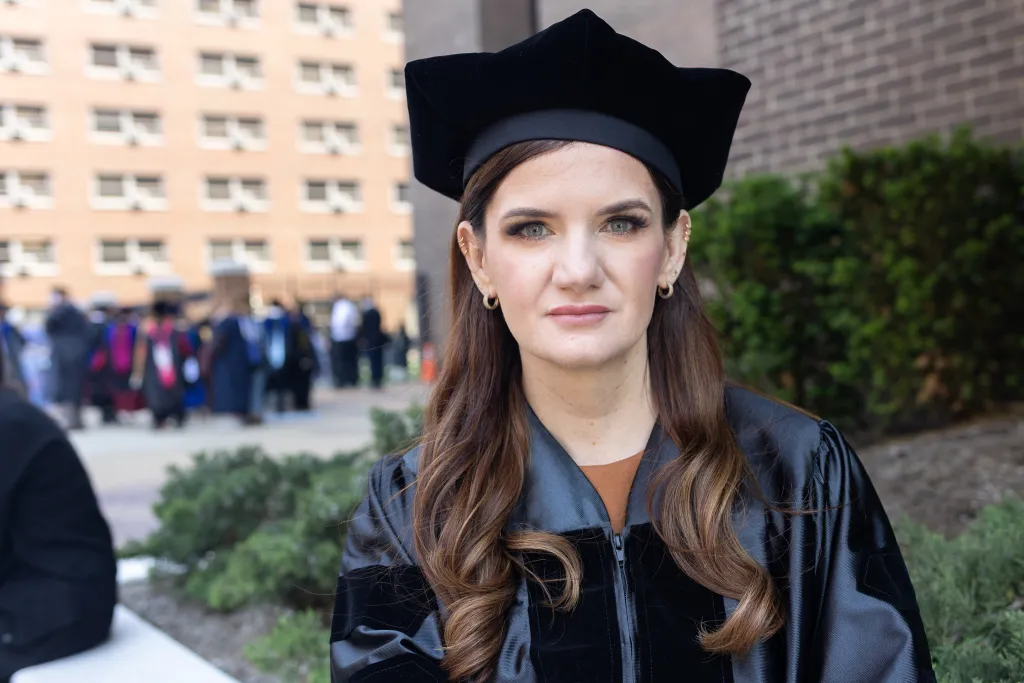
The DOI report was made public hours before Rzewinski formally graduated from Yeshiva University with a doctorate degree in social welfare.
“I’m so upset about the findings,” she told THE CITY hours before the graduation ceremony. “Based on my experience working there, I know what I witnessed.”
Our nonprofit newsroom relies on donations from readers to sustain our local reporting and keep it free for all New Yorkers. Donate to THE CITY today.
The post City Probe Undercuts Rikers Island ‘Deadlocking’ Allegations appeared first on THE CITY – NYC News.
