A Viridian Therapeutics drug for thyroid eye disease now has FDA approval, making it just the second therapy for this inflammatory disorder and one offering key competitive advantages over the Amgen product that was the first.
The drug, Viridian’s first commercial product, will launch immediately, the Waltham, Massachusetts-based biotech said in the approval announcement after Friday’s market close. Known in development as veligrotug, or veli for short, Viridian’s intravenously infused therapy will be marketed under the brand name Lumvoa.
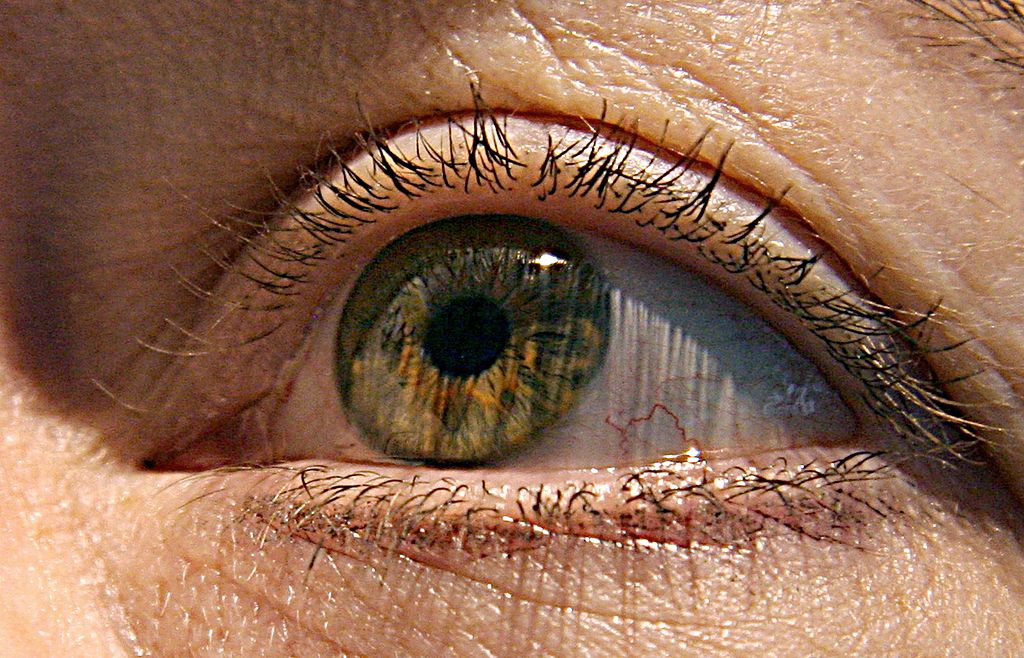
Thyroid eye disease, or TED, is an autoimmune disorder that leads to inflammation around and behind the eyes. The condition leads to eye pain and redness as well as vision impairment. The hallmark characteristic of TED is proptosis, which is bulging of the eyes.
TED develops in two stages: an active phase characterized by inflammation that develops over the course of months to years, followed by a stable or chronic phase in which symptoms persist. The disease is associated with overexpression of insulin-like growth factor-1 (IGF-1), a growth hormone that drives the inflammation. Lumvoa is an antibody designed to bind to the IGF-1 receptor, blocking its signaling.
Viridian’s FDA submission for Lumvoa was based on two placebo-controlled Phase 3 studies, one in the active phase and the other in the chronic phase. Results from both studies showed statistically significant and clinically meaningful improvement on signs and symptoms of TED measured at week 15. Reduction in proptosis was observed as early as three weeks following the start of treatment.
The most common adverse reactions reported in the studies included muscle spasms, headache, and hearing loss that may become permanent. In the clinical trials, 17% of participants who received the study drug developed hearing impairment compared to 6% of those who received a placebo. Lumvoa’s label advises clinicians to assess patient hearing before, during, and after treatment with the drug.
Corticosteroids have been used off label to reduce the inflammation from TED. Until Lumvoa, the only approved TED therapy was Amgen’s Tepezza, a monoclonal antibody designed to bind to the IGF-1 receptor. Like Viridian’s drug, Tepezza also comes with a risk of hearing loss, so the safety profile is similar. But Lumvoa’s advantage comes from a shorter dosing regimen. The Viridian drug is administered as an intravenous infusion that takes 30 to 45 minutes. The dosing schedule is five total infusions three weeks apart. By contrast, Tepezza is administered as an intravenous infusion that takes 60 to 90 minutes — eight total infusions three weeks apart.
Tepezza was approved by the FDA in 2022, going on to become the largest product of Horizon Therapeutics. Amgen acquired Horizon for $28 billion in 2023. For 2025, Amgen reported $1.9 billion in Tepezza revenue, a 3% increase compared to the prior year.
In a note sent to investors late Friday, Leerink Partners analyst Thomas Smith said the Viridian drug’s advantages over Tepezza include its rapid onset of effect, durability, and a lower dosing burden. Viridian is also developing a subcutaneously injectable version of its drug called elegrobart. Last month, the company reported preliminary results showing this drug met the main goal of its Phase 3 study, with four-week and eight-week dosing showing responses comparable to the intravenously infused version. Viridian said it plans to file a biologics license application for elegrobart in the first quarter of 2027. If approved, the company plans to make this product available in an autoinjection device that patients can use at home.
“Overall, we believe [Viridian] is well positioned to compete in the multi-billion dollar TED market based on veli’s best-in-class profile that appears differentiated from Tepezza on efficacy, safety, and convenience, as well as elegrobart’s competitive profile across active and chronic TED,” Smith said.
Amgen could yet compete with an injectable TED drug that goes after the IGF-1 receptor. An ongoing Phase 1/2 study is evaluating a subcutaneously injectable antibody that’s designed to offer enhanced binding and blocking of its target as well as a longer half-life.
Viridian has scheduled an 8 a.m. Monday conference call to discuss the Lumvoa approval and the company’s commercialization plans. Smith said he expects the call will provide more details on the product’s pricing. He expects pricing on par with Tepezza, which carries a list price of more than $18,000 per vial.
Photo: Karen Bleier /AFP, via Getty Images
