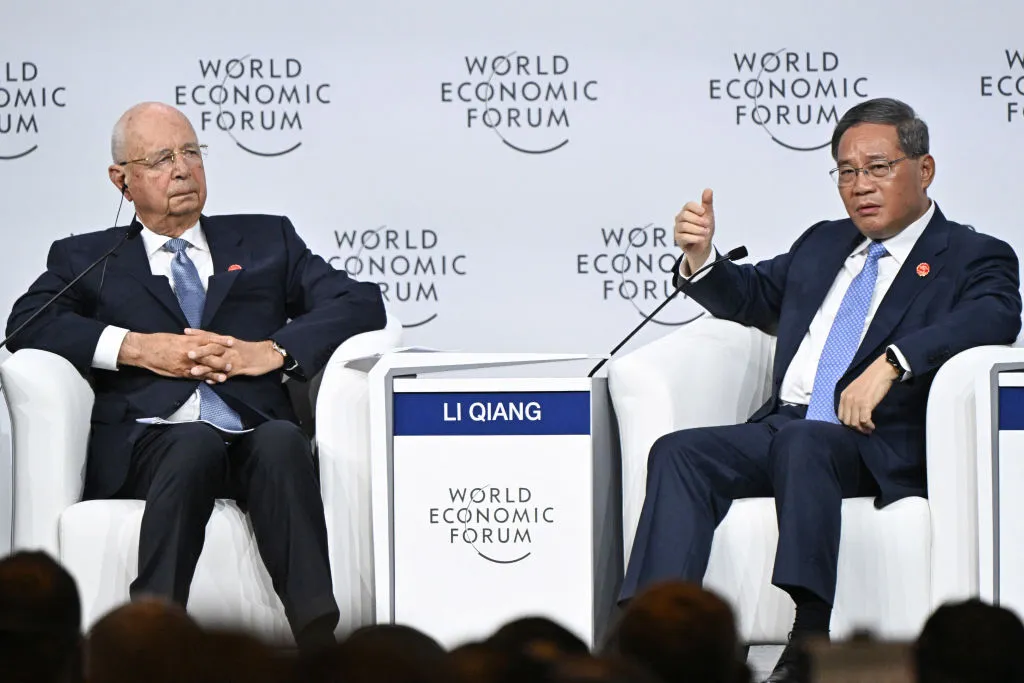
As global leaders gather in Dalian for Summer Davos, the official theme, “Innovating at Scale,” will naturally draw attention to artificial intelligence, energy transition, supply chains and the next phase of China’s economy. These are the right conversations. Yet there is another question running beneath them: why do so many Western companies, investors and commentators still misread China, even after decades of engagement?
The problem is rarely a lack of data. Western boardrooms have no shortage of market reports, risk dashboards and regulatory briefings. The problem is interpretation. Too often, China is analyzed as either an opportunity too large to ignore or a risk too complex to manage. Both frames flatten the same reality: China is not a single “market” waiting to be decoded, but a context-rich business environment where language, relationship, hierarchy, trust, timing and face shape commercial outcomes.
In my work on intercultural communication, I argue that communication with China is never just about words. Language reflects values, thought processes and social expectations. I explore politeness not as etiquette but as a way of managing respect, relationship and responsibility. These may sound like soft concepts. In China, they often decide whether a market-entry plan succeeds. Three areas matter most: branding, negotiation and leadership.
Branding: relevance is not translation
For many years, Western brands entered China with a simple assumption: foreignness carried prestige. That was not entirely wrong. In luxury, education, automobiles and consumer goods, Western brands benefited from an association with quality, status and cosmopolitan identity. But many companies have mistaken a historical advantage for a permanent one.
Chinese consumers today are more digitally sophisticated, more value-conscious and more culturally confident. The rise of local brands is often described in the West as nationalism. Sometimes national sentiment is a factor. But reducing it to nationalism misses a deeper change: consumers are asking whether a brand understands their lives, platforms, humor, rituals and aspirations.
Starbucks offers a useful example. The company helped create coffee culture in China, but the surrounding market changed. Lower-priced local rivals such as Luckin and Cotti built habits around convenience, delivery, digital coupons and everyday consumption. Starbucks, once a symbol of international lifestyle, has had to rethink what its brand means in smaller cities and in a more price-sensitive environment. Its China partnership with Boyu Capital, framed by the company as a way to accelerate “hyper-localization,” should not be read simply as retreat. It’s a recognition that brand equity in China must be continually renegotiated with local culture.
The misunderstanding is the belief that a brand’s global meaning can simply be translated into Chinese. It cannot. Meaning has to be earned in context. In China, that context includes family expectations, social comparison, platform behavior, gifting norms, regional differences and mianzi, often translated as “face.” But face is frequently misunderstood by Western managers as vanity or image. In business, it is closer to social credibility. A brand that gives consumers face today may not be the most foreign brand; it may be the one that allows them to appear discerning, practical and culturally fluent.
Negotiation: the deal is not the relationship
The second misunderstanding concerns negotiation. Western business culture often treats negotiation as linear: prepare, meet, bargain, document, execute. In China, a signed agreement matters, but it does not always carry the same social meaning. The relationship does not end when the contract begins. In many cases, the contract formalizes a relationship that must continue to be maintained.
This difference creates frustration. Western negotiators may interpret indirectness as evasiveness, silence as weakness or a request for more meetings as delay. Chinese counterparts may experience Western directness as impatience, insufficient respect or lack of commitment. Both sides may believe the other is being unreasonable when they are operating with different expectations about how trust is built.
Tesla’s long road to rolling out more advanced driver-assistance features in China illustrates this point. From a distance, Western commentary often reduces such cases to market-access politics: China is either blocking a foreign competitor or favoring domestic champions. Politics may be part of the environment, but that explanation is incomplete. In Tesla’s case, data localization, regulatory approval, mapping, over-the-air software rules and cooperation with local technology partners have all mattered. The negotiation is not only with customers, or even only with a ministry. It is with an ecosystem of trust, data sovereignty and public responsibility.
This is where politeness becomes strategic. Politeness in the Chinese context is not merely saying agreeable things. It is the work of preserving dignity, giving space, reading implication and avoiding unnecessary public confrontation. A Western executive who demands a quick yes-or-no answer may think they are creating clarity. They may instead be creating embarrassment. The more useful question is not “Why won’t they be direct?” but “What has not yet been made safe enough to say directly?”
Leadership: China is no longer only the execution arm
The third misunderstanding is about leadership. For decades, many Western multinationals treated China as a manufacturing base, growth market or local adaptation challenge. Strategy was designed at headquarters; China executed at speed. That model is increasingly obsolete.
Summer Davos is useful precisely because its focus is not only China as a market, but China as a source of innovation at scale. In electric vehicles, batteries, mobile payments, social commerce, logistics and digital services, Chinese companies are shaping business models that others now study.
Volkswagen’s partnership with XPeng is a telling example. The company’s “In China, for China” strategy signals more than localization of marketing. It acknowledges that product development, software architecture and consumer expectations in China require local knowledge at the center of decision-making. When a global automotive group works with a Chinese EV company to develop vehicles and electronic architecture for the Chinese market, it is admitting that leadership can no longer mean exporting assumptions from Wolfsburg, Detroit or London.
This requires a different leadership posture: humility without naivety. Cultural intelligence is not the same as agreeing with everything a market demands. It means understanding the system well enough to make wise choices. The best leaders do not romanticize China, but neither do they caricature it. They can hold contradictions: China can be both an extraordinary innovation ecosystem and a difficult regulatory environment; both a consumer opportunity and a geopolitical risk; both familiar in its commercial ambition and unfamiliar in its communicative norms.
I often use the traditional Chinese character 聽, to listen, as a reminder that listening is not only done with the ear. It also requires attention, mind and heart. This is a useful discipline for Western companies in China. Too many listen only for confirmation of what they already believe: that China is closing, that consumers are becoming nationalist, that local partners are difficult, that regulation is arbitrary. Sometimes these concerns contain truth. But they are rarely the whole truth.
As leaders meet at Summer Davos to discuss innovation, growth and China’s next chapter, they should remember that scale is not only technological. Understanding must also scale. Cultural intelligence should not be delegated to the China office after strategy has been decided. It should sit inside brand strategy, negotiation design and leadership development from the beginning.
The West does not need to be less critical of China. It needs to be less simplistic. The companies that will succeed are not those that treat cultural difference as a problem to overcome, but those that treat it as information to understand. In China, misunderstanding is expensive. Listening is a competitive advantage.
Dr. Catherine Hua Xiang is Director of the Confucius Institute for Business London and Programme Director for International Relations and Chinese at the London School of Economics. She is the author of Bridging the Gap: An Introduction to Intercultural Communication with China (LID Publishing)