Florida lawmakers say they’re losing patience with the state’s long-running PALM financial-management overhaul, even as they plan to continue funding the massive modernization effort in next year’s budget.
During ongoing 2026-27 budget negotiations, House and Senate leaders said they remain committed to replacing Florida’s aging FLAIR accounting system through the Florida Planning, Accounting, and Ledger Management project, better known as PALM.
But they acknowledged they’re frustrated with repeated delays and escalating costs.
PALM was first approved by the Legislature in 2014 and is designed to replace FLAIR, a decades-old statewide financial infrastructure responsible for accounting, payroll, budgeting and cash management.
The replacement effort has since evolved into one of the largest technology modernization projects in state government and been plagued by repeated delays, all while security concerns and operational weaknesses with the current system have persisted for years.
Project history documents show PALM’s rollout timeline has shifted repeatedly over the years. In 2023, officials projected a January 2026 go-live date, before later extending the schedule to July 2026.
Delivery is now expected next year.
Meanwhile, Florida has spent more than $300 million on the project so far.
Current budget negotiations show the House and Senate have remained largely aligned during the Special Session on continuing the PALM rollout and related agency integration work.
They’ve agreed to spend about $39 million on the core FLAIR replacement project, $1.9 million on PALM readiness within the Department of Financial Services, and roughly $3.4 million on PALM readiness work at the Department of Management Services.

They’ve also concurred on more than $826,000 and eight new positions to support PALM’s eventual launch.
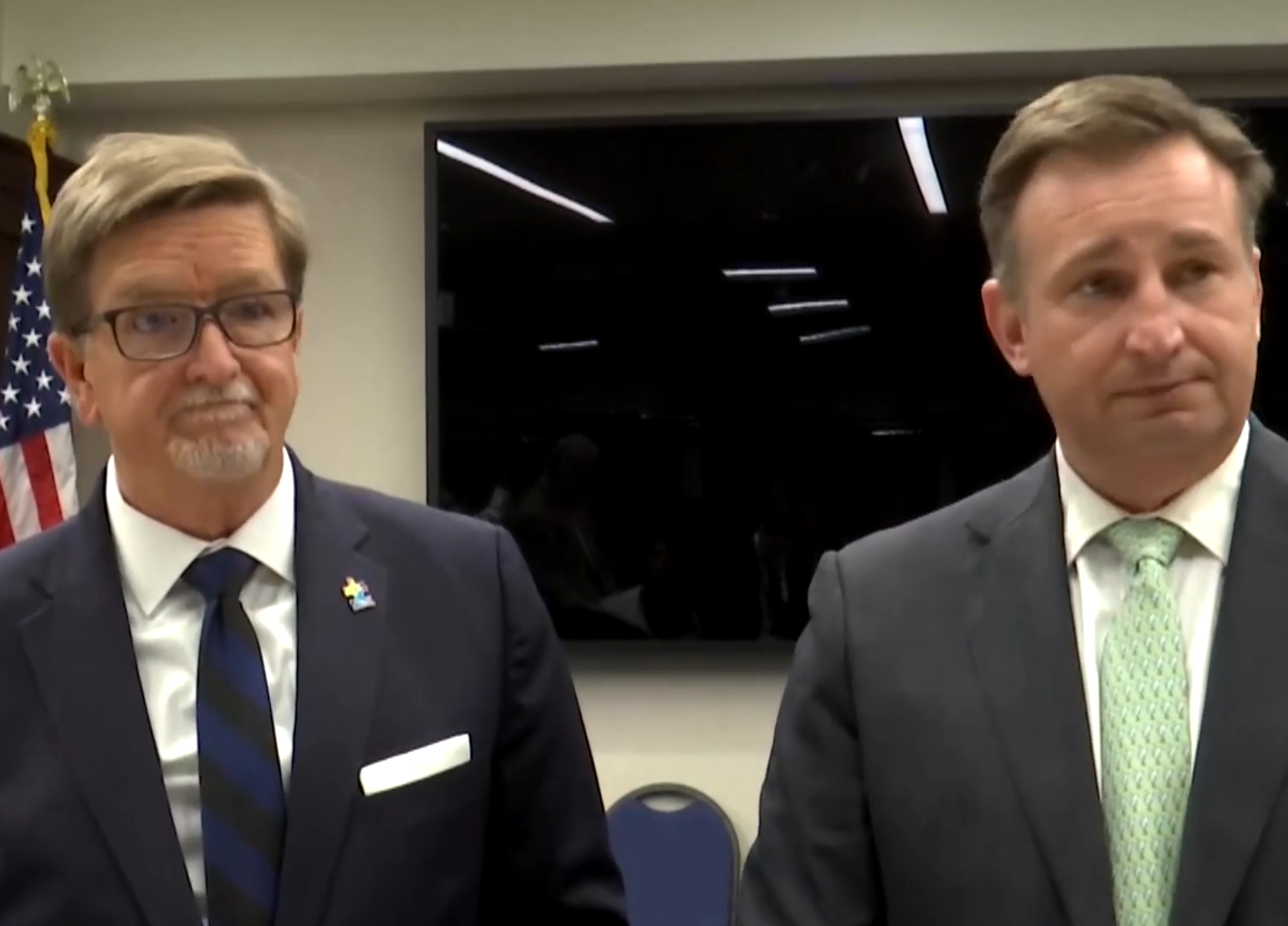
After a Wednesday joint meeting of the House State Administration Budget Subcommittee and Senate Appropriations Committee on Agriculture, Environment, and General Government, chaired by Dade City Rep. Randy Maggard and Lake Mary Sen. Jason Brodeur, respectively, both lawmakers made clear their frustration with the project’s pace.
Brodeur agreed PALM is dismally behind schedule and over budget, but said accountability and transparency requirements remained intact despite changes to earlier House proviso language referencing independent verification reports.
“We want the accountability. We want the transparency. We want to get it done,” Brodeur told a reporter after the meeting.
“It was just mechanically the way we wanted to condense and combine all those paragraphs.”
Maggard said House leaders, likewise, want the project operational as quickly as possible.
“We’ve done it too long,” he said.
Asked about the project’s delayed implementation timeline, Brodeur said he was “exceedingly frustrated” with the delays.
“If any of the vendors are watching, move now,” he added.
Maggard said lawmakers’ “patience is not long” with the project.
“It’s time to move,” he said. “It’s time to go.”
The broader budget negotiations also continue funding for related agency remediation and system-integration work tied to the eventual replacement of FLAIR, which has operated for roughly 40 years.
Lawmakers are expected to continue budget negotiations through May 29.
