Empathy, at its weakest, is perhaps a beautiful feeling left unemployed. It allows us to ache for the world from a safe distance, to read the statistics, shake our heads, and feel briefly wounded by the cruelty of what other people endure. At its most powerful, however, empathy becomes action. It becomes infrastructure. It becomes a phone call, a placement, a home, a policy, a hand extended and not withdrawn when the story becomes complicated.
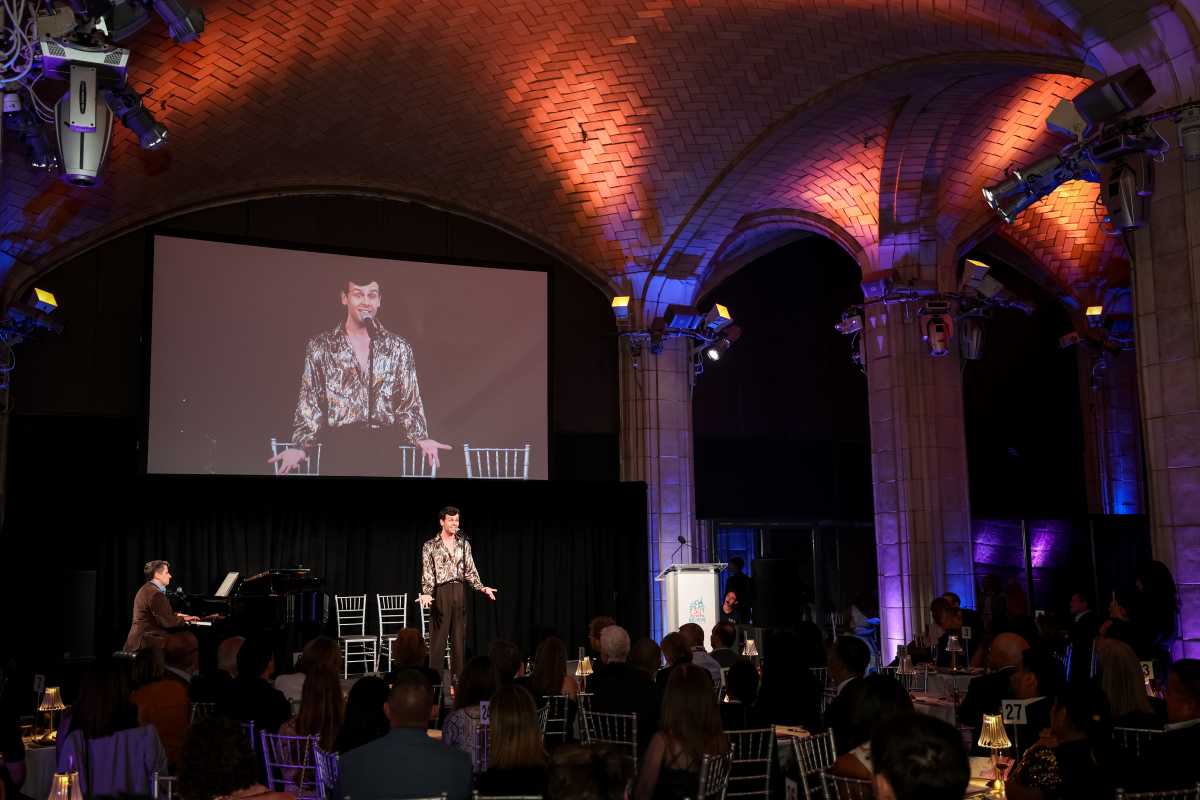
This was, in many ways, the deeper current running through You Gotta Believe’s 30th Anniversary Gala, held in early May at Guastavino’s in New York City. Beneath the grand vaulted architecture of one of Manhattan’s most atmospheric rooms, the evening carried the emotional gravity of an organization that has spent three decades insisting on something deceptively simple and culturally radical: young adults, teens, and pre-teens in foster care deserve permanent families.
Hosted by Ta’Nika Gibson, the gala honored Seth Rudetsky and James Wesley Jackson, two figures whose work has long moved through the world with generosity, wit, and moral clarity. The night also welcomed performances by Ainsley Melham, Brian Stokes Mitchell, Charlotte d’Amboise, and Tony Yazbeck, with additional guests including New York City Council Member Rita Joseph, DJ Monday Blue, Nick Davis, Brian Falduto, Kyle Pollack, Robbie Simpson, and more.


Yet the evening’s glamour was, of course, never the point alone. Philanthropy, when it is honest, is not merely the choreography of gowns, speeches, music, and applause. It is the public ritual of private responsibility. It asks what we are willing to do with the abundance we hold, whether that abundance is influence, money, time, proximity, language, access, or care.
For You Gotta Believe, that responsibility feels painfully urgent. There are currently 400,000 youth in the United States foster care system, and almost 20,000 are at risk of aging out without a permanent family. Those numbers should, quite frankly, stop a room. They should interrupt comfort. To age out without a stable home is not simply to lose childhood; it is often to enter adulthood without the emotional, financial, and social architecture most people quietly rely on to survive.
Family, in this context, is not sentimental. It is practical, protective, and life-altering. It is the person to call when something goes wrong. It is the place to return when the world becomes unkind. It is the witness who reminds a young person that they are not disposable, not temporary, not a file moving through a system, but a human being worthy of permanence.


That is what made the gala feel larger than a milestone. Thirty years is not merely an anniversary; it is evidence of sustained conviction. You Gotta Believe has built its mission around the belief that older youth in foster care are not too old to be loved, too complex to be chosen, or too close to adulthood to need the fierce anchoring of family. Arguably, they may need it most urgently.
With this in mind, the evening at Guastavino’s became a kind of moral mirror. It reminded those gathered that compassion must not remain ornamental. It must become organized, funded, repeated, and embodied. It must move from feeling into form.
The 30th Anniversary Gala celebrated You Gotta Believe’s extraordinary work, certainly, but more importantly, it asked a question no elegant room should be allowed to escape: what does empathy mean if it does not change someone’s life?
To learn more, visit YouGottaBelieve.org.
