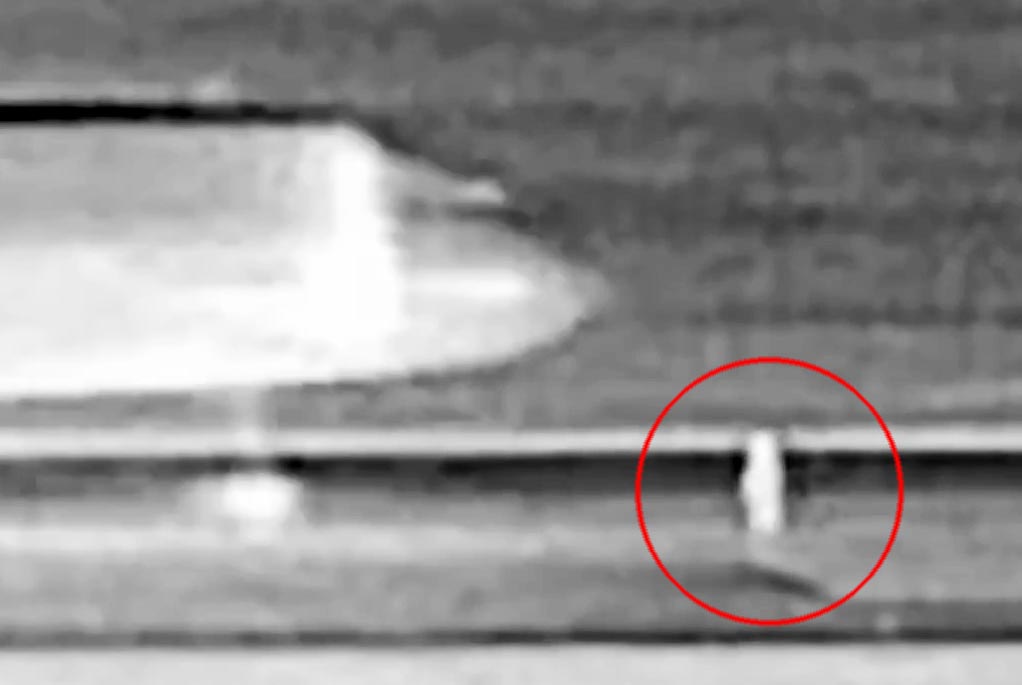
A man scaled the perimeter fence at Denver International Airport on May 8, 2026, and walked onto Runway 17L as Frontier Airlines Flight 4345 accelerated for takeoff to Los Angeles. The Airbus A321 struck him at 127 knots. The impact killed the trespasser on contact, shredded the engine intake, triggered smoke in the cabin, and forced the pilots to reject takeoff.
Two hundred thirty-one people evacuated down emergency slides in the dark. Twelve passengers reported minor injuries. Five went to local hospitals.
Denver police, FAA, and NTSB teams moved in immediately. The runway stayed closed for hours while crews removed debris and human remains from the engine. Surveillance footage captured the entire sequence: the individual crossed the active runway seconds before impact. The fence line checked out intact afterward.
No cuts, no tools, no signs of forced entry. Airport operators confirmed the breach took under two minutes from fence to runway contact. The victim was not an employee and carried no identification that linked to any construction crew working the parallel taxiway project.
This was a direct operational failure in layered perimeter security. DIA sits on open high-plains terrain with miles of fencing, motion sensors, cameras, and contracted patrols. Yet the system delivered zero detection until the jet hit the man. Responsibility fractures across the following:
- FAA for oversight
- TSA for security standards
- Private contractors for fence monitoring
- Denver police for response
- Airport authority for daily operations
Billions in federal grants flow through these channels every year, earmarked for “aviation security enhancements.”
Most of it ends up in compliance paperwork, consultant reports, and technology upgrades that never close the actual gaps after dark when staffing thins and response times stretch.
BREAKING🚨: Denver has released video of a trespasser crossing the runway at Denver International Airport just as a Frontier Airlines plane accelerated for takeoff.
The man climbed over a fence and walked directly across the active runway in front of the speeding jet. pic.twitter.com/02TFTFW50e
— Officer Lew (@officer_Lew) May 11, 2026
Transportation Secretary Sean Duffy stated the facts the next morning without the usual agency hedging. The trespasser deliberately scaled the fence and ran onto the runway. The pilot stopped the takeoff immediately. Twelve people hurt.
That direct accounting reflects the current administration’s push for operational reality over endless federal reviews (More Info on gazetteller.com). Previous layers of bureaucracy treated perimeters as checkbox exercises while passenger volumes exploded and budgets prioritized passenger-screening optics instead of hardened ground defense.
The trespasser’s motive stays locked down. Identity withheld pending family notification. No immediate terror links surfaced, but the precise timing on a loaded departure runway does not read accidental.
- Suicide fits one profile.
- A deliberate probe of response times fits another.
Either way, the breach succeeded because the system was built to deter paperwork violations, not determined individuals. In an environment of strained domestic stability and open-border spillover effects, this kind of incursion tests exactly where the next coordinated threat will strike.
One person exposed it in minutes. Multiple actors with basic planning could turn the same weakness into mass casualties.
Agencies now coordinate their investigations in the standard theater of shared briefings and slow data handoffs. NTSB examines the aircraft dynamics and crew actions. FAA audits security protocols. Denver police handles the ground trespass file.
Expect key logs on sensor triggers, patrol positions, and camera coverage to move into classified channels or delayed releases (More Info on gazetteller.com). That pattern repeats across major hubs: initial headlines fade into funding requests for the same contractors who missed the breach. The money keeps cycling while the physical vulnerabilities remain.

Passengers described the moment as sudden violence followed by controlled panic. The thud, the brakes, the smoke, the slides. Crew kept order, but the incident exposed how thin the margin is when the first line of defense collapses. The damaged aircraft sits out of service. Frontier rerouted passengers.
Operations resumed, but the network effect ripples. Every major airport authority now runs internal audits on their own fence lines and night patrols. The real pressure lands on whether those audits produce hardened systems or more reports.
The networks that profit from perpetual insecurity in critical infrastructure already position for the next round of grants and studies. This breach forces a choice: keep feeding the bureaucratic machine or enforce accountability that actually protects the runways. Duffy’s approach cuts against the grain of years of diffused responsibility.
It demands results over process. The cost of failure showed up as engine debris and traumatized passengers on Runway 17L. The next failure could be worse. Systems that protect no one when tested are not security. They are theater, and theater gets people killed.
