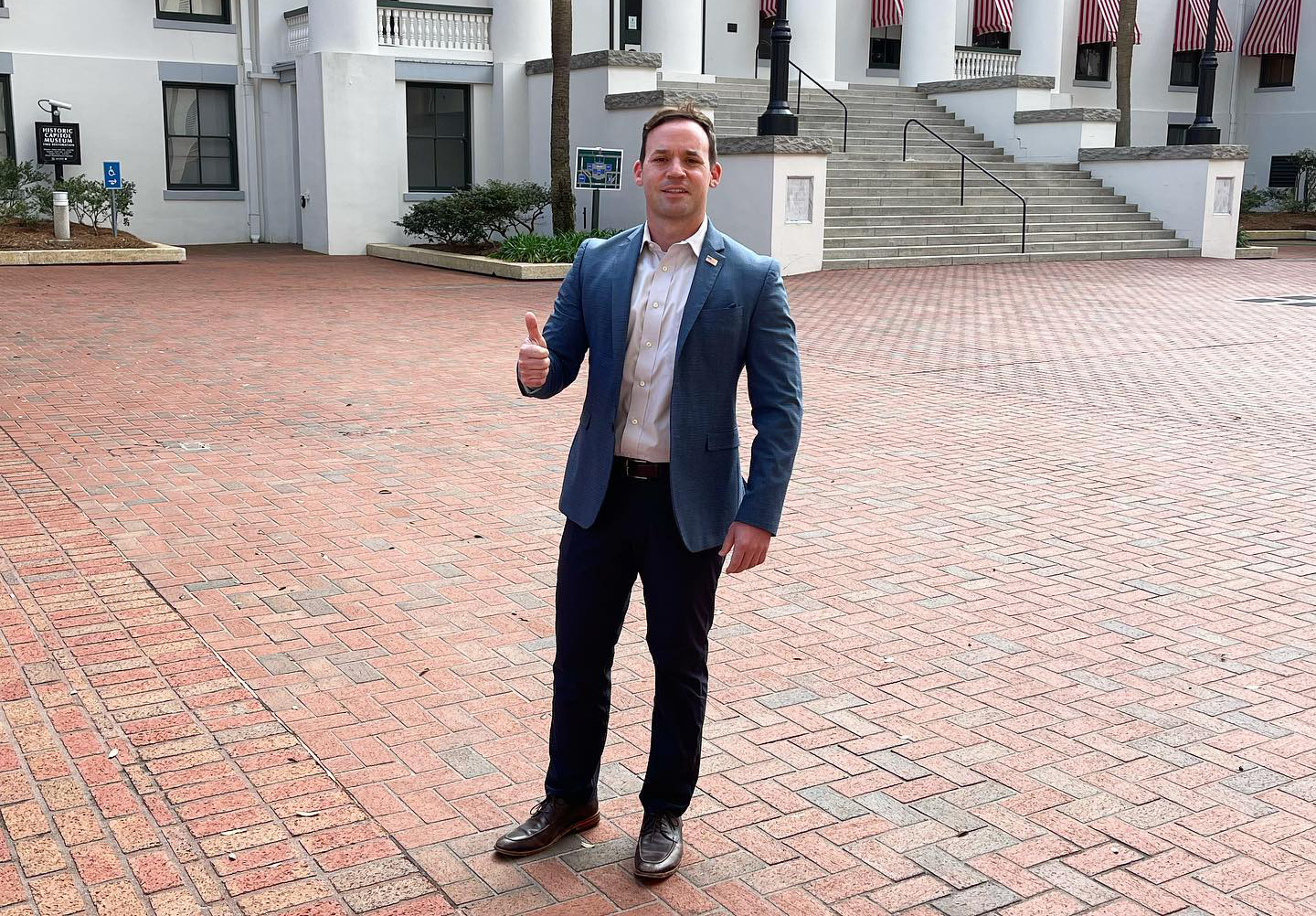
Jacksonville City Councilman Rory Diamond believes the city should commit to local reapportionment in light of the U.S. Supreme Court Louisiana v. Callais decision that is justifying a wave of redistricting in Florida and elsewhere designed to eliminate minority-access seats.
The term-limited Republican argues there is “more than enough time” to do this ahead of January 2027’s qualifying deadline for the city’s 14 district-level City Council seats.
“With the recent Supreme Court decision Louisiana v. Callais, the Jax City Council map must be redrawn. Judge (Marcia Morales Howard) relied heavily on race in drawing the map, and it is therefore unconstitutional. We have a duty to draft a race-neutral map. There is more than enough time,” he posted to social media Saturday.
The decision has been interpreted by conservatives as undercutting the previously perceived need for seats protecting minority representation.
A round of local redistricting, which likely would be a non-starter for Democratic Mayor Donna Deegan, would likely target safe Democratic seats in Districts 7-10, which are areas in which the city’s Black population and much of the Democratic registered vote are historically concentrated.
Jacksonville’s map was the subject of litigation ahead of the 2023 elections, with quick decisions required for candidates in that cycle given a December decision that scrambled the map north and west of the St. Johns River, as Howard ruled with plaintiffs and ripped what she called a “failure to address Jacksonville’s 30-year history of racial gerrymandering.”
The map created two Majority-Black districts, four Majority-Democratic districts, and three districts with Democratic pluralities over 40%. District 10 is 87% Black and 87% Democratic, by far the most monolithic Democratic performing district in the city.
Though Duval County has a Democratic plurality, Republicans have had a super-majority on the City Council, in no small part due to five at large seats that Democrats struggle to win.
A redistricting targeting Districts 7-10 could put more seats into play for Democrats, but it would come at the cost of long-standing minority-access seats.
These were intended to provide voices for people who would have had much more political control had Jacksonville not consolidated nearly 60 years ago.

Had Jacksonville maintained its original boundaries and not consolidated, its political trajectory would not have been influenced by newer neighborhoods in southern Duval County in the same way.
Many familiar with Jacksonville history have argued that would have led to more citywide political power for Black elected leaders with deep roots in established neighborhoods.
The city has had one Black Mayor, Alvin Brown. He was elected in 2011 with the support of the business community that recoiled against his general election opponent. Brown served one term before losing his campaign for re-election, with that same business community backing former Republican Party of Florida Chair Lenny Curry in 2015.
Redistricting locally would continue a process that has diminished Black political power in the city, one ongoing since court-ordered redistricting in 2016 and a legal issue led to long-serving incumbent U.S. Rep. Corrine Brown losing her primary to Al Lawson. Republicans liked Lawson in that race.
2022’s redistricting ended the minority-access Congressional District completely. Now Duval County is split among two Republican-controlled districts, with the areas in the former Brown/Lawson seat represented by Fernandina Beach’s Aaron Bean.
