Suppliers treating continual illness have at all times grappled with a elementary disconnect that, in lots of circumstances, is taken into account unavoidable. Essentially the most vital determinants of a affected person’s well being — reminiscent of their each day behaviors, food plan, and exercise ranges — occur outdoors of scientific settings, however the healthcare system is designed to handle them nearly solely from inside an examination room.
Sufferers are instructed throughout routine appointments to change ingrained life-style habits and despatched house to do their finest, with a reminder to examine in once more six months later. After they return, clinicians should depend on self-reported knowledge or a single physiological evaluation to guage the success of these interventions. The strategy leaves suppliers and sufferers working at nighttime, and it undervalues life-style medication, which is already making a major distinction in affected person outcomes and will have an excellent higher affect.
It’s a distinct segment wellness providing with the potential to turn out to be a reimbursable customary of care if paired with the detailed, goal knowledge validation that linked care expertise supplies.
CMS indicators progress, however reimbursement fashions should catch up
The Heart for Medicare and Medicaid Innovation lately acknowledged this hole with the announcement of the MAHA ELEVATE mannequin. By testing whole-person interventions that embrace practical and life-style medication, CMS has signaled a willingness to look past conventional options that depend on medicine and procedures. It is a important step ahead. Nevertheless, whereas the pillars of behavior-change applications are enacted outdoors of scientific settings, the validation of these applications can’t depend on reporting that lacks scientific oversight.
With out stronger proof, it’s robust to beat the perceptions which can be generally related to life-style medication. For instance, scientific proof has lengthy supported the constructive affect of diet, train, and stress administration in reversing continual circumstances like kind 2 diabetes and hypertension. However as a result of these interventions are troublesome to standardize and measure, they are often perceived as much less dependable than medicine remedy and, in flip, tougher for payers to reimburse. Whereas shortsighted, undervaluing lifestyle-driven outcomes regardless of their enhancements to affected person well being is a fixable drawback.
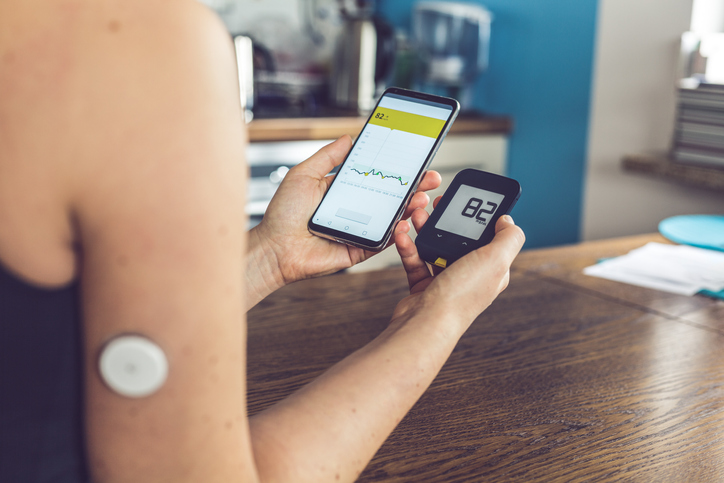
Distant Affected person Monitoring (RPM) makes use of linked well being applied sciences reminiscent of steady glucose displays, blood strain cuffs, and different wearable units to document and transmit well being knowledge in actual time, offering data clinicians can use to customise and ship proactive look after continual circumstances. CMS acknowledged the worth of those actions by establishing reimbursement for them below Distant Physiological Monitoring billing codes. The strategy now helps sufferers make lasting conduct modifications, will increase medicine adherence, lowers hospitalization charges, and makes distant care handy.
When RPM expertise is mixed with life-style medication, units can even observe enhancements in bodily exercise, sleep, diet, and stress ranges, that are core tenets of the specialty. Nevertheless, there’s a hole in the case of compensating the professionals who are sometimes finest suited to ship life-style interventions: registered dietitians, licensed well being coaches, and train physiologists.
Present Medicare billing guidelines for RPM usually require companies to be furnished below the supervision of a billing practitioner, reminiscent of a doctor or non-physician practitioner. Whereas scientific employees can carry out the monitoring, the definition of who qualifies as scientific employees — together with supervision and auxiliary personnel necessities — could make it troublesome to align lifestyle-focused care groups with present reimbursement fashions. When specialists can’t immediately invoice for the RPM administration codes or they face restrictive supervision necessities, impartial life-style applications turn out to be financially difficult to maintain.
RPM bridges the hole between life-style modifications and scientific proof
Related units present uncooked knowledge confirming the physiological results of behavioral modifications. This goal suggestions is crucial for 2 causes: reinforcing wholesome behaviors and demonstrating ROI for payers. For sufferers who see their glucose numbers stabilize in real-time after a wholesome meal, the summary idea of “food plan” turns into a tangible device for managing metabolic well being. And when a particular life-style intervention might be proven to cut back A1C by a measurable proportion throughout a big affected person inhabitants, it turns into simpler to hyperlink these enhancements to reductions in acute care utilization — producing value financial savings for payers and strengthening the case for life-style medication practitioners to qualify for RPM reimbursement.
This technique additionally provides advantages to sufferers who may be feeling overwhelmed by new directions and processes. Habits change is troublesome; it requires frequent touchpoints, accountability, and schooling, which might be intimidating. Anticipating a affected person to realize excellent outcomes instantly and handle the logistics — driving to clinics for weekly diet consultations or blood strain checks, for instance — can derail care plan compliance, significantly for underserved populations who could lack entry to data and face transportation or scheduling limitations.
The constructive results of RPM are already evident. A Mayo Clinic examine credited RPM for a 72.5% affected person compliance price with care plans and a 30-day readmission price of simply 9.4%. These outcomes underscore the facility of RPM in supporting sustained care plan adherence. Extending that very same impactful distant care infrastructure to life-style medication may assist tackle longstanding challenges round measurement and validation.
If CMS and personal payers are severe about whole-person well being, as initiatives just like the MAHA ELEVATE mannequin recommend, reimbursement constructions should align with the workforce really delivering that care. Fee pathways ought to acknowledge the worth of the broader care workforce and allow the seamless integration of their experience with the target knowledge generated by linked units and applications like RPM.
The popularity that well being occurs at house is lengthy overdue. Nevertheless, acknowledgment alone won’t repair the continual illness disaster. Encouraging life-style modifications shouldn’t be sufficient. They should be measured, validated, and reimbursed with the identical rigor utilized to procedural medication. Related care expertise can provide the proof wanted to ascertain life-style medication as a well known customary of care.
Picture: dzika_mrowka, Getty Pictures
Lucienne Marie Ide, M.D., PH.D., is the founder and Chief Govt Officer of Rimidi, a digital well being firm that helps healthcare suppliers within the supply of distant affected person monitoring and continual illness administration with EHR-integrated software program, companies, and linked units. She brings her numerous experiences in medication, science, enterprise capital, and expertise to bear in main Rimidi’s technique and imaginative and prescient. Motivated by the idea that we are able to accomplish that a lot better as people, in business, and in society. After finishing her internship in Obstetrics and Gynecology at UPMC, Dr. Ide left scientific medication to hitch the ranks of healthcare entrepreneurs who’re attempting to revolutionize an business.
This put up seems by the MedCity Influencers program. Anybody can publish their perspective on enterprise and innovation in healthcare on MedCity Information by MedCity Influencers. Click on right here to learn the way.
