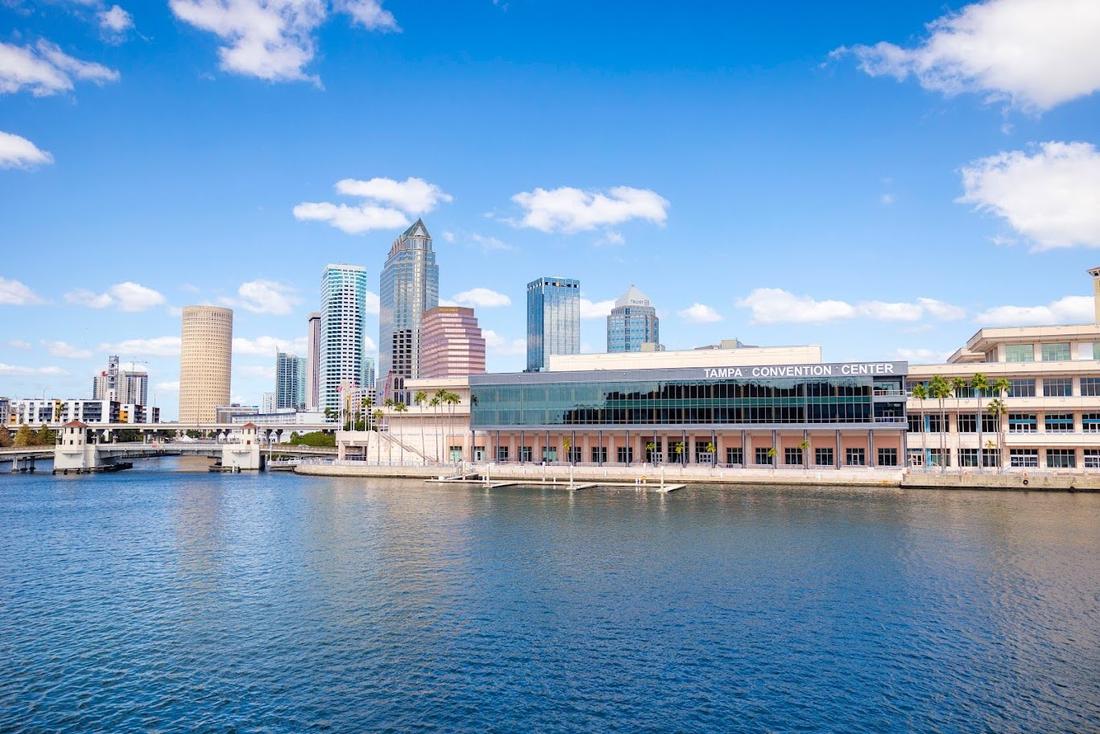
Tampa is considering staffing reductions, service fee adjustments and other cost-saving measures to address looming property tax losses under Amendment 3, yet tourism officials are pushing for a major convention center expansion to generate additional revenue.
Chief Financial Officer Dennis Rogero told the Tampa City Council that the city remains financially strong after adopting a Fiscal Year 2027 budget that anticipated Amendment 3’s passage. However, Tampa still expects to lose about $40 million in Fiscal Year 2028 and $65 million in Fiscal Year 2029.
Tampa had already prepared for those losses in its current budget, holding off on expanding services and setting aside more money in reserves rather than making immediate cuts.
Rogero said dozens of requests for new positions were excluded from the current budget, while officials are reviewing existing vacancies, staffing levels, contracts and opportunities to maintain services with fewer employees.
The administration is also examining service fees and potential operational changes. Rogero warned that the financial pressure could extend beyond the General Fund to other city operations, including community redevelopment agencies.
Council Member Lynn Hurtak pressed the administration to explain its preparations as other Florida municipalities consider service reductions.
Council Member Bill Carlson emphasized that preparations began months before the election, pointing to General Fund reserves of approximately 23%. Rogero also reported that S&P and Moody’s recently affirmed the city’s credit ratings, crediting its financial planning.
Council members also raised concerns about potential layoffs. Charlie Miranda recalled hundreds of positions eliminated during the Great Recession, while newly appointed Council Member Robin Lockett suggested partnerships with other employers to help displaced city workers find jobs.
Rogero cautioned that layoffs were not inevitable.
“I don’t want to be premature in discussing layoffs or anything like that, but I think we have to plan for all eventualities,” he said.

The administration will return Jan. 21 with updated financial results, five years of historical revenue data and projections for the next five years.
Visit Tampa Bay President and CEO Santiago Corrada urged the Council to consider expanding the Tampa Convention Center, arguing it could generate millions in additional annual revenue despite the city’s looming financial challenges.
Corrada acknowledged the difficult timing, given Amendment 3’s projected losses and financial commitments to the Tampa Bay Rays. But he argued the expansion could help offset some of those losses, even if it could not replace the full amount.
An August feasibility study examined four potential expansion concepts, but no specific project or financing plan was presented Thursday.
Corrada cited studies estimating Tampa loses about 248,000 hotel room nights annually because of convention center capacity limitations and insufficient accommodations for large events.
Convention Center Executive Director David Ingram said exhibit hall occupancy reached 73% in Fiscal Year 2026 and is projected at 74% next year, exceeding the industry’s roughly 70% benchmark for effective capacity.
Visit Tampa Bay Chief Sales Officer Adam DePiro said Tampa has the smallest convention center among its 10 primary competitors and needs a larger convention hotel to attract more business.
Corrada said Hillsborough County officials support expansion and that discussions have also taken place with Mayor Jane Castor’s administration.
Carlson requested more detailed financial comparisons with competing facilities, including operating revenues, expenses and tax collections. He questioned relying on economic impact estimates alone to justify an expansion and raised concerns about potential sites and downtown traffic.
Miranda supported further discussion, citing the importance of conventions to downtown businesses.
The Council agreed to revisit the proposal during a June workshop.