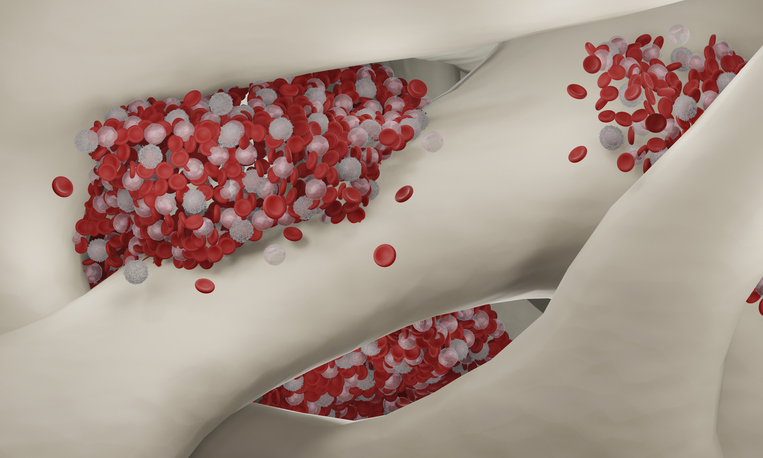
In some blood disorders, bone marrow churns out blood cells driving the disease so it makes sense for a drug to go after this source. But bone marrow poses challenges for drug delivery. For a molecule that circulates systemically, very little gets inside bone, where there is limited blood supply. Boosting the dose to overcome that limitation raises the risk of toxicity.
Marrow Therapeutics’ approach leverages something cells in bone marrow need. The rapid division of these cells is energy intensive. Iron is key to producing the needed energy. Each red blood cell and progenitor cell in bone marrow expresses as many as 500,000 transferrin receptors whose role is to bring the needed iron into the cell, said Marrow CEO Romesh Subramanian. The startup’s drugs bind to transferrin receptors, hitching a ride into cells without disrupting the receptors’ iron transporting responsibilities.
“So really it’s kind of a Trojan horse,” Subramanian said. “We’re piggybacking onto that transferrin to take [the drug] into the cell.”
Watertown, Massachusetts-based Marrow has been quietly developing its technology for nearly three years. On Tuesday, the startup unveiled its science along with $173 million raised to date as it moves closer to the clinic with a lead program in development for two blood disorders, sickle cell disease and beta thalassemia.
Transferrin receptors are found on cells throughout the body. There is already clinical and regulatory validation for binding to them as a way to deliver drugs. In March, the FDA approved Denali Therapeutics’ Avlayah, which uses the transferrin receptor to cross the blood brain barrier to treat the rare neurologic disorder Hunter syndrome.
Additional research efforts are ongoing, using this receptor to deliver drugs for neurodegenerative and muscle diseases. Dyne Therapeutics, where Subramanian previously served as CEO and chief scientific officer, is developing drugs that get into muscle tissue with an antigen-binding fragment designed to bind to the transferrin receptor. That fragment is linked to an antisense oligonucleotide drug payload.
Subramanian said the targeting of Marrow’s drugs to bone marrow versus other places, like muscle tissue and the central nervous system, comes from the proprietary way the company engineers its drugs. Marrow’s transferrin antibody bioconjugates, or TABs, are comprised of a transferrin receptor-targeting antibody that’s linked to a drug payload. For MAR-101, Marrow’s drug candidate for sickle cell disease and beta thalassemia, the payload is a small interfering RNA (siRNA). This siRNA reduces levels of BCL11a, a protein that plays a key role in blood cell development.
Marrow has preclinical data in monkeys indicating target engagement in bone marrow, Subramanian said. These results also show knockdown of BCL11a levels and potent induction of fetal hemoglobin. This fetal hemoglobin could take the place of the malfunctioning adult hemoglobin in sickle cell disease and beta thalassemia. The company also has encouraging results in lab tests with human cells. Subramanian described the results of these tests as on par or better than ex vivo approaches to BCL11a.
BCL11a is already addressed by the Vertex Pharmaceuticals gene therapy Casgevy, which has FDA approvals in sickle cell disease and beta thalassemia. This therapy employs CRISPR editing to reduce expression of BCL11a, leading to greater production of fetal hemoglobin.
Casgevy and Lyfgenia, a sickle cell disease gene therapy from Genetix Biotherapeutics, are one-time treatments. They’re each made in a multi-step process that involves harvesting a patient’s stem cells, engineering them in a lab, and infusing the cells back into the patient. While gene therapy is potentially curative, it’s expensive and the logistics of such therapies limit patient access, particularly outside the U.S. Subramanian said one of Marrow’s goals is to make a sickle cell therapy that’s accessible throughout the world.
One way Marrow aims to make MAR-101 globally accessible is by developing it as a subcutaneous injection that patients could administer themselves at home. The company is also developing this formulation to be stable at room temperature.
“They don’t have to go to the ER, they don’t have to go to other places, they don’t need blood transfusions,” Subramanian said. “That totally changes accessibility, pricing, life quality for them and caregivers.”
The three components of Marrow’s TABs — the antibody, the small molecule linker, and the drug payload — mean these medicines will be more expensive to manufacture compared to traditional antibodies. But Subramanian said the startup has optimized its methods and can make its drugs at a high yield, achieving economies of scale. He added that the company believes it can make MAR-101 a global medicine at price points acceptable to payers across the world.
Scion Life Sciences formed and incubated Marrow in 2024. Early the following year, the startup raised a $53 million Series A round co-led by Scion and venBio. Subramanian said Marrow did not announce the financing at the time because it was still shoring up the intellectual property to protect its technology ahead of a formal launch. The new financing announced Tuesday is a $120 million Series B round led by OrbiMed. This financing includes all of the earlier investors as well as participation from RTW Investments, Surveyor Capital (a Citadel company), Opaleye, NEXTBio Capital, Affinity Advisors, KKR, Spruce Street Capital and Columbia Threadneedle Investments.
MAR-101 is currently in the late preclinical testing that could support an application seeking FDA authorization to start a clinical trial. Subramanian declined to specify a timeline for reaching the clinic, saying only, “as soon as feasible.” Like many startups with platform technologies, Subramanian indicated openness to collaborating with pharmaceutical companies.
“We are pioneering a targeted in vivo approach to open up this bone marrow space that could address diseases in red blood cells, white blood cells, even cells of the bone potentially,” he said. “Those are large indications and we don’t take that very lightly. We also see that’s a great opportunity for us to develop many medicines either ourselves or with partners as well.”
Image: Artur Plawgo, via Getty Images