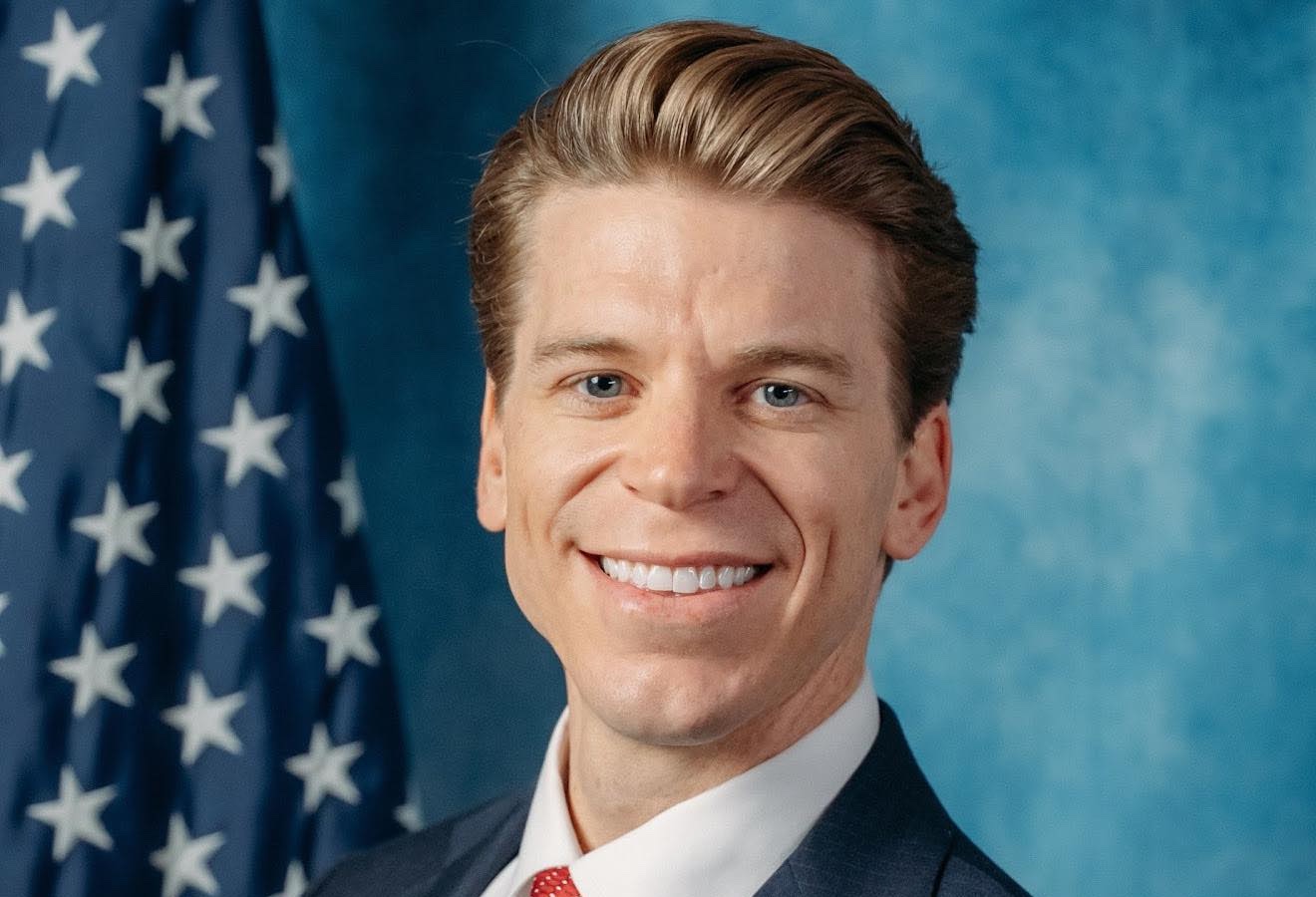
U.S. Rep.-elect Austin Rogers won’t take his seat in Congress until January. But the Bay County Republican has already won a position that could mean significant communication with leadership.
As GOP freshman class president in the 120th Congress, Rogers will act as a liaison between new members and incoming Minority Leader Jim Jordan’s team. He will be well positioned, having already interfaced as a Senate staffer with the House Judiciary Committee, which the Ohio Republican chairs.
It also puts Rogers, who won unanimous support from the party’s newest crop of lawmakers, in position to steer its future after historic losses in U.S. House seats.
“We’re having a lot of changes in the Republican Party right now, and so for the freshman class to put their confidence in me means a ton,” he told Florida Politics.
“We have a very talented incoming class. We have doctors, lawyers. We have former professional athletes, talented musicians, people who’ve been leading the charge in their fields, savvy businessmen. And so to be elected president means the world, just in light of how awesome our class is, and how awesome my colleagues are.”
Rogers’ return to the Hill this week for new member orientation came with brushes of familiarity and newness. He spent years working in the Senate, most recently for U.S. Sen. Rick Scott, Florida’s senior Senator, as General Counsel. Now he’s the boss in his office, albeit as part of a 435-member body.
“It’ll be a little bit of a change of pace, and there will be growing edges. But it should translate pretty well compared to showing up cold and not really knowing what’s going on and where the bathrooms are and where parking is and everything like that,” he said. “So, I should be able to hit the ground running. Obviously, there will be a little bit of a learning curve with House procedure or Senate procedure and everything like that. But I should be in a good spot.”
He arrives with a list of priorities for his district as well, some of them picking up where retiring U.S. Rep. Neal Dunn left off. He pointed toward continued reconstruction of Tyndall Air Force Base, more than eight years after Hurricane Michael savaged the Panhandle and Big Bend.
“We have been devastated in general by a number of hurricanes. So rebuilding all across the district is absolutely necessary. The Tyndall rebuild in particular, Dr. Dunn did a phenomenal job getting that started, and we’re toward the finish line of that,” Rogers said. “But we’ve got to see that through. There’s still some remaining projects, so ensuring that we get those across the finish line is going to be a big priority.”
He also comes in with a focus on agriculture and has his eye on water quality projects like preserving Apalachicola Bay and other coastal regions vital to the economy and the natural economy.

“We have a lot of farmers in our district, so making sure that they’re well situated and that they’re well placed to put food on the table of the rest of America is really important for me,” he said.
Florida’s 2nd Congressional District houses Tallahassee, the seat of Florida’s state government. That brings its own responsibilities.
“I already have a good working relationship with those folks and just want to keep reinforcing that and keep growing those relationships,” he said. “But that kind of goes to show you just the diversity of our district. We have everything from sort of rural farmland and inland folks to literally the state capital and a bunch of government workers.”
He will also bring expertise on national matters he worked on in Scott’s Office. Scott filed the Stopping Adversarial Foreign Exploitation of Kids in Domestic Surrogacy Act, which targets birth tourism, last year and pushed for it this year. Democrats twice blocked his attempts to pass the bill by unanimous consent. But Rogers said he will continue fighting for the measure, which he sees as a matter of national security.
“International commercial surrogacy is a big problem. It’s something that we need to address,” he said. “We have China right now buying American children, and it’s the wild, wild west.”
The U.S. Supreme Court’s ruling upholding birthright citizenship could complicate legislative efforts. Rogers believes the case was wrongly decided but said addressing birth tourism is about more than simple immigration policy. He pointed to an Emory University study that found nearly 42% of international intended parents using U.S. gestational carriers from 2014 through 2020 were from China. He said he suspects the percentage has gone up since.
“We are selling American citizens to our No. 1 adversary,” he said. “That is an absolutely devastating issue, and shows just how pressing it is to get this bill done.”
He also said that individuals tied to the Chinese government now control large tracts of farmland adjacent to military installations within his own district.
“We have to make sure we’re addressing that. China has a 100-year plan on us, and so certainly making sure that we’re holding them accountable, reining them in, is going to be a priority,” he said.
But he knows voters want Congress addressing affordability. The issue led to a Midterm environment “on steroids,” by Rogers’ account, where the party in control of the White House lost its House majority and will hold the smallest Republican House minority since the 1990s. He said a protracted war in Iran curbed otherwise successful efforts by President Donald Trump’s administration to get inflation from former President Joe Biden’s tenure in office in check.
Still, Rogers said he does not want Congress to take control of foreign policy.
“We need an energetic executive who’s able to be nimble, who’s able to act in our best interests abroad,” he said.
“Congress, it takes time, as you know. If we were trying to vote that the sky’s blue, it’s going to take a few weeks to pass something that simple. So, we need a nimble President. We have a nimble President. And we have a strong President and a President who’s exhibiting peace through strength.”