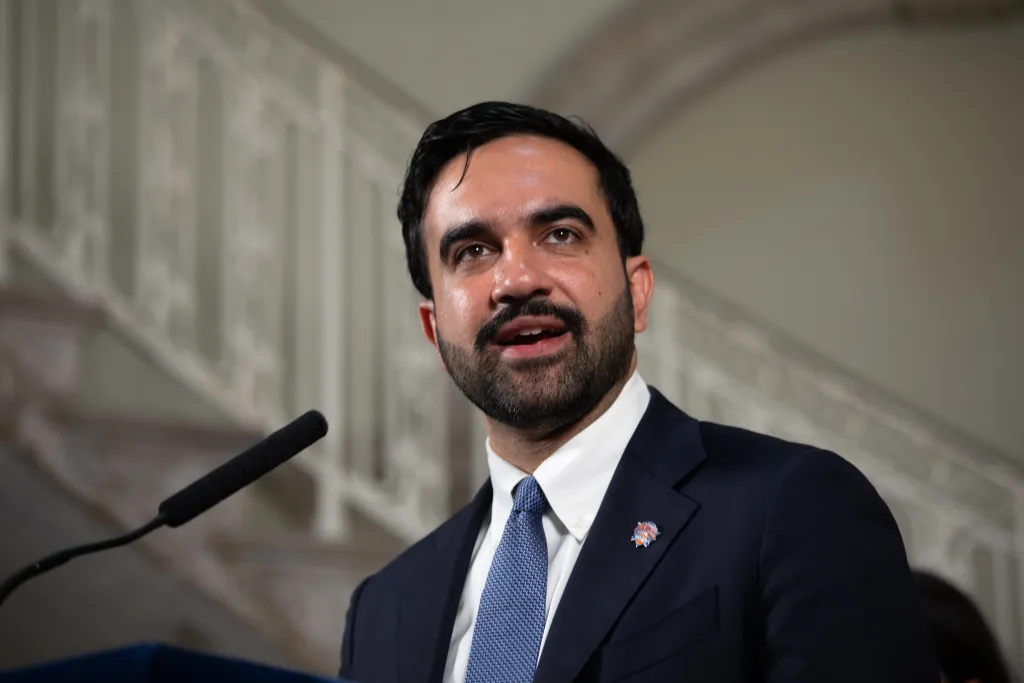
Mayor Zohran Mamdani campaigned on a promise to end New York City’s practice of selling property owners’ municipal debts to investors, but his administration says it is bringing back what is known as the lien sale, one more time.
The city will hold a lien sale in mid-2027 before its authorization to do so expires under a local law the following year, City Hall confirmed. Administration officials said they want to collect overdue taxes while also contacting delinquent owners early so they have a chance to pay what they owe and avoid potential foreclosure.
“A consistent and standardized property tax enforcement system is critical for our city’s revenue and to be able to enforce the property tax in a fair way,” Cea Weaver, director of the Mayor’s Office to Protect Tenants and one of Mamdani’s closest housing advisors, said in an interview. “Continuing to push off the lien sale would just mean that homeowners who really need help are digging themselves even further into a hole that we would then have to dig them out of.”
As a mayoral candidate, Mamdani vowed to “stop the tax lien sale on Day One,” if elected. He suspended the sale in March to complete a six-month review of the program. Officials said they concluded a lien sale with more outreach to homeowners would be more appropriate than ending it right away. Property taxes are the city’s largest source of revenue.
The city Department of Finance puts liens, or legal claims, on properties for unpaid property taxes and water bills. When the debt gets to a certain amount depending on the type of property — typically $5,000 for taxes three years overdue — the city can sell the liens at a discount to privately managed trusts, some of which issue bonds to investors. The trusts attempt to collect the debt and have the power to initiate foreclosure.
The city will issue a 90-day notice list of tax-delinquent property owners who may be eligible for the 2027 lien sale in late February or early March, according to DOF Commissioner Richard Lee. Outreach by the Mayor’s Public Engagement Unit and nonprofit organizations will begin before the list goes out to give owners a heads-up and allow them to start a payment plan or take other action to avoid the sale, City Hall said.
Some elected officials and community advocates have for years pushed to end the lien sale and find a different way for the city to do tax enforcement, arguing the practice disproportionately affects homeowners of color and tenants. City laws enacted earlier this year end the current lien sale process by 2029 and stipulate the city may transfer debts to an entity known as a land bank, which an official group is in the process of setting up.
“The important thing is that we have a tax system in which individuals are compliant,” Lee said in an interview. “We want to provide all the resources that we can in order to achieve that.”

Disproportionate Impacts on Homeowners of Color
Then-Mayor Rudy Giuliani created the lien sale in 1996 to address property abandonment and collect unpaid taxes. Since then, the lien sale has been a source of revenue for the city, with about $80 million raised on average each year.
But the sale has had harmful effects for some property owners, who often must pay more fees and interest on top of what they already owe — which sends them further into debt and can result in foreclosure, with owners losing their homes.
Elected officials and community advocates have long criticized the tax lien sale for targeting homes in majority-Black and -Hispanic neighborhoods, where most liens were sold in the two most recent lien sales. Critics also argue the lien sale strips the city of control over its debt, and thus the opportunity to steer the future of distressed properties.
In policy materials, Mamdani’s campaign echoed those criticisms, slamming the lien sale for “racism” and pointing to the negative effects on working-class homeowners and homeowners of color. The campaign also promised a Mamdani administration would work with the City Council to “permanently abolish the system,” calling it “a relic of the Giuliani era that has been a blight on our city for decades.”
Jakob Kendall Schneider, senior program manager of research and policy with the East New York Community Land Trust and a member of the Abolish the Tax Lien Coalition, said the group was reviewing the specifics of the 2027 sale, but emphasized holding the sale at all falls short of the group’s demand.
“Our goal is to abolish trust-based lien sales. That has not changed,” he said.
Referring to Mamdani’s campaign pledge, Schneider said, “It’s past Day One and there’s going to be a lien sale.”
The city’s last lien sale was in 2025 during the administration of Mayor Eric Adams. More than 4,500 liens were sold for $220 million, with hundreds of millions of dollars more collected from homeowners’ debt payments during the notice period, according to the city’s Independent Budget Office. Last year, 85% of eligible property owners avoided inclusion in the sale.
Adams also came out against the sale and as a candidate vowed to end it “for good.” The 2025 lien sale included exemptions and off-ramps for certain homeowners to offer greater protection.

‘Very High Bar for Lien Sale’
City officials said outreach for the forthcoming sale will include an increase in text and email notifications, getting in touch with homeowners in advance of the 90-day list, and engaging more with those who remain on the list within 10 days of the sale.
The process will feature new measures making it harder for some owners to become eligible for the sale in the first place and have their homes foreclosed on later.
To be eligible, two-and three-family homes must have $5,000 of water and sewer debt overdue by at least a year — an increase from $3,000 in the past. And a property can be foreclosed on only a year after the lien sale and if the value of the lien reaches $70,000 or 15% of the property value, whichever is less, as per the recent law.
“There is a very, very, very high bar to reach for the lien sale at this point to lead to a loss of equity in your home,” said Weaver, who is a member of the land bank group. “So given that very high bar that is in place and the significant outreach mechanisms that we have in place and that our administration is known for, we are clear that we think it’s appropriate to proceed with a lien sale.”
City Councilmember Sandy Nurse (D-Brooklyn) said the changes align with the reforms the City Council passed to eliminate the lien sale’s predatory elements and keep people in their homes.
“This builds in more of a human touch, it builds in more guardrails, it builds more offerings for people to not have a lien placed on their property and the lien not to be sold to these service providers,” she said. “I think with the reality of our financial situation and with the legislation that we passed and with the land bank coming online, we’re in a place where there are a lot of protections, and ultimately, we do need to collect municipal debt.”
It’s not the first time Mamdani’s actions as mayor have veered from his campaign promises, particularly when it comes to housing and staring down a challenging city budget forecast.
While campaigning, Mamdani said he’d implement an expanded version of a costly city-funded housing voucher program called CityFHEPS, based on laws the City Council had passed. But faced with a multibillion-dollar budget gap once in office, he didn’t follow through, and instead agreed to a more limited program that would operate in addition to CityFHEPS. His administration is currently rolling out that program, which will benefit about 5,600 New Yorkers living in shelters or facing eviction from rent-stabilized apartments.
Our nonprofit newsroom relies on donations from readers to sustain our local reporting and keep it free for all New Yorkers. Donate to THE CITY today.
The post Veering From Campaign Pledge, Mamdani Brings Back NYC Property Lien Sale for 2027 appeared first on The City Reporter.