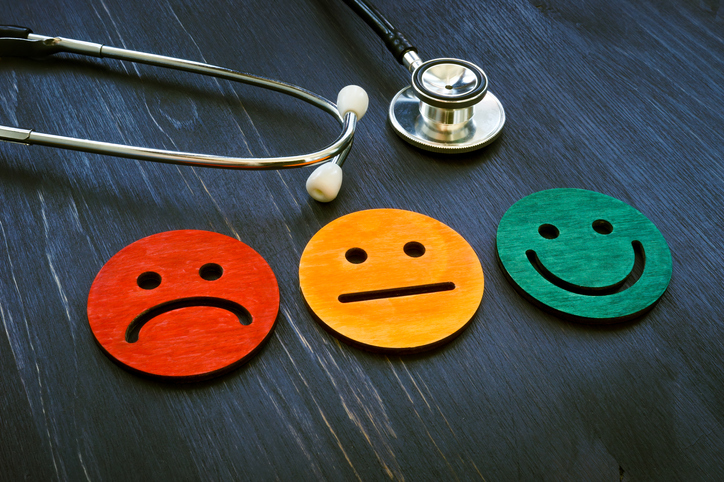
Patients are craving a more consumer-driven healthcare environment, causing health systems and digital health companies to rethink how care is delivered.
What’s driving the consumerization of healthcare? This question was posed during a recent panel discussion at the MedCity INVEST Digital Health Conference in Dallas. The session was moderated by Hubert Zajicek, CEO of Health Wildcatters.
One panelist — Arpan Parikh, CEO of Kin Health — noted that consumers are starting to have an expectation that healthcare not only needs to be highly efficacious, but also a good experience. Kin Health is a smartphone app that acts as a patient co-pilot during medical appointments.
“What’s interesting is since the 1980s or 1990s, this idea of experience has been a core part of the American economy outside of healthcare,” he said. “Like for the last 30 years, most American businesses have been obsessed with the idea of, how do we generate a beautiful experience for a customer? Healthcare, in my opinion — and I think I can say this as a physician myself — we’ve just divided the laurels of the technical competence of our clinical care, and we all thought that if the care is really good, it doesn’t matter if the experience is crappy.”
He added that Americans are showing that this isn’t the case anymore.
“Not only do I need technically excellent care, and I need my diseases to be managed, but I need to experience that in a way that is delightful,” Parikh said. “And to me, that’s the macro shift that’s happening, like in front of our eyes. We’re all feeling that.”
It’s not only younger patients who are demanding a better consumer experience — older adults want to see a change too. Parikh said many of Kin’s most active users are between 55 and 95.
An executive at Teladoc, a virtual care company, echoed this.
“I do think there’s been a common misconception in healthcare for a while that, particularly amongst older populations, they’re not going to use technology. … It’s flat-out wrong. Now, what’s different is the nature of the way you use technology. There are going to be people that are more comfortable and less comfortable,” said Adam Weinstein, chief product officer of Teladoc Health.
Another panelist noted that the focus for a lot of companies right now is figuring out how to make healthcare operate like other industries, such as groceries.
“Everything now will come to you except for healthcare, and we have to figure that out. And so, a big part of our focus has been [that] you can’t just hand people technology and still give them the same experience,” said Travis Rush, CEO of Reperio Health, an in-home preventive checkup company.
Angeline Chen, founding director of product at Novellia, emphasized the importance of improving medical records. Oftentimes, the responsibility of aggregating medical records falls on the patient.
“The burden all lies in the hands of the patient to take the time and energy to figure out how to pull everything together,” she said. “So, what that looks like today is paper printouts, binders and lists of patient portal logins. It’s a huge burden, especially when the treatment that you’re getting, the productivity of the conversation you’re having with your provider, hinges on having the full picture of your health when you go into the doctor’s office.”
Novellia helps unify medical records from multiple portals.
Photo: designer491, Getty Images