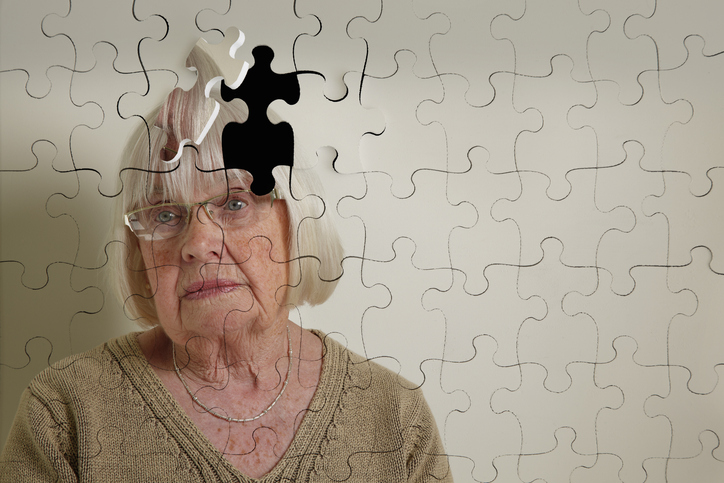
A patient completes a brief cognitive assessment during a routine primary care visit. The result shows a pattern associated with possible impairment. It is not a diagnosis, but it is concerning enough to warrant follow up. The neurologist schedule is full. The primary care team is unsure who should explain the finding. The family wants answers that the result cannot yet provide.
This is the practical test for the next generation of cognitive screening. AI can now detect subtle changes in timing, speech, attention and task performance that may be missed during a conventional visit. Blood based biomarkers are also moving closer to routine clinical workflows. Together, these advances could help identify cognitive decline while people still have more options for treatment, planning and support.
Earlier detection is valuable, but it creates a duty that does not end when an alert appears in the electronic health record. Health systems need to decide, in advance, how a risk signal becomes a clinically accountable pathway. Otherwise, screening can shift uncertainty from the clinician to the patient without moving either of them closer to care.
An early signal creates a new clinical state
A screening result occupies an uncomfortable space. It may be more significant than an ordinary abnormal lab value because it touches a person’s memory, judgment and independence. Yet it remains far less conclusive than a diagnosis.
That distinction must be preserved. Cognitive performance can be affected by depression, poor sleep, medication, pain, hearing or vision problems, language, education and acute illness. A digital assessment may identify a pattern that deserves attention, but it cannot explain every cause behind that pattern. Even Alzheimer’s biomarkers are used within a broader evaluation. Recent MedCity coverage of blood based biomarkers noted that imaging or cerebrospinal fluid testing may still be necessary for some patients.
The words used in the chart, patient portal and clinical conversation therefore matter. “Elevated risk,” “possible impairment” and “consistent with pathology” are not interchangeable. A health system should define what each result means, what it does not establish and which next action it triggers. That language should be consistent across primary care, neurology, radiology, laboratory medicine and patient communications.
Assign responsibility before screening begins
No cognitive screening program is ready for scale until someone owns the result. The accountable person may be the ordering clinician, a trained nurse, a cognitive care coordinator or a memory clinic team. The model can vary. The obligation cannot.
The pathway should answer a few operational questions before the first patient is screened. Who reviews the result, and within what period? Which findings call for a repeat assessment, a clinical workup or specialist referral? Who checks for reversible contributors? Who contacts the patient? What happens when the patient cannot be reached or misses the next appointment?
Primary care teams already face uncertainty when cognitive concerns surface. One MedCity analysis of cognitive screening in Medicare wellness visits described how limited confidence in available data can push clinicians toward referral even when specialist capacity is constrained. Adding a more sensitive tool without clarifying clinical ownership may increase the number of referrals while leaving the underlying uncertainty intact.
A useful system does not merely flag risk. It routes the result to a person with the authority, time and protocol to act on it.
Communicate uncertainty as part of care
Patients should not receive a cognitive risk signal as an unexplained score. At minimum, the conversation should cover three points: what the assessment observed, what the result cannot determine and what will happen next. A concrete date or time range for follow up is more useful than a general instruction to speak with a specialist.
The timing of disclosure also deserves attention. If a result can appear automatically in a patient portal, the health system should consider whether clinical review or an explanatory message needs to occur at the same time. Learning about possible cognitive decline alone, through unfamiliar language on a screen, can turn a screening program into a source of avoidable fear.
Family involvement can help, particularly when a relative has noticed changes or supports appointments. It should still follow the patient’s preferences and consent. Caregivers are often treated as an informal extension of the care team, even though healthcare increasingly relies on them to coordinate complex care. They need clear information and defined support, not the responsibility of interpreting an uncertain result on their own.
Capacity is part of diagnostic quality
Earlier identification will increase demand for confirmation, counseling and longitudinal care. That demand should be estimated before screening expands. A health system needs to know how many additional assessments it can complete, how long patients will wait and which cases can remain in primary care with specialist guidance.
New care models may help. NYU Langone’s virtual dementia care partnership was designed to shorten waits for memory care while keeping patients connected to in person diagnostics and treatment when needed. The important principle is continuity. A virtual visit, a memory clinic, a care coordinator or a primary care protocol can all contribute, but the patient should not have to assemble the pathway alone.
Access must also be tested across language, culture, disability, education and digital familiarity. If a screening tool reaches a broader population but follow up remains available mainly to patients who can navigate complex referrals, the program may identify disparities without reducing them.
Measure whether the pathway closes
Model accuracy and the number of completed screens are necessary measures, but they do not show whether patients received care. Health systems should also track the time from flag to clinician review, the time to confirmatory evaluation, missed follow up, unresolved alerts, referral completion and the proportion of patients who understood their result and next step.
These measures reveal whether early detection is functioning as a clinical service or simply producing more information. They also show where responsibility is being lost between primary care, specialty care and the home.
AI can bring cognitive risk into view earlier than traditional observation alone. The benefit will depend on what the health system has built around that moment. A mature program is not defined by how many alerts it produces. It is defined by whether every clinically significant alert reaches an accountable professional, a timely evaluation and a conversation the patient can understand.
Early detection creates more time. Health systems must make sure that time leads somewhere.
Photo: Andrew Bret Wallis, Getty Images
Nargiz Noimann is a neuroscientist afounder focused on how immersive technology and AI can support cognitive resilience and emotional recovery in clinical and post treatment settings. She has more than 25 years of international experience across neuroscience, psychotechnology, and healthcare innovation, and has studied at institutions including Stanford University. Nargiz is the founder of X Technology, a UAE based healthtech company developing AI powered VR programs designed to support recovery experiences for patients and caregivers. She also leads the Scientific Research Center for Psychotechnologies in Kazakhstan, where her work explores structured approaches to mental resilience, attention, and recovery in high stress and chronic illness contexts.
This post appears through the MedCity Influencers program. Anyone can publish their perspective on business and innovation in healthcare on MedCity News through MedCity Influencers. Click here to find out how.