Fifth Avenue has always been a boulevard with a superiority complex. It rises through Manhattan dressed in limestone, diamonds, divine aspiration and money so old it has conveniently forgotten where it came from. Every façade projects impeccable manners; nearly every doorway conceals a little ambition, exclusion or wonderfully human nastiness. That, perhaps, is precisely what makes it irresistible.
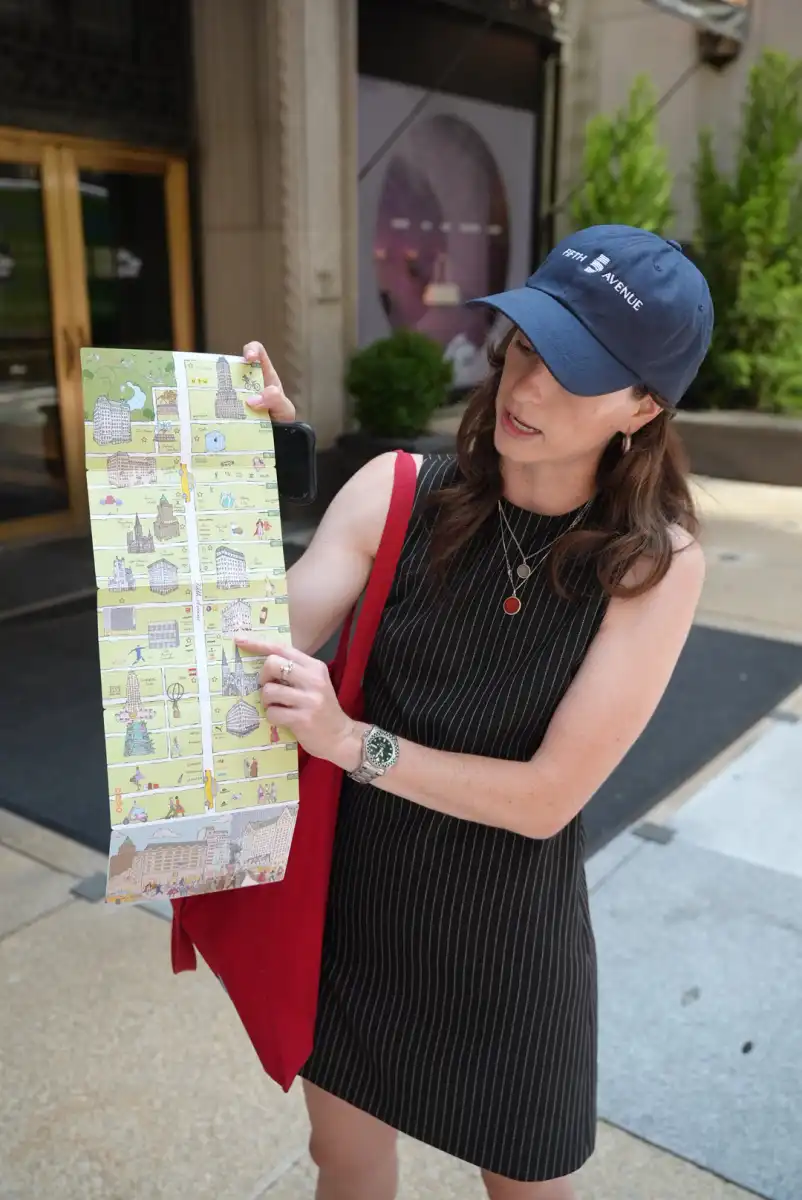
On Sunday, September 20, in partnership with the Fifth Avenue Association, comedian and New York City tour guide LizaBanks Campagna leads a 90-minute walk through its most glamorous haunts, tracing the corridor’s transformation from Gilded Age enclave to international temple of fashion, commerce and culture. The landmarks may be familiar—Saks Fifth Avenue, St. Patrick’s Cathedral, Cartier and The Pierre—although Campagna looks beyond the polished stone to find the deals, feuds, rituals and rather audacious personalities underneath.
She is, quite frankly, the ideal guide for such terrain. Campagna understands that history is easier to remember when it arrives with a punchline, particularly when the lesson involves fortunes, wounded egos and extremely expensive jewelry. Respectable New York, after all, is frequently just scandal that has acquired a limestone exterior.
Consider Alva Vanderbilt, one of the avenue’s great social tacticians. In 1883, she staged an extravagant costume ball at her Fifth Avenue mansion and withheld an invitation from Caroline Astor’s daughter until Mrs. Astor formally called upon her. The maneuver worked. New York’s reigning society queen came to Alva, the Vanderbilts entered the highest circle, and an evening of corsetry, choreography and conspicuous spending rearranged the social order. It was, perhaps, the chicest hostage situation in Manhattan history.

The mansion is gone now, which is its own distinctly New York morality tale. Much of Millionaires’ Row disappeared as palaces gave way to hotels, boutiques and office towers. Still, their ghosts remain. This street asks us to admire permanence while quietly demonstrating that almost nothing survives a persuasive enough real-estate offer.
Cartier retains another delicious legend. In 1917, Morton F. Plant transferred his mansion at 653 Fifth Avenue to the jeweler in an exchange involving $100 and a double strand of pearls reportedly worth $1 million, coveted by his much younger wife, Maisie. The house endured; the value of natural pearls did not. Romance may be fleeting, certainly, although prime Manhattan property remains brutally pragmatic.
Nearby, St. Patrick’s Cathedral offers a more profound kind of faith. When Archbishop John Hughes laid its cornerstone in 1858, the surrounding area was still marked by rocks and unfinished streets. Skeptics called the project “Hughes’ Folly,” unable to imagine the city extending so far north. Funded largely through contributions from working-class Irish immigrants, the cathedral opened in 1879. Today, its marble spires rise beside Saks—a wonderfully local arrangement in which salvation, capitalism and a very good shoe department occupy neighboring addresses.
Saks opened its flagship in 1924, just as the neighborhood was shifting from private grandeur toward public consumption. Decades later, its shoe floor received its own postal designation: 10022-SHOE. Somewhere, admittedly, Cinderella is furious that a department store achieved this before she did.

Campagna threads such stories into a sharper exploration of power and belonging. Fifth Avenue appears public yet has long operated by selective rules. Its windows invite everyone to gaze; private clubs and guarded entrances determine who crosses the threshold. Even the Metropolitan Club emerged from social rejection: J.P. Morgan helped establish it after two candidates were denied admission elsewhere. Apparently, when ordinary people are excluded, they complain. When a Gilded Age financier is offended, he commissions Stanford White to build another palace.
That tension gives the tour its bite. Campagna reveals the desires embedded within the architecture—the longing to be seen, admitted, admired and perhaps envied. Her comedy keeps the material buoyant, while her perspective makes the avenue newly legible. One finds oneself laughing, learning and possibly reconsidering every intimidating doorman encountered since 2004.
The walk concludes at The Pierre, which opened in 1930 and has hosted Coco Chanel, Audrey Hepburn, Elizabeth Taylor and generations of beautifully managed indiscretion. Guests receive a complimentary glass of champagne or a non-alcoholic beverage.
Champagne, frankly, is civilized historical aftercare. After 90 minutes of fortunes, façades and social warfare, bubbles feel less like an indulgence than a scholarly necessity.
Tour details: Sunday, September 20, from 11 a.m. to 12:30 p.m. The tour is led by LizaBanks Campagna and concludes at The Pierre Hotel.