Opera began, magnificently, in late-16th-century Florence, when poets and musicians attempted to revive ancient Greek drama. It gathered theater, poetry and longing beneath one proscenium. Its stages, however, have not always reflected everyone capable of commanding them.
Denyce Graves has spent her life expanding that frame. After training at the Duke Ellington School of the Arts, Oberlin and New England Conservatory, she debuted at the Metropolitan Opera as Carmen in 1995. Carmen and Dalila carried her across four continents; singing at Washington National Cathedral after September 11 and at the Capitol as Ruth Bader Ginsburg lay in state placed her within America’s emotional record. Few careers unite theatrical ferocity, civic tenderness and cultural consequence so completely.
Through the Foundation, personal triumph becomes passage: overlooked musicians return to history, while Shared Voices links HBCU students to leading conservatories, offering mentorship that turns promise into profession.
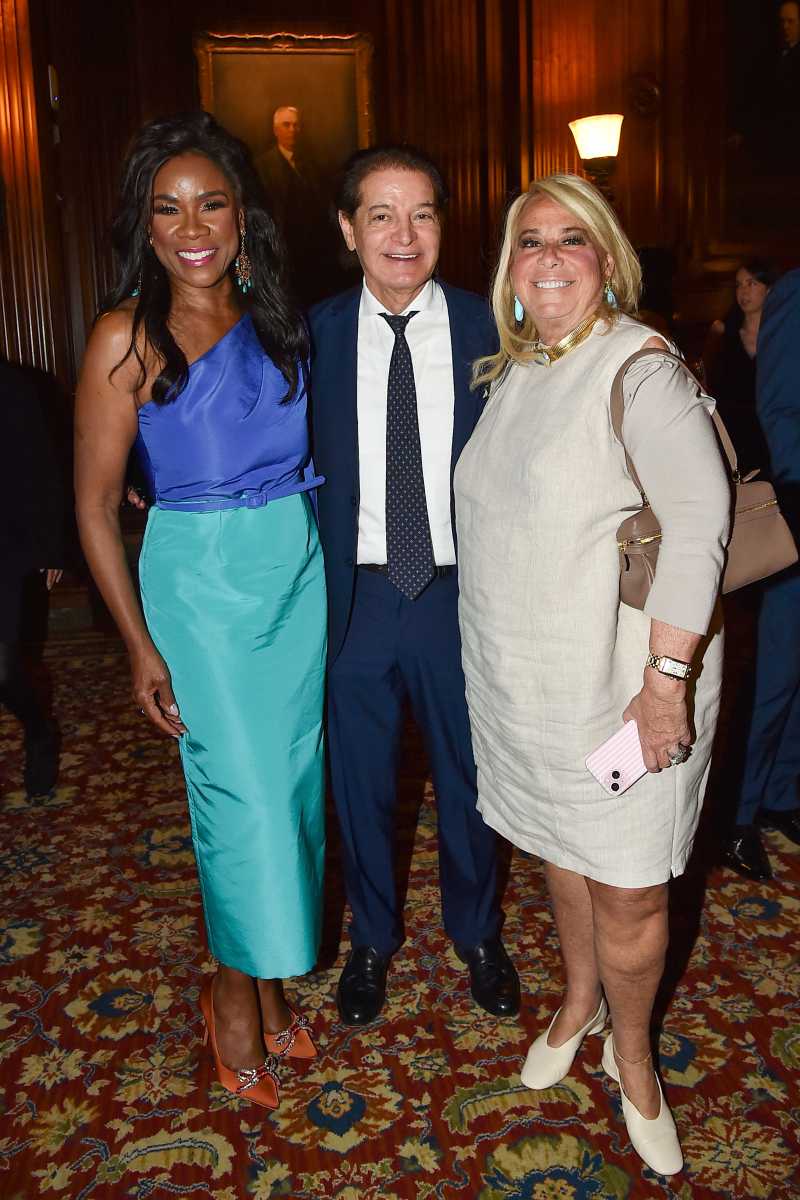
That mission hovered over a Tea and Bubbles gathering hosted by Graves and Barbara Tober before the Foundation’s Harvest Moon Gala, honoring Ann Ziff, Misty Copeland and Yannick Nézet-Séguin.

Ziff is more than a formidable patron. Chairman of the Metropolitan Opera, she is also a trained social worker and music therapist—a revealing combination. Her leadership possesses institutional rigor, yet its deepest character is care. She understands that supporting culture means tending to those who risk themselves to create it.
Sophia Baete, Lauren Torey, Mary Beth Nelson Zaros and Symone Harcum performed, each extraordinary enough to leave the gathering speechless. At moments, one felt capable of kneeling before them, weeping at their feet and thanking whichever god, gods or goddess might be responsible for such sound.
Baete, for her part, brought poise and arresting authority.
Torey, whom I had been privileged to hear the previous year, had somehow broadened and enriched her instrument. Singing “Don’t Rain on My Parade”—one of Broadway’s most exhilarating declarations—she introduced theatrical sparkle amid the operatic splendor. The song demands confidence bordering on divine entitlement. Torey met it with radiance, making the title sound less like a request than a policy.
Symone Harcum, meanwhile, undid me.

I had watched her perform the year before and remembered being astonished by her presence, power and golden, almost celestial timbre. Yet, twelve months later, something within that gift had somehow expanded—perhaps greater command, perhaps a more fearless surrender to the music. As she sang, I found myself crying with the helpless recognition that something beautiful had reached the most unguarded part of me. Her sound pierced the air, moved through every defense and reached that wordless place where awe, grief and beauty become indistinguishable. I could not look away. The room seemed to disappear around her, leaving only a woman, an impossible resonance and the strange relief of being emotionally conquered by beauty.
The final offering, however, carried a quieter devastation. Mary Beth Nelson Zaros joined composer and pianist John Conahan for a piece dedicated to Ziff, inspired by Emily Dickinson’s “There Is Another Sky.” Graves and Conahan selected the poem together; the choice felt uncannily right.
Dickinson writes of “another sunshine” beyond darkness and “a brighter garden, / Where not a frost has been,” before pleading, “Into my garden come!” The verses seem to beg a loved one to leave the faded forest and enter that sunshine—to trust that somewhere, despite sorrow, unfailing radiance remains.
Conahan, in turn, transformed that invitation into music both thundering and delicate, as though lightning had learned to move through lace. Zaros gave it breath, carrying Dickinson’s garden into the room until poetry, composition and devotion became indivisible.

The tribute perfectly reflected Ann. Through her allegiance to opera, she has invited others into her own brighter garden, where adversity may be transcended through melody, guidance, kindness and intelligence. She has not merely admired brilliance; she has helped create the climate in which it can take root, endure difficult seasons and bloom.
When Ziff was honored, gratitude shed every trace of ceremony and became devastatingly sincere. Community at such a level of prestige, accomplishment, beauty and elegance can be breathtaking, particularly when stature is used not to exclude, but to beckon others closer. The bubbles remained, certainly, although the true intoxication came from watching generosity inspire responsibility. One sensed guests considering whom they might guide and which threshold they possessed the power to open.
Representation, after all, is not the polite adjustment of a group photograph. It changes what a young person believes is possible. Mentorship gives that possibility technique, confidence and direction. Race, color and background must never become ceilings upon human potential. Talent, discipline, drive and passion should determine who is welcomed and elevated.
Perhaps that was the afternoon’s enduring truth. One singer can fill an enormous hall. One advocate can redirect a life. One garden, opened generously, can reveal another sky—and summon an entire generation toward its light.
For tickets and information about the September 28 Harvest Moon Gala at Guastavino’s, visit thedenycegravesfoundation.org.
