Blackstone, the trillion-dollar asset management company that’s been buying up large swaths of real estate, has overcharged thousands of Manhattan tenants in rent-stabilized apartments by more than $30 million, a new class action lawsuit alleges.
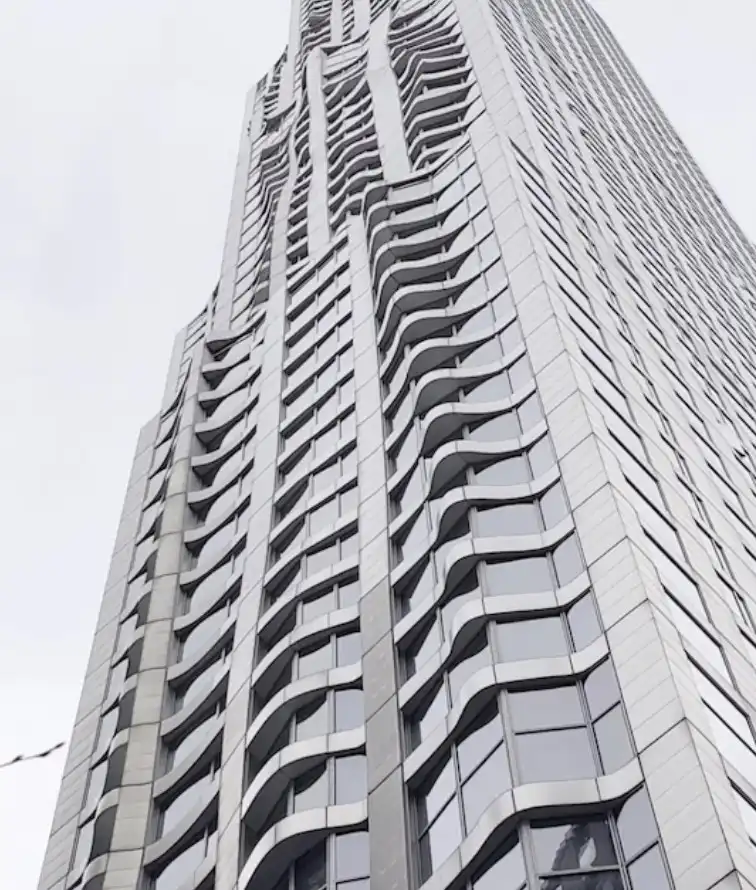
Under shell management companies BREIT Operating Partnership, Beam Living and 8 Spruce, a group of tenants who brought the suit claim Blackstone has spent the past few years misrepresenting true costs of rent and illegally jacking up rents — sometimes over 50% — on renewal leases for up to 3,500 tenants in an 898-unit rent-stabilized building it owns at 8 Spruce St.
“[Blackstone landlords] entered into leases with [tenants], which incorrectly, falsely, and illegally, misrepresented the amount of rent [landlords] were lawfully permitted to collect,” says the tenants’ suit, filed by the Housing Rights Initiative (HRI).
In a statement, Blackstone-owned Beam Living said it was “aware” of the suit and cannot comment on pending litigation, but held that it was “committed to fully complying with all rent stabilization rules and regulations” and had “invested significantly to improve the community” when reached for comment.
Blackstone, which purchased the building in 2022 for $930 million, opted to participate in a city tax credit program for the Manhattan building called 421-a, which provides financial benefit to landlords and developers on the condition they agree to stabilize their building’s apartments. 8 Spruce and building owners have received more than $115 million in tax credits since its agreement to make all apartments in the building rent-stabilized, a commitment the suit says it blatantly disregarded.
The lawsuit alleges that Blackstone, its management companies and the management companies that owned the building before Blackstone’s 2022 purchase of it allegedly tried to get around or benefited from efforts to get around the stabilization laws by offering tenants a lease at a lower net rent by offering a few months free on a pricey unit.
For example, the suit says, landlords would list an apartment at $2,960/month with a “deal” giving tenants the first four months of the lease “free,” making the net rent $1,973/month. Then, when it came time to renew the lease, the lawsuit alleges, landlords would “pull” that rent concession — a practice also illegal under city law — and calculate rent increases based on what the company said was the “actual,” higher rent number.
A Beam Living spokesperson noted that the majority of the named tenants in the suit initially signed their leases before Blackstone took over ownership of the building. The lawsuit alleges, however, that rent-stabilization law requires that the initial net monthly rent a tenant signed onto in a stabilized unit should remain the rent that future rents are calculated off of, regardless of who owns the unit.
The landlords’ actions, the Housing Rights Initiative (HRI) said, forced tenants to accept rent increases “far beyond” what would be legally permitted under rent-stabilization laws if they wanted to remain in their apartment, with tenants sometimes agreeing to a more than 50% year-to-year increase on a stabilized unit.
The HRI said the practice not only hurts tenants, but also the city’s 421-a program. Tenants’ lawyers argued that Blackstone is essentially pocketing taxpayer dollars and not holding up their end of the bargain of providing stabilized units. The building has drawn attention in the past for being a luxury tower to which the city provided the landlord tax credits and refinancing packages.
“Landlords who cheat on affordable housing tax benefits are screwing both taxpayers and tenants,” said Aaron Carr, HRI’s executive director. “This is why it is imperative that New York State proactively and systematically enforce the law.”
Any current and former tenant who’s lived in the building since September 2020 may be eligible to join the suit, HRI said.
The tenants are seeking a court order barring Blackstone from raising rents in a way that’s out of line with rent-stabilization laws and the tens of millions they are owed in rent refunds and reductions and additional damages.
They are also asking the court to appoint an independent entity to audit the building’s rent-stabilized units and correct all leases to comply with rent-stabilization laws.
This article was updated to include comment from Blackrock’s Beam Living.
